Jahongir
Meaning of Jahongir
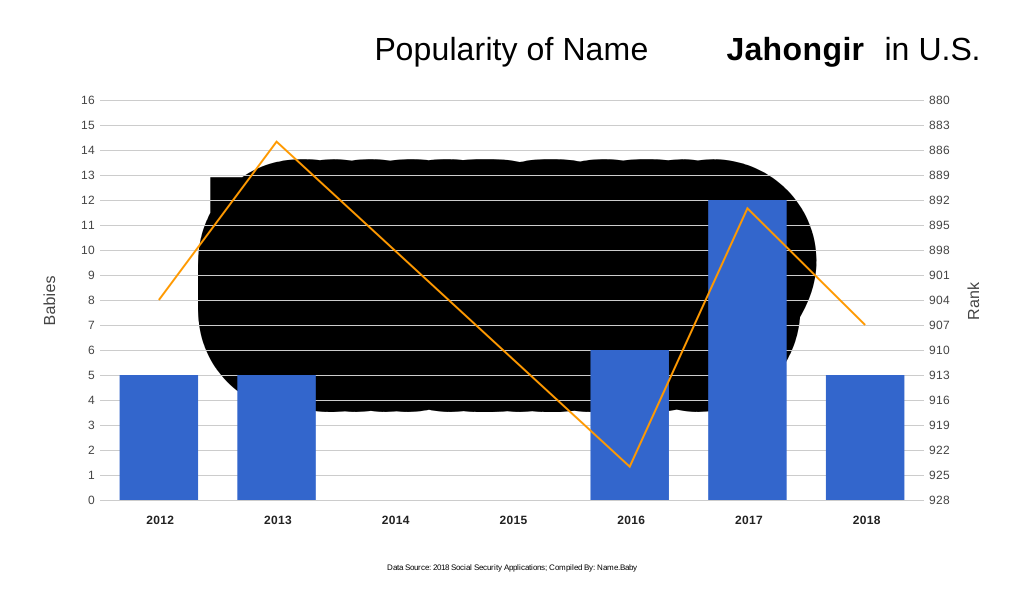
Rooted in the Persian compound jahān, “world,” and gir, “seizer,” the Uzbek masculine name Jahongir resonates with the lofty cadence of imperium mundi, for it memorializes the ambition once embodied by the Mughal emperor Jahangir, whose reign bridged the arts and statecraft along the storied corridors of the Silk Road; yet, despite such imposing historical overtones, contemporary American usage remains discreet—Social Security data record only a single-digit to low-double-digit occurrence each year between 2012 and 2018, never rising above rank 885—thus enabling modern parents to confer a designation that is at once culturally resonant and statistically uncommon. Pronounced jah-HAHN-geer (/dʒɑˈhɑŋ.gir/), its phonetic contour glides from the brisk affricate /dʒ/ to the resonant velar –gir, audibly tracing the arc of expansion implied by its meaning, while its semantic kinship to Latin locutions such as victor orbis lends classical gravitas that tempers its martial etymology with a suggestion of enlightened stewardship. Whether selected to honor Central Asian heritage or to whisper, in a single word, humanity’s perennial aspiration toward wider horizons, Jahongir stands as a layered appellation—simultaneously historical chronicle and quiet promise, awaiting a new bearer to inscribe his own chapter upon the world.
Pronunciation
Uzbek
- Pronunced as jah-HAHN-geer (/dʒɑˈhɑŋ.gir/)
U.S. Popularity Chart
Similar Names to Jahongir
Notable People Named Jahongir
| Jahongir Otajonov - |
| Jahongir Ergashev - |
| Jahongir Aliev - |
