Jamias
Meaning of Jamias
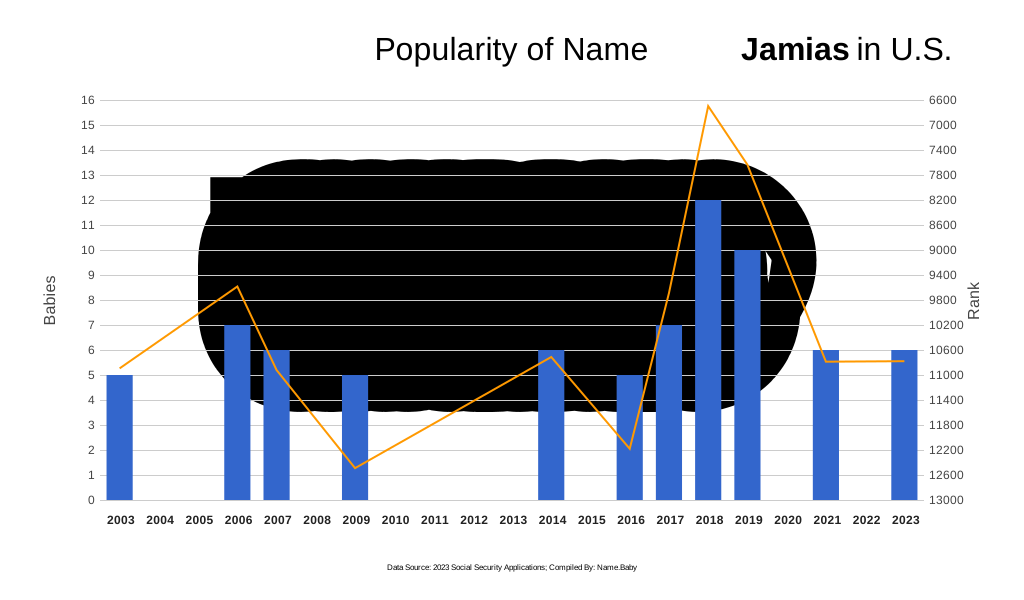
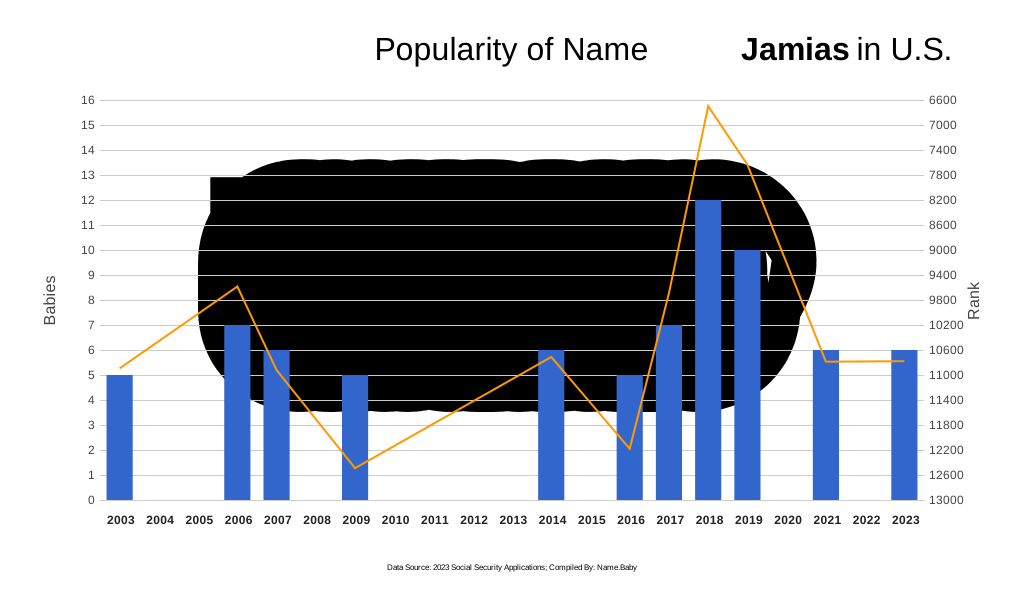
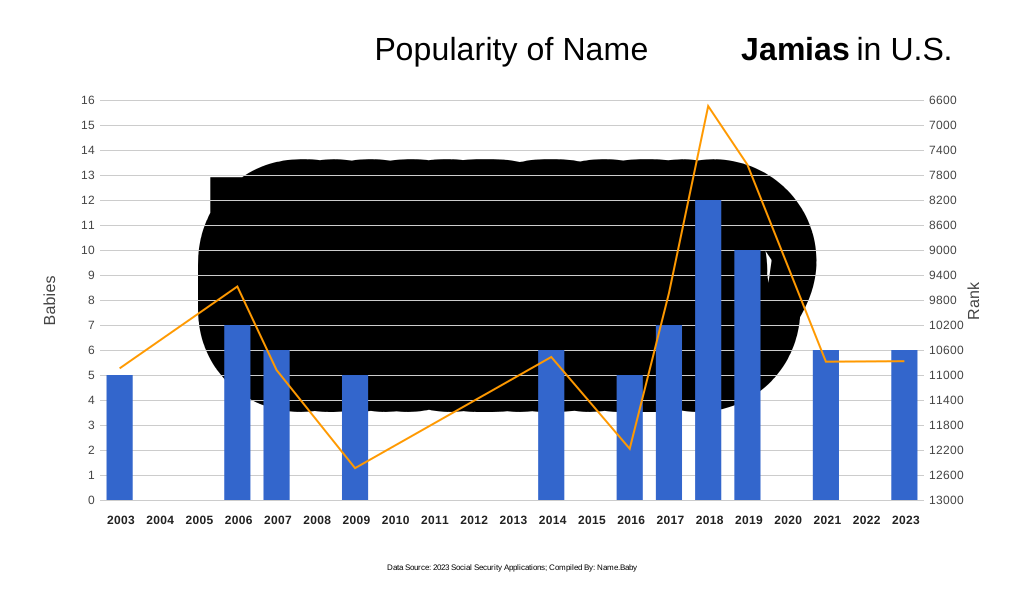
Jamias, pronounced juh-MY-uhs, is best understood as a contemporary Anglo-American formation that welds the time-honored James to the –ias ending long associated with Hellenized Hebrew names such as Elias and Zacharias, thereby imparting a quietly biblical resonance without tying the bearer to a single scriptural figure. The resulting morphology harmonizes with Greek-Hebrew transliteration conventions in which –ias can signify “pertaining to Yahweh,” a nuance that, while etymologically inferred rather than documented, lends the name a theophoric undertone attractive to parents who favor subtle religious symbolism. Empirical birth records from the United States show Jamias entering measurable use in 2003 and thereafter maintaining an annual count of roughly five to twelve newborns—peaking at twelve in 2018—positions that keep it outside the mainstream yet sufficiently visible to avoid total obscurity. Its phonological clarity, absence of contested spellings, and compact trisyllabic footprint confer practical advantages in everyday communication, while its statistical rarity supports an aura of individuality prized in modern naming culture. Consequently, Jamias occupies a distinctive niche at the intersection of venerable tradition and fresh coinage, furnishing a masculine option that feels simultaneously recognizable and rare.
Pronunciation
English
- Pronunced as juh-MY-uhs (/dʒəˈmaɪəs/)
U.S. Popularity Chart