Jenissa
Meaning of Jenissa
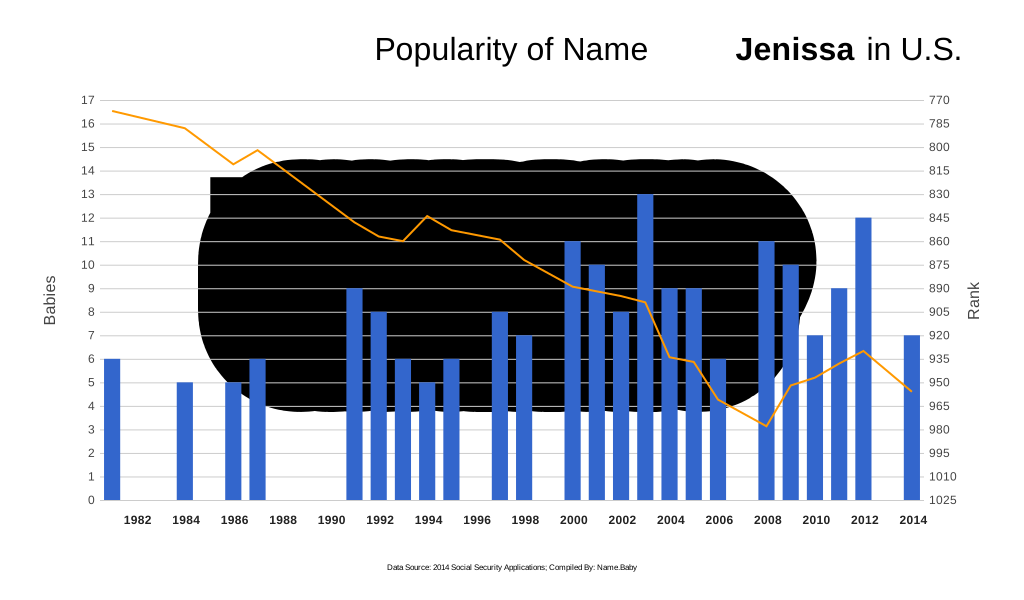
Jenissa, a melodious feminine name pronounced juh-NIS-uh (/dʒəˈnɪsə/), stands at the confluence of ancient Hebrew tradition and Latinate refinement; its etymological lineage can be traced to the Hebrew Yōḥānān, “Yahweh is gracious,” which, having journeyed through the Greek Ioánna and medieval Latin Ioanna, finds renewed expression in the elegant suffix –issa—recalling classical appellations such as Clarissa and Marissa and thereby bestowing a sense of poised sophistication. Like the soft glow of dawn filtering through Roman porticos or the enduring strength of carved marble, Jenissa evokes both gentle luminosity and steadfast grace, suggesting a bearer who embodies benevolence, introspective warmth, and cultivated resilience. Within Latin American cultural spheres, it resonates as a heartfelt homage to ancestral roots while simultaneously projecting a modern sensibility. Though its statistical presence in the United States has remained modest—hovering beyond the top 800, with a notable rank of 777 in 1981—Jenissa’s sustained, albeit understated, adoption by discerning parents attests to its enduring appeal as a name that seamlessly marries academic refinement with emotional intimacy.
Pronunciation
English
- Pronunced as juh-NIS-uh (/dʒəˈnɪsə/)
U.S. Popularity Chart