Jeriah
Meaning of Jeriah
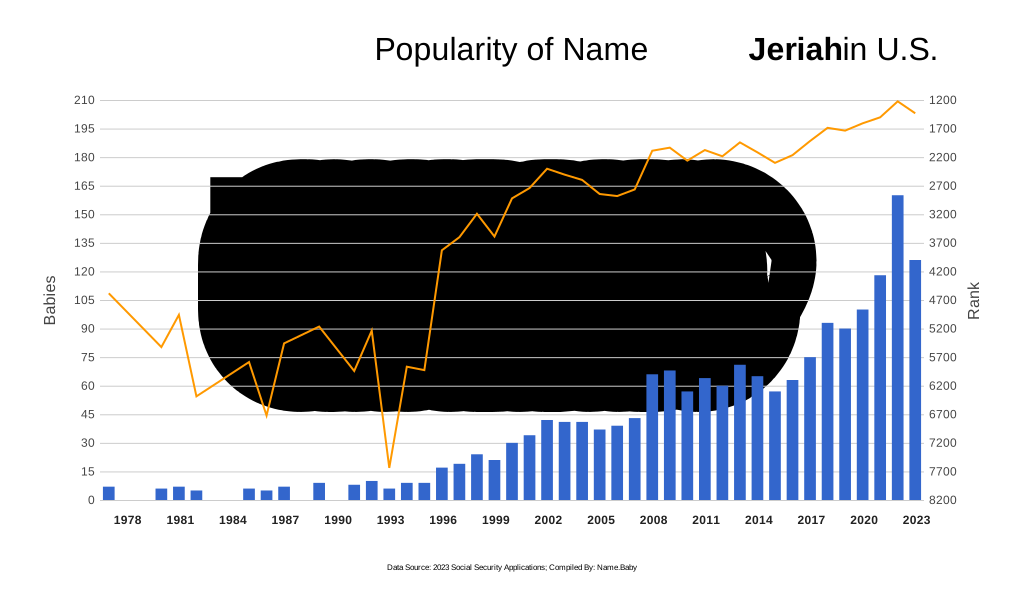
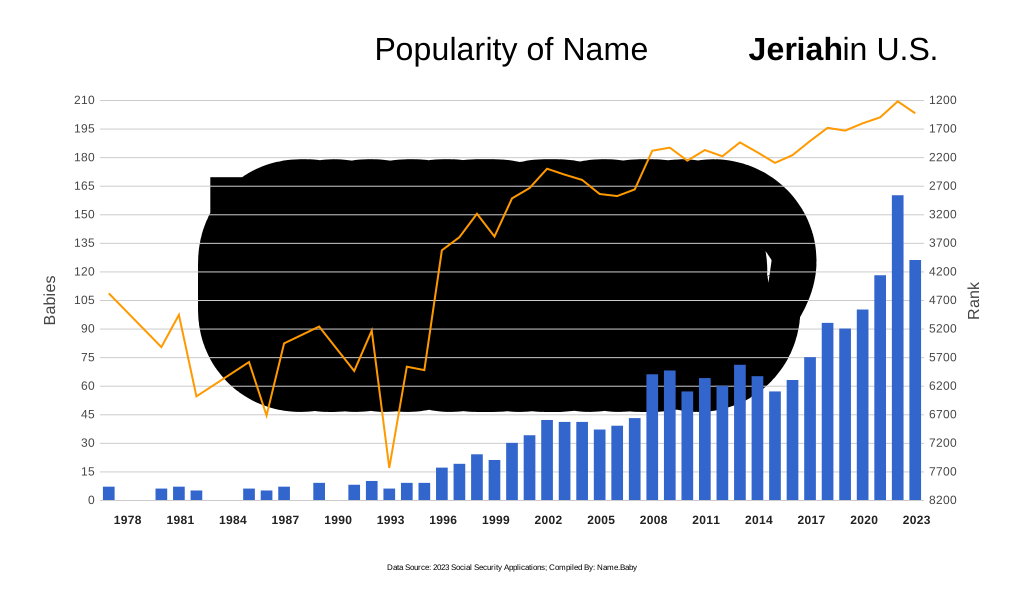
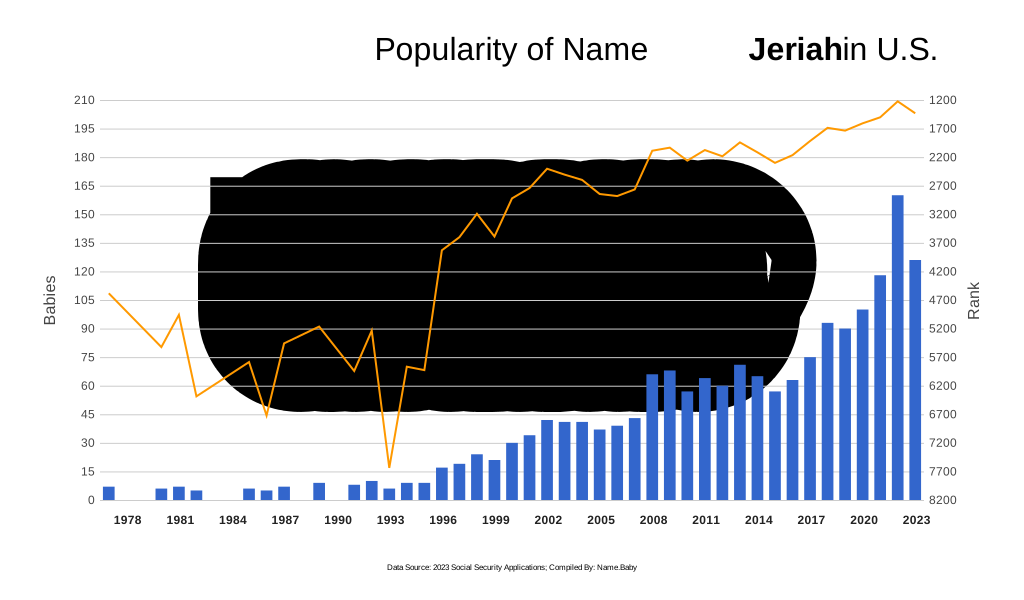
Jeriah, occasionally rendered Jerijah in older English transliterations, is a masculine appellation of Biblical-Hebrew provenance (יְרִיָּה, Yiriyyāh) that scholars most commonly gloss as “Yahweh has seen,” with a secondary exegetical tradition reading the root as “taught by the Lord.” The name enters the historical record in 1 Chronicles, where a minor Levite bearing it underscores its sacerdotal associations and confers a quiet, lineage-oriented gravitas. Phonetically articulated juh-RYE-uh, Jeriah shares the rhythmic profile of Jeremiah while dispensing with its final syllable, a contraction that renders the name both familiar and distinct within contemporary Anglo-American parlance. U.S. vital-statistics data reveal a pattern of low-to-moderate but remarkably steady usage: since the late 1970s the name has appeared almost every year, and recent counts show a gradual rise from 100 newborns in 2020 to 144 in 2024, suggesting renewed interest among parents who value Scriptural heritage without sacrificing modern brevity. Because its orthography is transparent, its cadence unhurried, and its semantic field implicitly reflective, Jeriah functions as an unobtrusive yet theologically resonant alternative to more common Old Testament staples, appealing to families who seek a balance between rarity, historical depth, and phonetic accessibility.
U.S. Popularity Chart
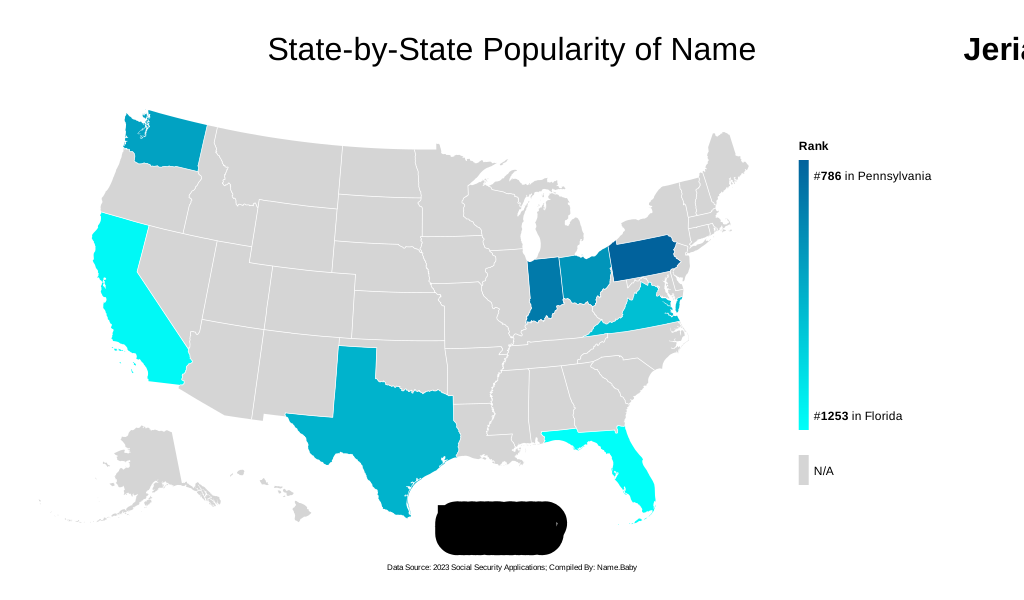
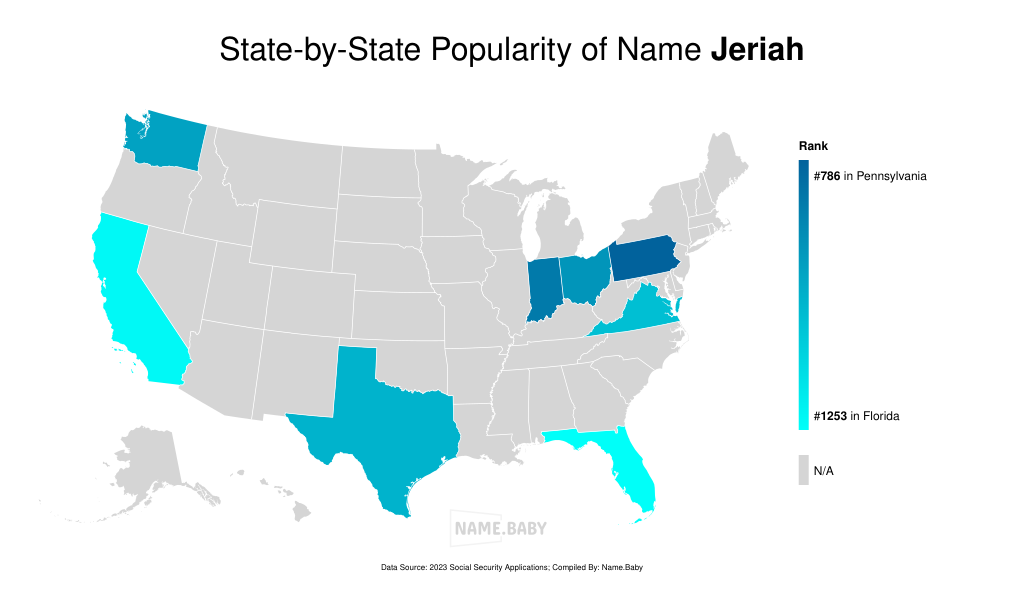
States Popularity Chart
Notable People Named Jeriah
| Jeriah Swetland - |
