Jesly
Meaning of Jesly
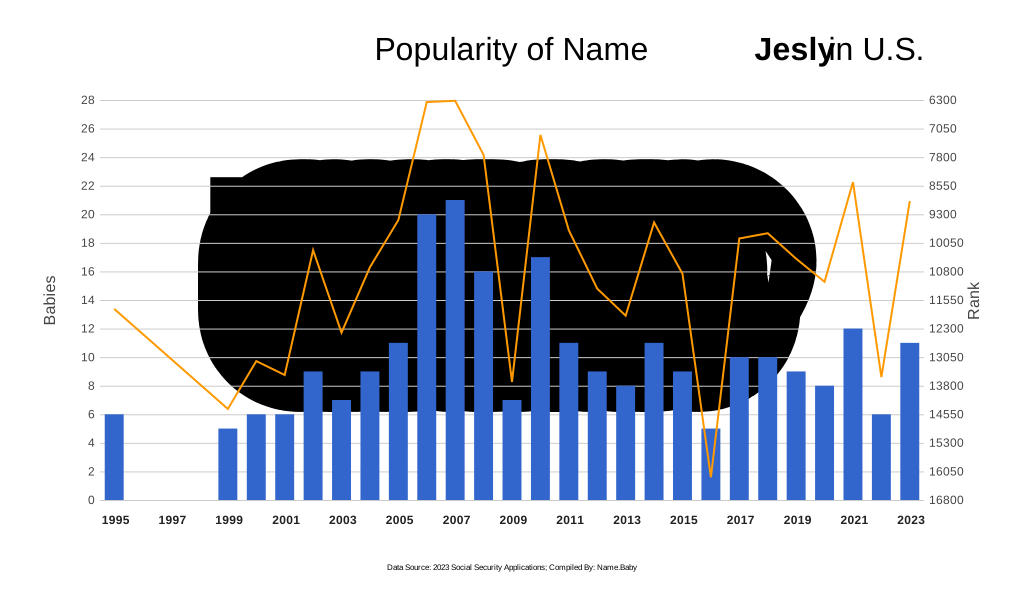
The name Jesly, pronounced /ˈdʒɛsli/, stands as a modern feminine appellation whose etymology can be traced to the confluence of Hebrew and Old English naming traditions—melding the emergent form of “Jessica,” itself derived from the Hebrew Yiskāh meaning “foresight,” with “Ashley,” denoting an “ash tree clearing”—and further refined by a Latin-inflected suffix evocative of adverbial morphology. Its phonemic arrangement, featuring a voiced affricate onset followed by a liquid consonant and a sibilant coda, imbues the name with a harmonious cadence that has appealed to a discreet segment of American parents; data from 1995 to 2024 reflect its persistent yet modest usage, with annual registrations ranging from five to twenty-one and national rankings oscillating between 853 and 973. An analytical examination of this demographic trajectory underscores Jesly’s stability amidst the capricious currents of naming fads: rather than surging or vanishing, it weaves through decades like a subtle filament—an intricate tapestry of cultural heritage and phonetic elegance. In the realm of contemporary onomastics, Jesly embodies a nuanced hybridity, interweaving Semitic, Germanic and Latin linguistic threads into a name that, while rare, resonates with an understated scholarly charm.
Pronunciation
American English
- Pronunced as jes-lee (/ˈdʒɛsli/)
U.S. Popularity Chart