Jheremy
Meaning of Jheremy
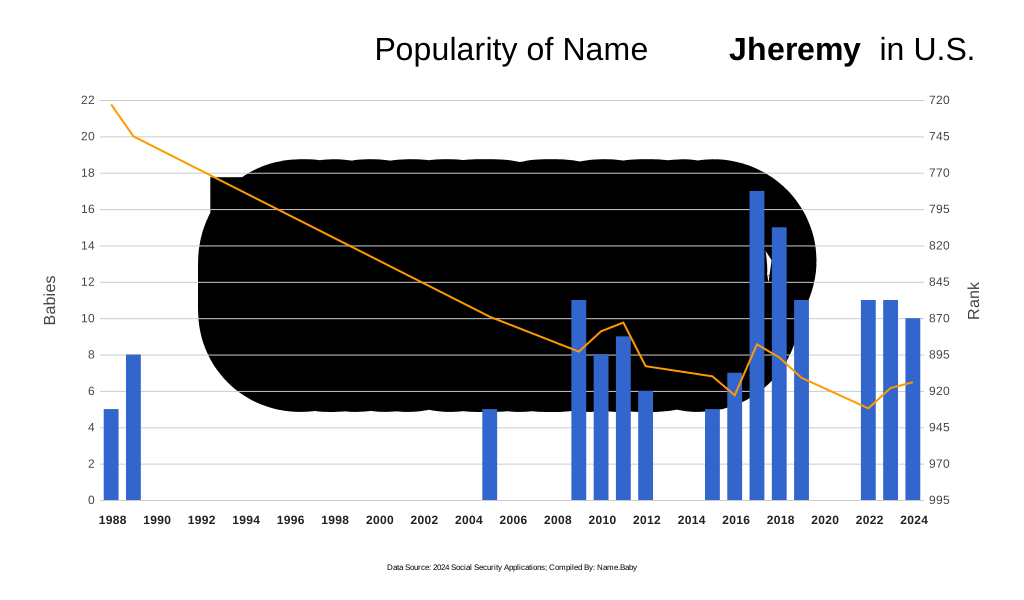
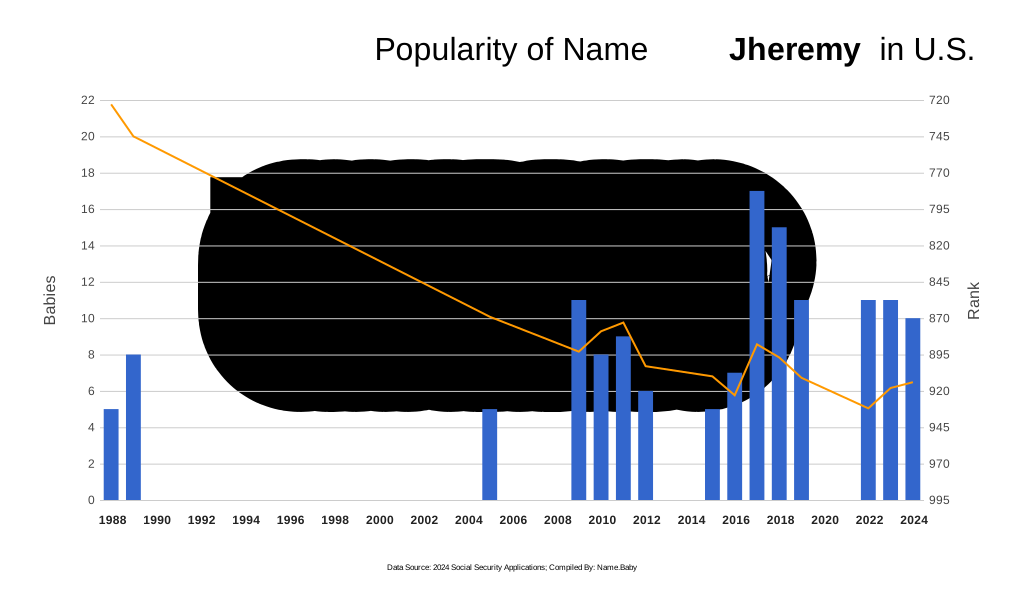
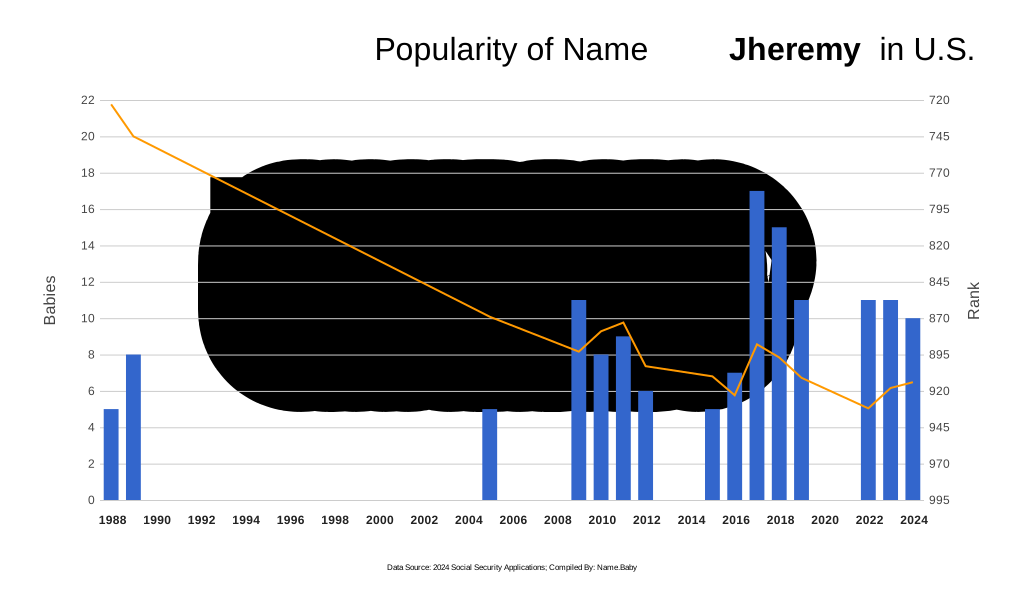
Jheremy, a refined orthographic variation of Jeremy, traces its lineage to the ancient Hebrew Yirmeyahu—“appointed by God”—and passed through the melodious corridors of classical Latin (Jeremias) into modern Western usage; it is pronounced in American English as jer-uh-mee (/ˈdʒerəmi/). In onomastic scholarship, Jheremy occupies a fascinating niche: though it appears but sparingly in U.S. birth records—its annual tally oscillating between five and seventeen newborns since the early 2000s and its Social Security ranking lingering around the low 900s (peaking at 888 in 2017 and most recently positioned at 914 in 2024)—it endures like a hidden gem within the broader tapestry of Latin-infused naming traditions. Like a solitary star in a scholarly sky, the name conveys both the weight of prophetic heritage and the warmth of familial devotion, its syllables echoing the solemn cadence of medieval liturgy even as they settle gently into contemporary speech. In cultures where Spanish Jeremías resonates with the rhythms of colonial baroque churches, Jheremy offers anglophone parents a subtly exotic alternative, marrying academic gravitas with heartfelt intimacy. Though one might jest—dryly, of course—that divine appointments seldom surface in census tables, Jheremy’s steady, if modest, presence attests to its enduring charm, a quiet testament to the interplay of tradition, identity, and the ever-evolving art of naming.
Pronunciation
American English
- Pronunced as jer-uh-mee (/ˈdʒerəmi/)
U.S. Popularity Chart