Ji
Meaning of Ji
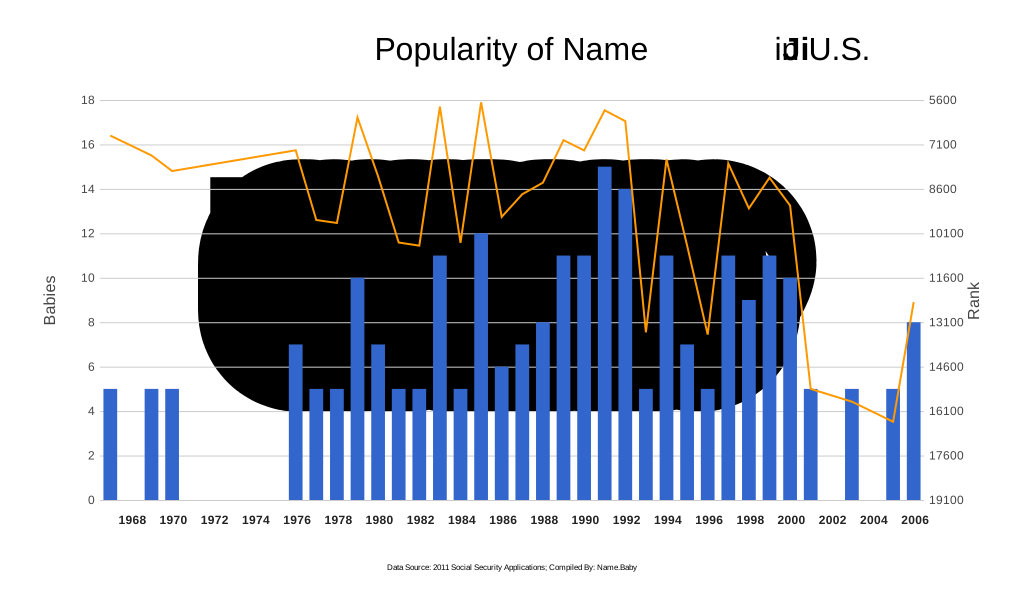
Ji is a compact, two-letter tribute to East Asian tradition, pronounced “jee” in Mandarin (dʒi) and with a slightly crisper edge in Korean (tɕi). In Chinese, it can be written with characters such as 吉 “auspicious,” 纪 “record,” or 姬 “lady,” so the meaning drifts with the stroke of the pen. Korean parents, meanwhile, select one of several Hanja—智 “wisdom,” 志 “will,” or 知 “knowledge” are perennial favorites—slotting Ji into two-syllable constructions like Ji-woo or Ji-yeon, or letting it stand alone for spare elegance. The Social Security files show that American enthusiasm for Ji has been polite rather than exuberant: yearly tallies since 1967 hover in the single digits, never cracking the top 700 and peaking at a modest dozen births in 1985. Still, its brevity, cross-cultural pedigree, and quietly optimistic meanings give Ji a certain minimalist charm—proof that, at least in baby-naming, size isn’t everything.
Pronunciation
Chinese Mandarin
- Pronunced as jee (/dʒi/)
Korean
- Pronunced as jee (/tɕi/)
U.S. Popularity Chart
Notable People Named Ji
| Ji Chang-wook - |
| Ji Sung - |
| Ji Jin-hee - |
| Ji Soo - |
| Ji Yeon Kim - |
| Ji Han-jae - |
| Ji So-yun - |
| Ji Eun-hee - |
| Ji Kang - |
| Ji Seong-hwan - |
