Johann
Meaning of Johann
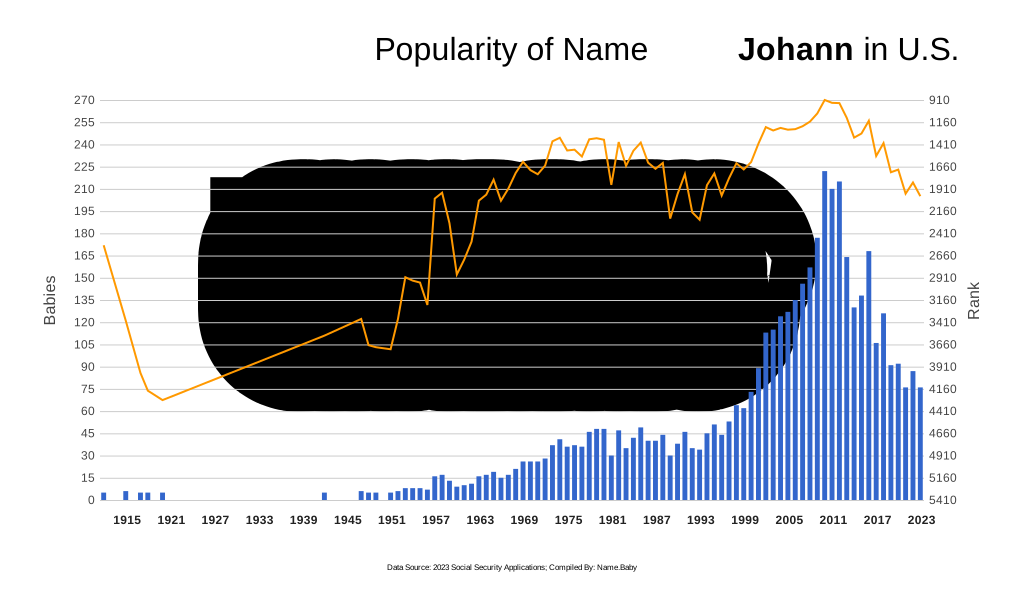
Johann traces its lineage to the Hebrew Yochanan, meaning “God is gracious,” filtered through the Latin Iohannes before settling into the German yo-HAHN and the English yo-HAN. The name echoes across cathedral choirs and concert halls, carried by luminaries such as composers Johann Sebastian Bach and Johann Strauss, yet it also belongs to saints, scientists, and statesmen who gave it sober credibility. U.S. birth data show Johann holding a quiet but resilient niche, gliding between the 500th and 900th spots for more than a century and resting near rank 833 in 2024—a pattern that signals steady respect rather than passing fashion. Parents often choose it to honor German roots, salute classical music, or present a cosmopolitan counterpart to John, Juan, or Giovanni. Elegant in any language and compact on the page, Johann offers a timeless blend of tradition, culture, and understated distinction.
Pronunciation
German
- Pronunced as yo-HAHN (/joˈhan/)
English
- Pronunced as yo-HAN (/joˈhæn/)
U.S. Popularity Chart
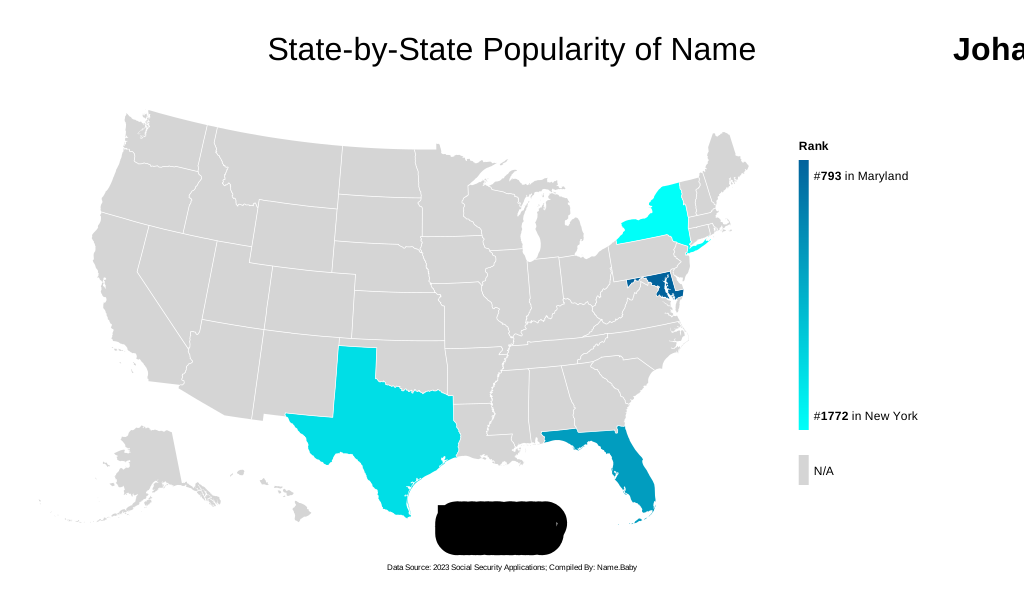
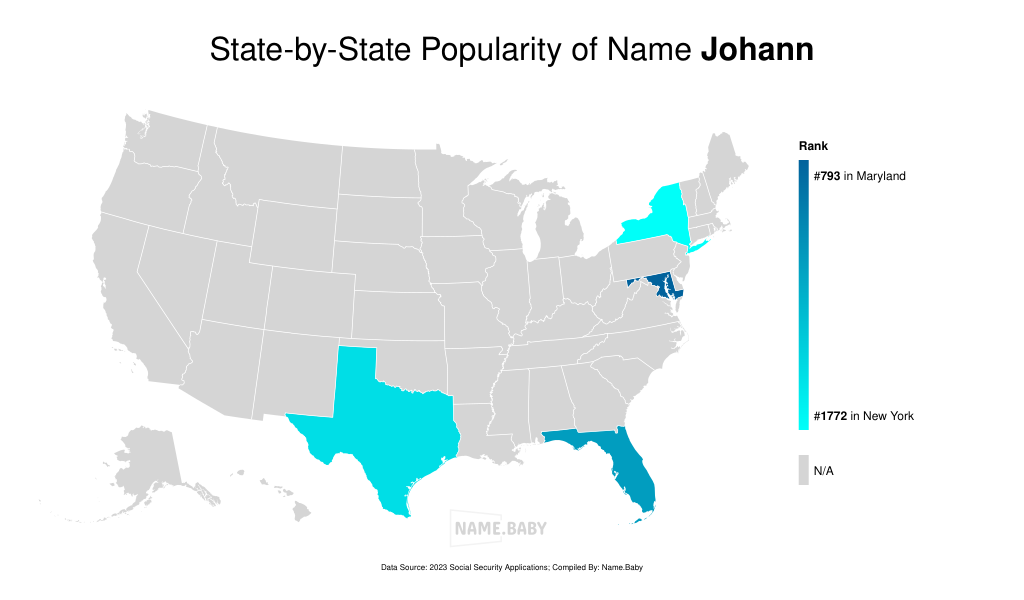
States Popularity Chart
Notable People Named Johann
| Johann Sebastian Bach was a German Baroque composer and musician celebrated as one of the greatest composers in Western music. |
| Johann Wolfgang von Goethe was a German poet, novelist, playwright, and scientist whose works shaped literature and philosophy. |
| Johann Gottlieb Fichte was a German philosopher who helped establish German idealism, building on the ideas of Immanuel Kant. |
| Johann Strauss II was an Austrian composer and violinist known for his waltzes, dance music and operettas. |
| Johann Christian Bach was a German Classical composer and the youngest son of Johann Sebastian Bach. |
| Johann Kaspar Lavater was a Swiss poet, philosopher and Reformed theologian known for his work in physiognomy. |
