Juliza
Meaning of Juliza
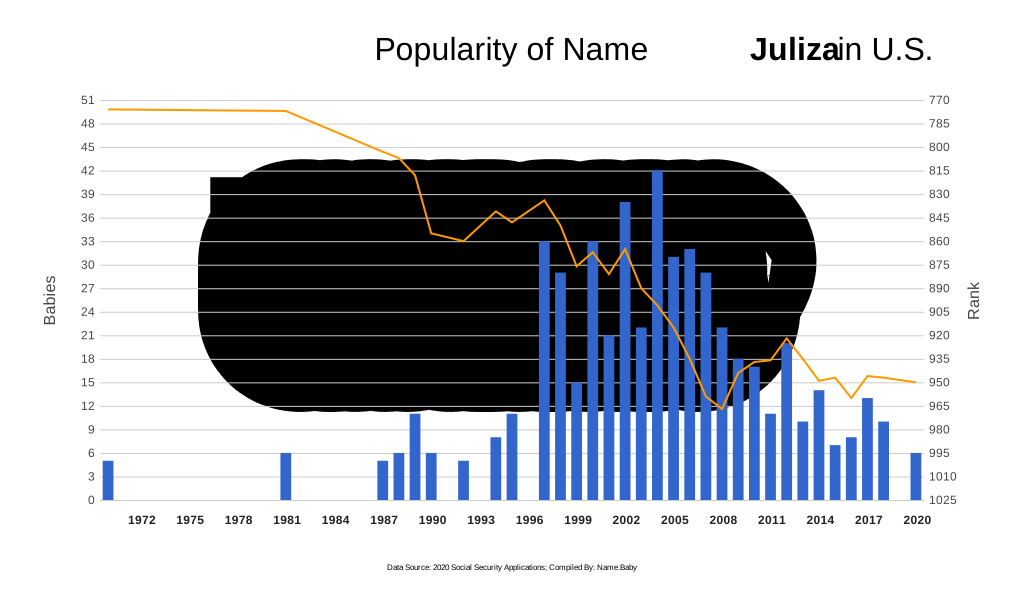
Juliza is a feminine appellation that emerges from a confluence of Romance-language morphology and contemporary naming innovation: its Latin stem Julia, signifying “youthful” or “downy,” is affixed to the phoneme-rich suffix -iza, producing a form that in Spanish phonology is articulated as /xuˈli.sa/ and in American English adapts to /dʒuˈliːzə/. Longitudinal analysis of U.S. Social Security data from 1970 through 2020 indicates that Juliza has consistently occupied a marginal yet persistent stratum of popularity, with annual rankings oscillating between positions 776 and 967 and peak occurrences clustered in the early 2000s and again in 2018. This statistical trajectory underscores its status as a niche choice within Anglo-American onomastic patterns, appealing to parents who prioritize cross-cultural resonance coupled with low-frequency distinction. The name’s structural derivation and phonetic adaptability render it a subject of technical interest for scholars examining the interplay of Latin etymological roots with Anglophone phonological integration.
Pronunciation
Spanish
- Pronunced as hoo-LEE-sah (/xuˈli.sa/)
American English
- Pronunced as joo-LEE-zuh (/dʒuˈliːzə/)
U.S. Popularity Chart