Kameshia
Meaning of Kameshia
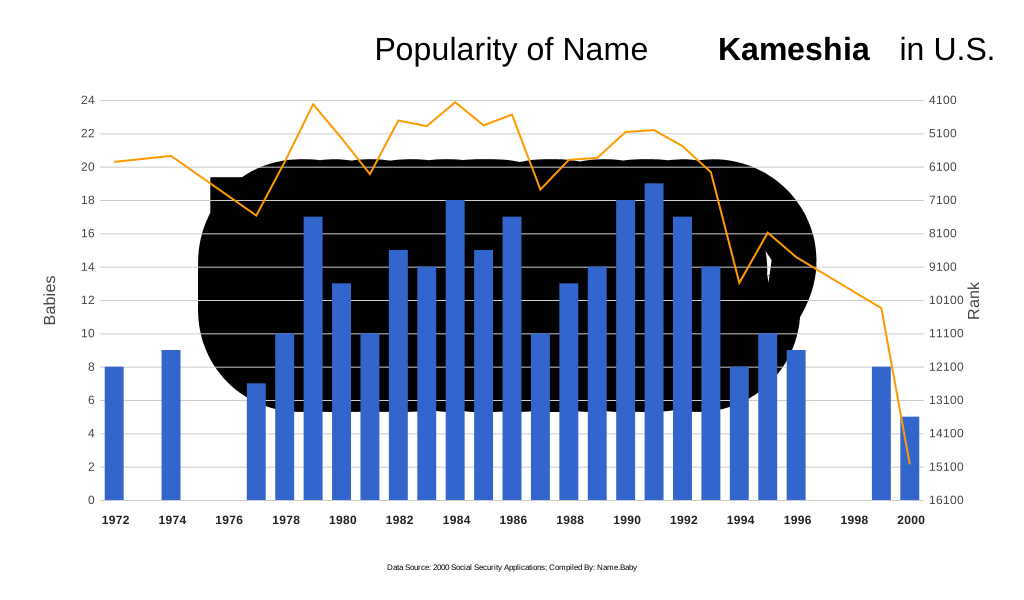
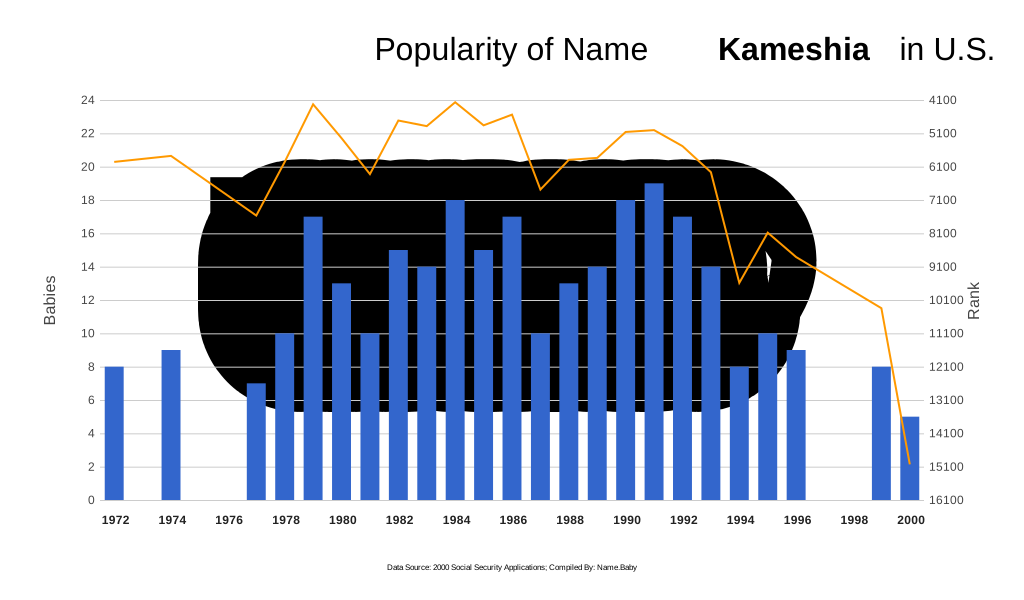
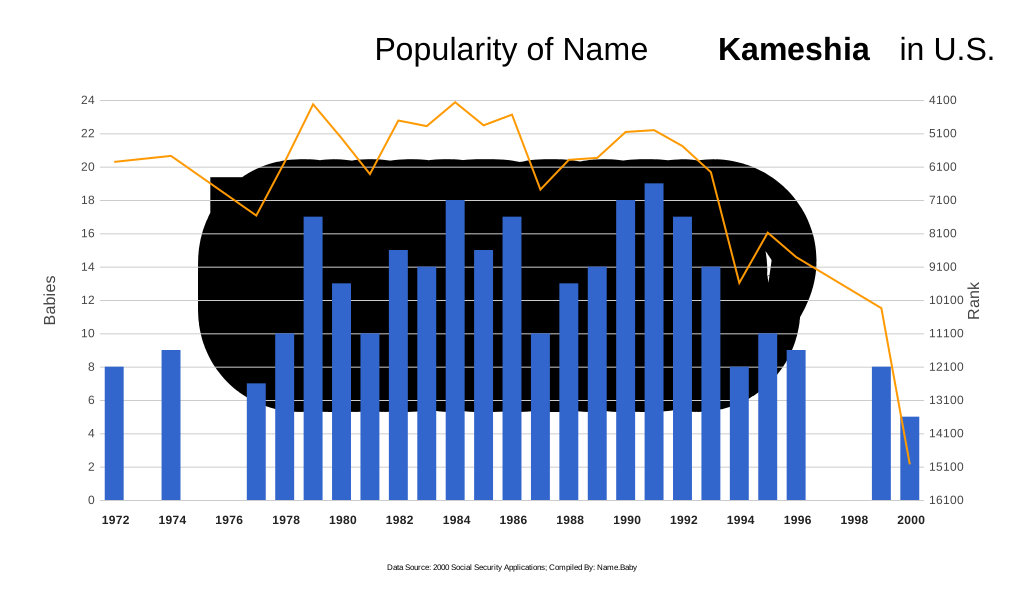
Pronounced kuh-MEE-shuh, Kameshia is widely regarded as a contemporary, African-American elaboration of Keisha—the latter tracing its lineage to the Hebrew Keziah, “cassia tree,” a symbol of sweet fragrance and quiet resilience—augmented by the emphatic prefix “Ka-,” whose cushioned plosive imparts both rhythmic lift and a sense of individual distinction. Linguistically, the name glides through three mellifluous syllables, each one sustaining a gentle rise and fall that philologists would describe as trochaic-anapestic, a cadence as sinuous as a pasillo latino and as soothing as a marimba’s low hum. First documented in U.S. birth records in the early 1970s, Kameshia’s modest yet persistent appearance—peaking in the 740s for popularity during the era of soul ballads and satin-lapelled optimism—mirrors the broader cultural renaissance in which African-diasporic creativity and classical Hebrew imagery wove themselves into a single, fragrant garland. Parents who choose Kameshia often cite its sonorous warmth, its aura of self-determination, and the almost synesthetic sensation of cinnamon-tinged breezes that the cassia reference evokes, como un susurro de verano sobre la piel. Though statistically rare, the name’s rarity functions less as obscurity than as an academic exercise in onomastic precision: it grants its bearer an unmistakable vocal fingerprint, a “signature timbre,” to borrow the language of acoustic science, while still sitting comfortably within the wider Keisha-Lakeisha-Alicia sound family. Thus, Kameshia stands at the crossroads of etymology and cultural memory, a small yet luminous testament to the perennial human desire to bestow not merely an identifier, but a whispered blessing of aromatic grace and rhythmic resolve.
Pronunciation
American English
- Pronunced as kuh-MEE-shuh (/kəˈmiːʃə/)
U.S. Popularity Chart