Kani
Meaning of Kani
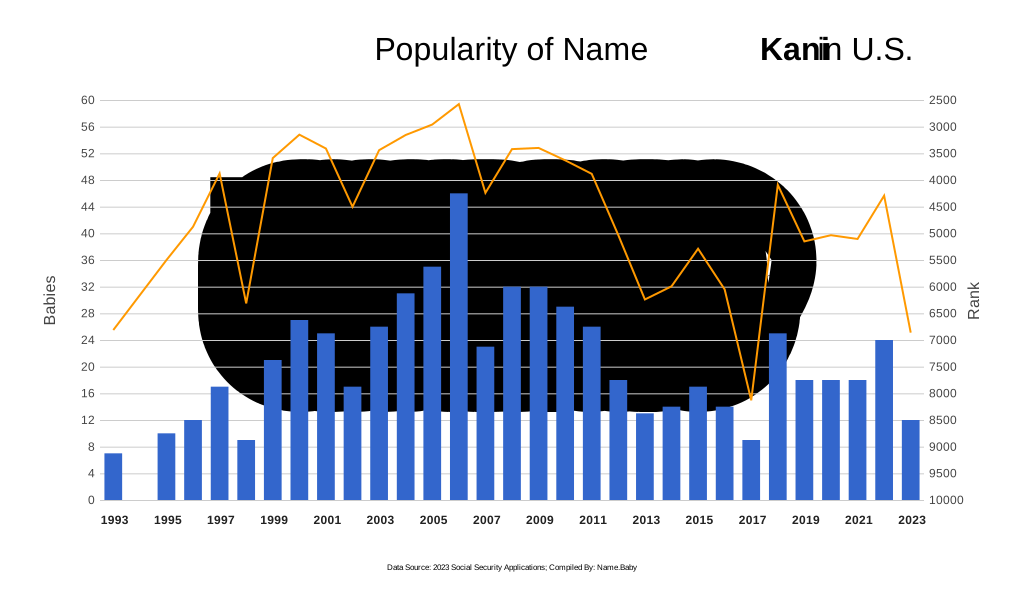
Kani emerges as an evocative unisex forename whose primary lineage traces to the Japanese lexeme kāni (/kɑːni/), denoting “crab”—a creature armored by nature, whose lateral stride evokes both strategic maneuver and the stoic endurance of Carthaginienses defending their shores. Phonologically, Kani is a bisyllabic trochee—an economical structure that resonates with the rhythmic cadences of classical Latin declamation while recalling the serene pulse of Pacific tides. Though its appearance in United States birth registers has been modest—hovering between seven and twenty-nine annual occurrences from 1993 through 2024, and ranking between 772 and 919—the name has nonetheless woven a discreet tapestry of identity, akin to an artisanal text whose hidden watermark reveals itself only to the discerning eye. Beyond its Sino-Japanese root, Kani also surfaces in select Dravidian dialects as “fruit” or “first offering,” thus inheriting an aura of fecunditas and renewal. In bestowing the name Kani upon a newborn, guardians confer a moniker that bears the gravitas of academic resonance, the warmth of Latin soul, and a touch of wry, dry humor—quietly indelible in its elegant simplicity.
Pronunciation
Japanese
- Pronunced as KAH-nee (/kɑːni/)
U.S. Popularity Chart
Notable People Named Kani
| Kani K. Navas - |
| Kâni Karaca - |
