Kaziyah
Meaning of Kaziyah
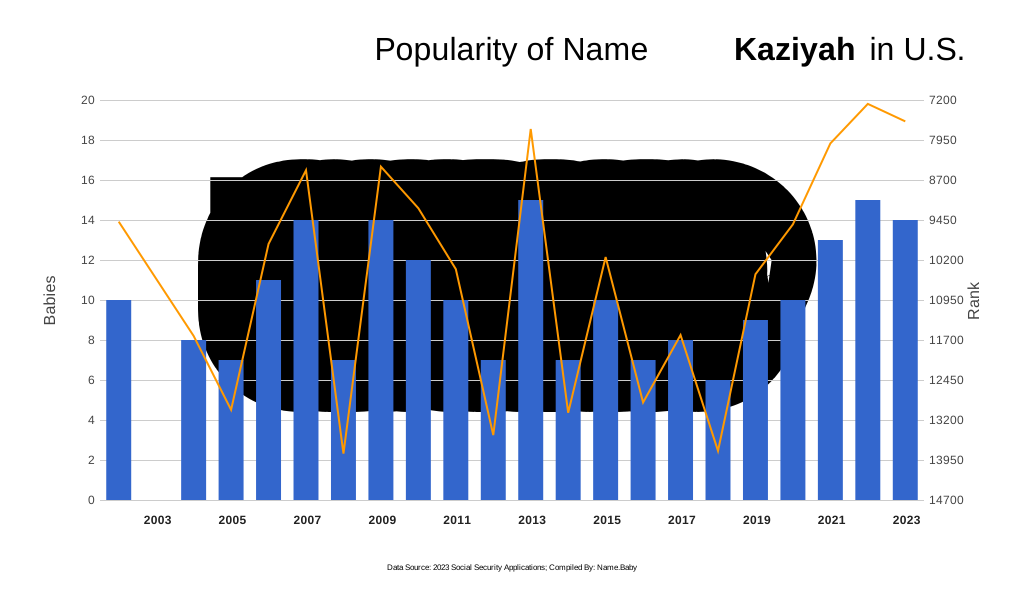
Kaziyah, pronounced kah-ZEE-yah (/kɑːˈziːjə/), traces its etymological lineage to the Hebrew Keziah—“cassia bark”—and bears the imprimatur of classical Latin transliterations, evoking the spice-laden caravans that once threaded along Roman viae; like a delicate breeze redolent of cinnamon groves at dawn, the name conjures an aura of fragrant resilience, weaving together the tangible poetry of the natural world with the exalted legacy of biblical matriarchs. In onomastic and phonological terms, Kaziyah exemplifies a strategic morphological evolution—where the original sibilant soft “s” yields to a more assertive “z,” thereby signaling a modernized sensibility while preserving its venerable provenance. Analysis of Social Security Administration data reveals that, although its rank has experienced modest fluctuation—from its inaugural listing at 893 in 2002 with 10 occurrences to rank 922 with 28 occurrences in 2024—the absolute number of bearers has nearly tripled, a trajectory that underscores its emerging status among parents seeking appellations that resonate with both scholarly depth and contemporary elegance. As such, Kaziyah stands as a testament to names’ enduring capacity to bridge epochs, cultures, and elemental beauty.
Pronunciation
English
- Pronunced as kah-ZEE-yah (/kɑːˈziːjə/)
U.S. Popularity Chart