Kermitt
Meaning of Kermitt
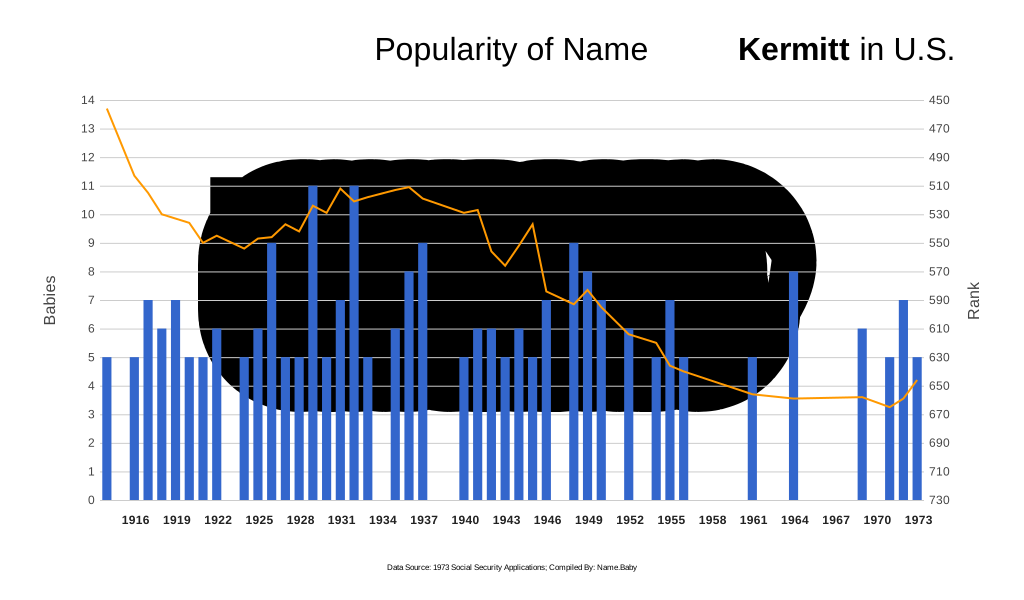
Kermitt, the double-t cousin of Kermit, ultimately descends from the Irish patronymic Mac Diarmada—stripped of its prefix, softened through Manx Gaelic, and interpreted by most etymologists as “free man” or, more quaintly, “unfettered one.” In American data the spelling has never broken into mainstream view: Social Security files record only five to eleven births per year between 1914 and 1973, with a brief high-water mark of rank 503 in 1916 and a steady ebb thereafter. Historically, its strongest real-world ambassador was Kermit Roosevelt, son of President Theodore Roosevelt; culturally, the name’s single-t twin achieved puppet stardom in 1955, a development that some parents embrace and others politely ignore. Opting for the doubled consonant retains the vintage Roosevelt aura while muting the immediate frog reference—an economical tweak for those who like heritage but dislike ribbits. The result is a quietly distinctive choice: recognizably Anglo-American, technically well-sourced, and, judging by the numbers, blessed with near-certain classroom singularity.
Pronunciation
English
- Pronunced as KER-mit (/ˈkɜrmɪt/)
U.S. Popularity Chart