Keyler
Meaning of Keyler
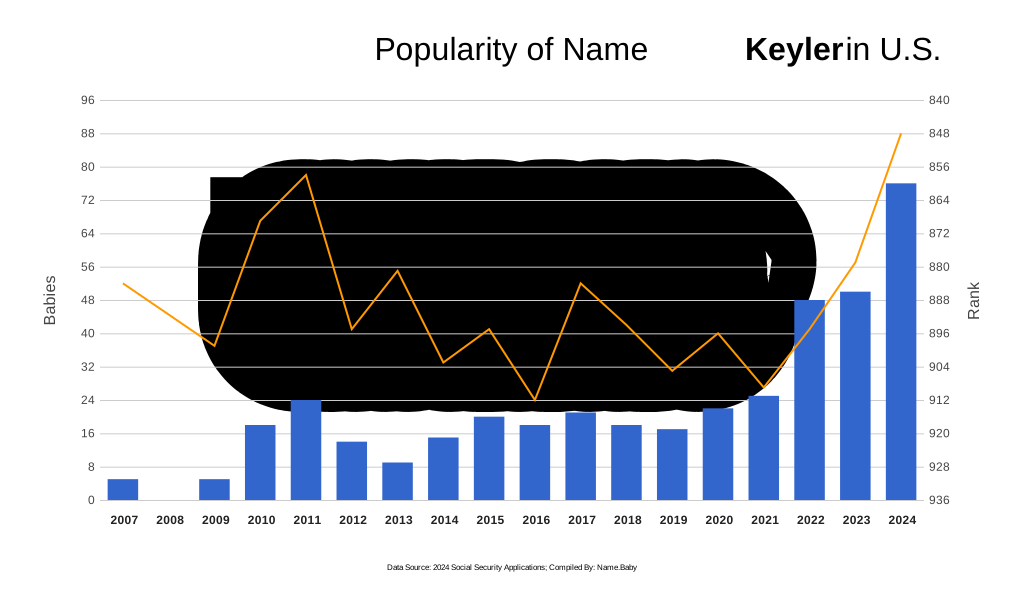
Keyler, pronounced KAY-ler (/keɪlər/), presents itself as a masculine appellation whose etymology unfolds like a finely wrought tapestry, interlacing the Old English “key”—itself tracing back to the Latin clavis—with the Germanic agentive suffix –ler, thereby evoking the image of one destined to guard thresholds and unlock hidden realms of possibility. In the United States, its journey resembles the slow ascent of a lone star emerging against a nocturnal sky: from mere handfuls of bearers in the late 2000s to 76 newborns in 2024, a figure that situates Keyler at rank 848 among male names—a modest yet steady climb that, to the academic eye of the onomast, signals both novelty and resilience. In Latin‐flavored cultural contexts, it resonates with the Spanish clave, suggesting a rhythmic key that unlocks the music of identity, while in its dry‐humored undercurrent it offers parents a moniker unlikely to dissolve into the background hum of convention. Steeped in symbolic gravitas, Keyler stands as a warm testament to guardianship, potential, and the art of opening doors—literal or figurative—that may otherwise remain forever sealed.
Pronunciation
American English
- Pronunced as KAY-ler (/keɪlər/)
U.S. Popularity Chart
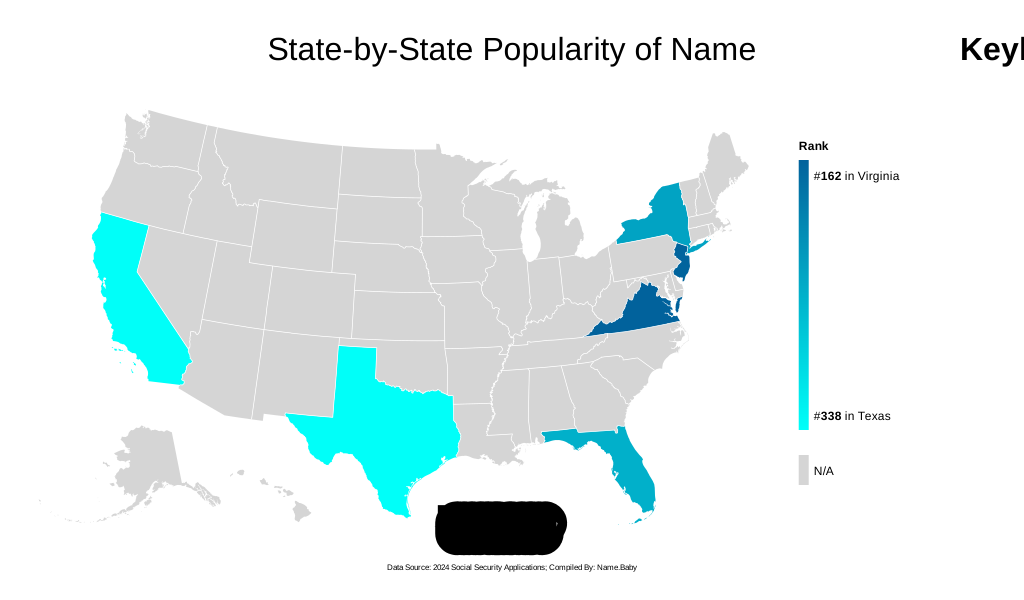
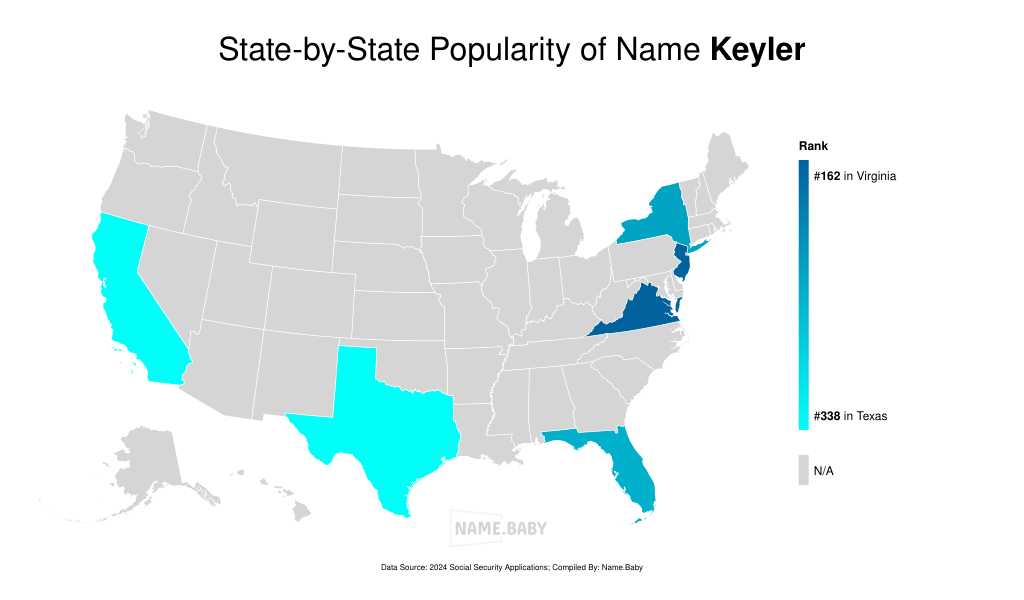
States Popularity Chart
Notable People Named Keyler
| Keyler García - |
