Kiansh
Meaning of Kiansh
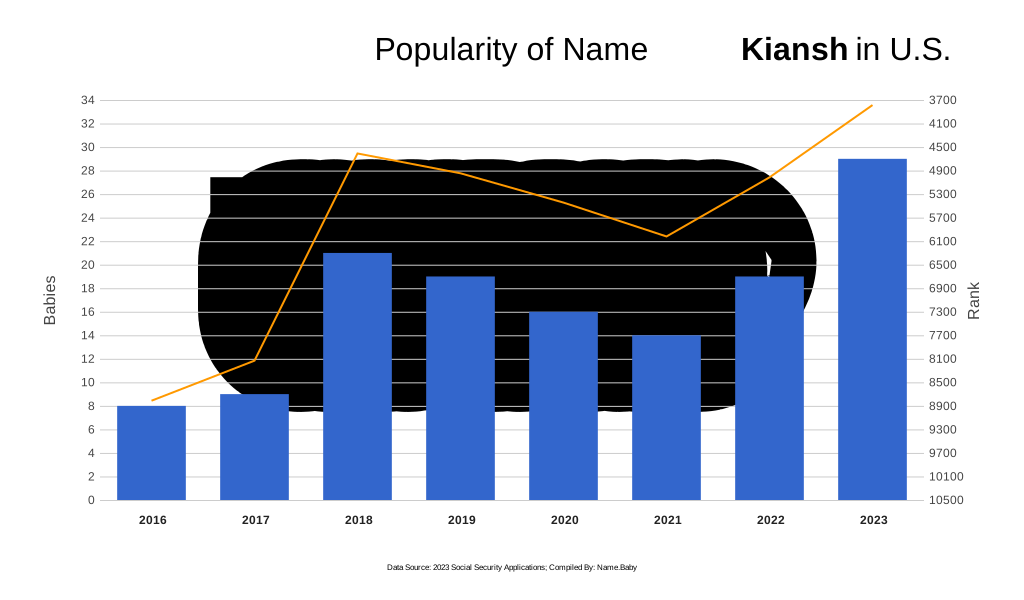
Kiansh, a masculine name drawn from the ancient weave of Sanskrit, marries kian—“grace of the divine”—with ansh—“fragment”—to evoke a single moonbeam distilled upon a dewy maple leaf in a Kyoto temple garden. Pronounced kee-AHN-sh (/kiːˈɑnʃ/), it glides across the tongue like a silent waterfall, cool yet insistent. Though still a rare blossom in American naming gardens—rising gently from eight newborns in 2016 to twenty-five in 2024—it carries a quiet assurance that defies the clamor of passing fads (for this is not the cry of a playground sloganeer). With its blend of celestial intimacy and Japanese minimalism, Kiansh stands as a contemplative token of ancestral grace and unfolding possibility.
Pronunciation
Indian (Hindi)
- Pronunced as kee-AHN-sh (/kiːˈɑnʃ/)
U.S. Popularity Chart