Kikue
Meaning of Kikue
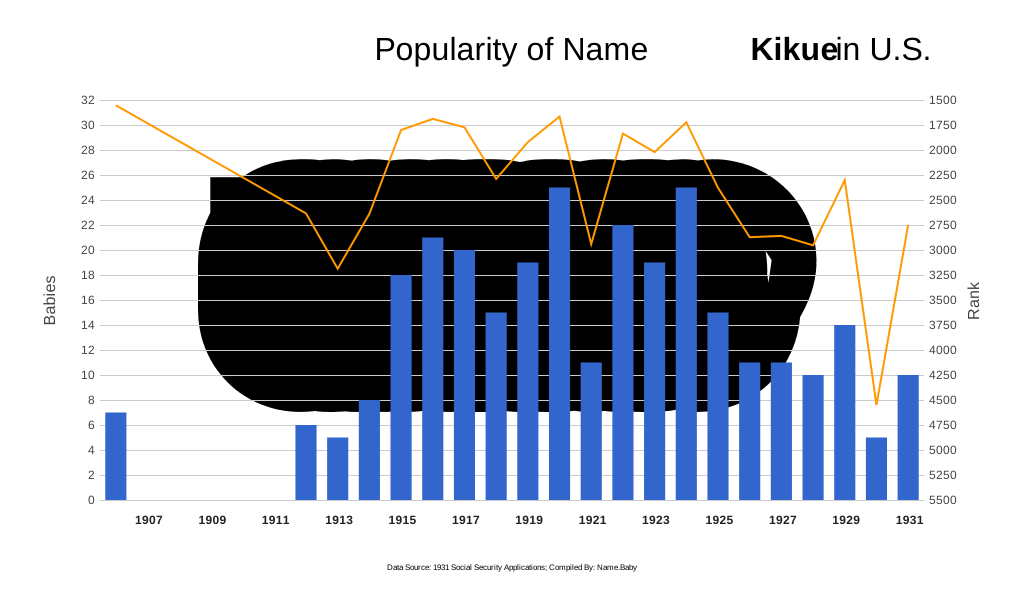
Kikue (Japanese pronunciation kee-KOO-eh, /kiːkuːe/) is a feminine Japanese given name formed from the kanji 菊 (kiku), “chrysanthemum,” and 枝 (e), “branch,” semantically yielding “chrysanthemum branch” and precisely reflecting the flower’s elevated status in Japanese cultural symbolism. Within the structured field of traditional Japanese onomastics, where the chrysanthemum is venerated as the Imperial seal and celebrated during the Chrysanthemum Festival (Kiku no Sekku), the motif denotes longevity, nobility, and the autumnal transition, attributes systematically encoded within the name’s morphological composition. Although it remained uncommon outside Japan, Social Security Administration records indicate that Kikue achieved modest recognition in the United States during the early twentieth century, peaking at seven occurrences in 1906 (rank 353) and exhibiting sporadic entries throughout the 1910s and 1920s, with ten instances (rank 580) documented in 1931. In contemporary Anglo-American naming contexts, Kikue offers technical precision, a cool aesthetic, and cross-cultural depth, rendering it an analytically intriguing and distinctively elegant choice for a female given name.
Pronunciation
Japanese
- Pronunced as kee-KOO-eh (/kiːkuːe/)
U.S. Popularity Chart
Notable People Named Kikue
| Kikuë Tachibana - |
