Lacee
Meaning of Lacee
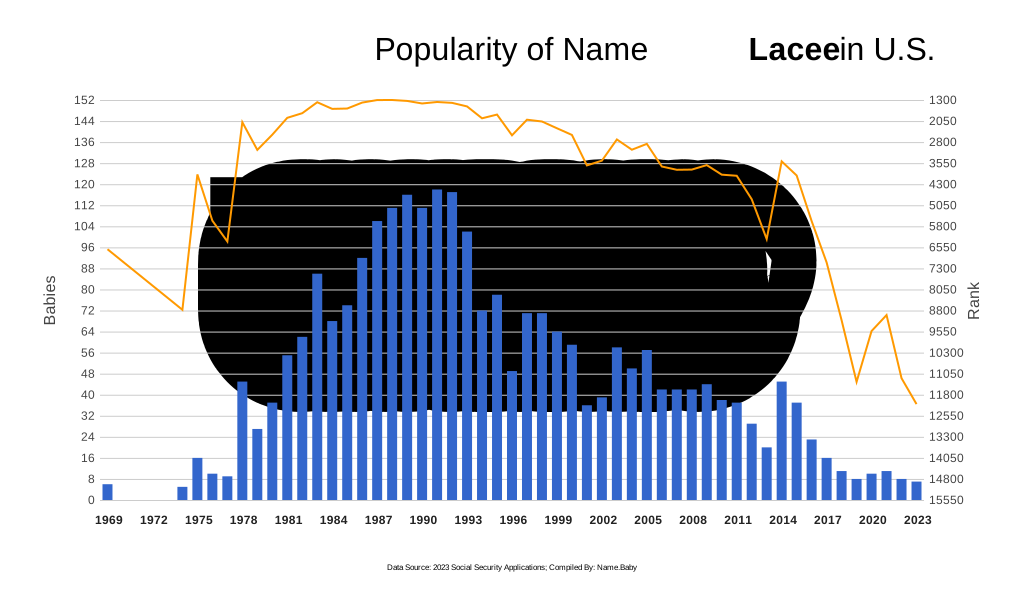
In the tapestry of contemporary American nomenclature, Lacee emerges as a feminine given name of Norman French origin, descending from the medieval surname de Laci—itself a toponymic testament to the village of Lassy in Normandy—and has evolved into a modern variant that phonetically unfolds as LAY-see (/leˈsi/). As a linguistic motif, Lacee conjures the delicate resilience of lace, the entwined filaments of artisanal filigree that mirror the intricate “encaje” of Spanish courtship veils and the enduring bonds of familia, evoking sun-dappled courtyards in colonial haciendas. Although its statistical presence in the United States remains modest—five occurrences in 2024, ranking 945th in popularity—its undulating trajectory over recent decades reveals a pattern of rediscovery, as parents seek appellations that harmonize vintage gravitas with contemporary orthographic flourish. From an academic perspective, Lacee exemplifies the dynamic interplay between onomastic heritage and modern innovation, weaving historical resonance into the present moment with an elegance as refined as its silken namesake.
Pronunciation
American English
- Pronunced as LAY-see (/leˈsi/)
U.S. Popularity Chart