Laquan
Meaning of Laquan
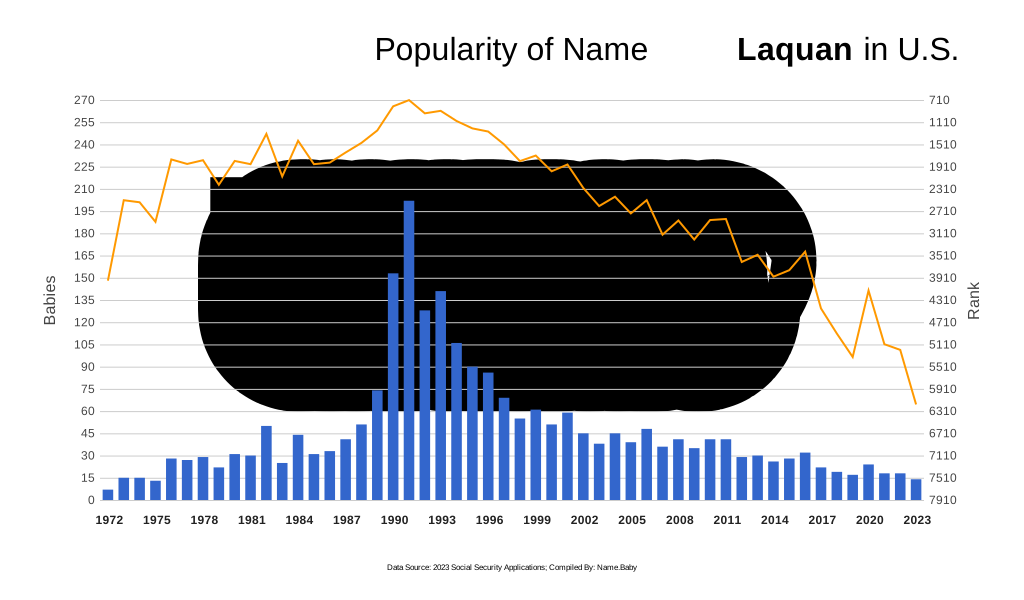
Laquan emerges like a moonlit poem whispered through bamboo groves—its two syllables, pronounced luh-KWAN, resonating with the cool grace of a lantern’s glow upon still water—born not of ancient tomes but of the creative impulse that courses through African-American naming traditions. First murmured by just seven newborn voices in 1972, it rose to a crest of fifty-nine in the early 2000s before settling into a steady refrain of around a dozen introductions each year, its national rank hovering near the nine-hundredth mark in 2024—a modest arc that speaks to a quietly enduring allure. Though it has never stormed the charts like an office karaoke champion belting anthems, Laquan’s sparse yet deliberate cadence suggests strength tempered by elegance, as if each utterance carries a folded fan’s promise of serenity and hidden depth. In its very essence it bridges past and future, weaving individual identity into the broader tapestry of American life with the refined restraint of wabi-sabi—beautiful in its imperfection, lyrical in its simplicity.
Pronunciation
African American English
- Pronunced as luh-KWAN (/ləˈkwɑn/)
U.S. Popularity Chart