Mael
Meaning of Mael
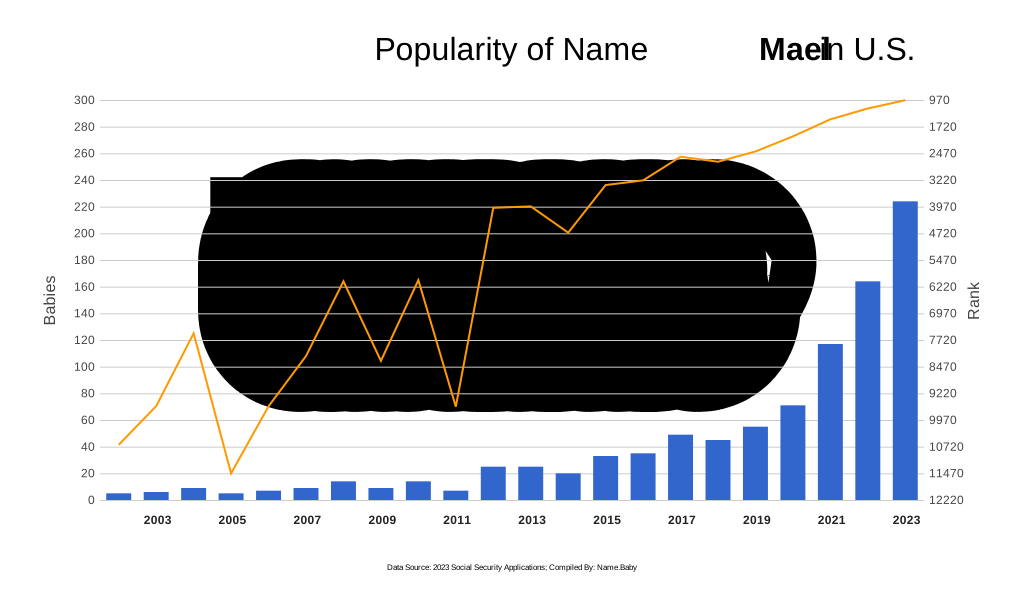
Mael, a masculine forename of Breton and more broadly insular Celtic provenance, derives from the Old Breton element “mael,” signifying “prince,” “chieftain,” or, in some ecclesiastical contexts, “devotee,” an etymology that situates the name within the sociopolitical structures of early medieval Brittany and Wales. Historically, its stature is burnished by Saint Mael, a fifth-century monk reputed to have journeyed with Saint Cadfan from Armorica to the British Isles, thereby lending the appellation an enduring hagiographic resonance. Contemporary usage in the Francophone world retains the diacritic form Maël, pronounced mah-EL, while English-language registers often forgo the accent without altering the phonetics. In the United States, the name’s quantitative trajectory—rising from single-digit annual occurrences at the turn of the millennium to over two hundred births in 2024—illustrates a gradual, data-validated diffusion from regional curiosity to understated mainstream acceptance, a pattern consistent with the broader American receptivity to succinct, vowel-forward Celtic imports.
Pronunciation
French
- Pronunced as mah-EL (/maɛl/)
U.S. Popularity Chart
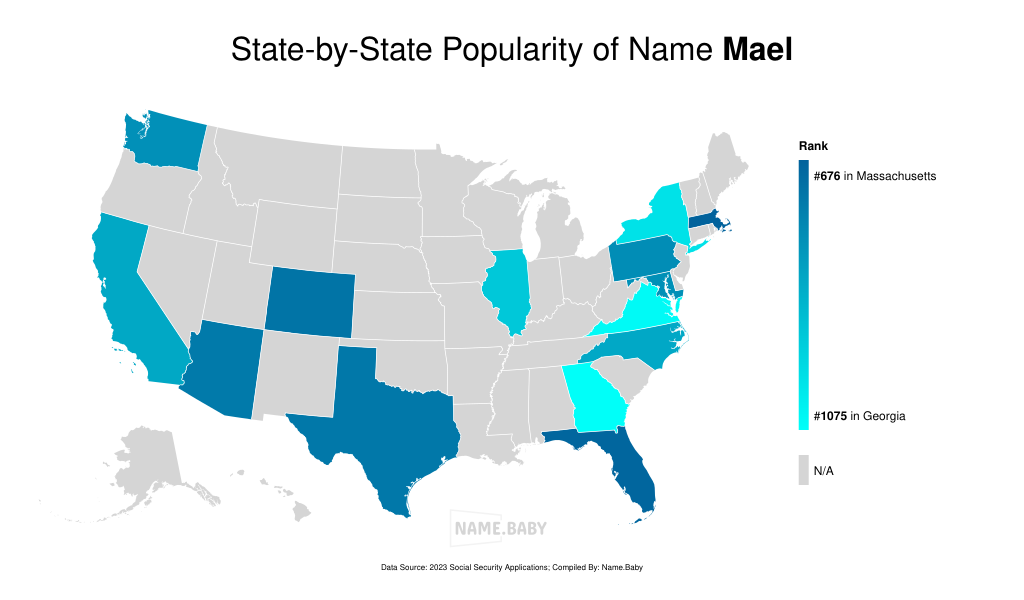
States Popularity Chart
Similar Names to Mael
Notable People Named Mael
| Mael Corboz - |
| Maël Henry - |
| Maël Lépicier - |
