Mandra
Meaning of Mandra
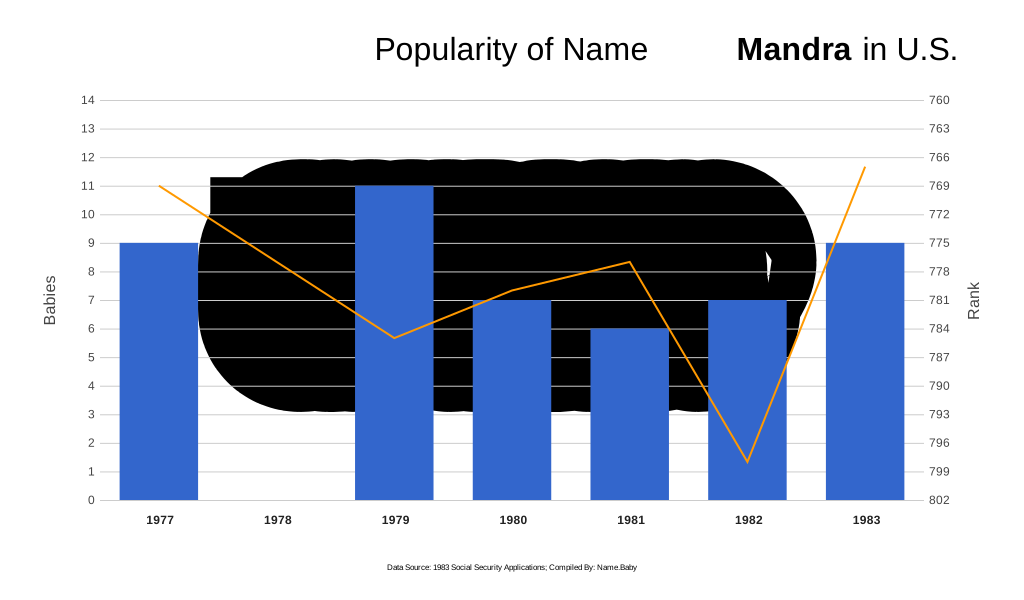
Mandra arrives like a soft breeze across a sun-dappled piazza, her syllables weaving through olive groves and echoing within ancient stone walls. Born from the Greek mandra, meaning “enclosure” or “safe haven,” she later sailed the Mediterranean in the hearts of Latin poets, painted as a guardian of secret courtyards and moonlit fountains. Pronounced MAN-druh, the name carries the warm solidity of a shepherd’s fold and the subtle intrigue of a hidden garden—magic, yet without any need for a mandrake’s midnight howl. In the United States, Mandra made a modest debut in the late 1970s, gracing birth records with occasional appearances—peaking at nine newborns in both 1977 and 1983—before settling into a charming rarity. She evokes qualities of steadfast protection and quiet curiosity, inviting each child who bears her to become a storyteller weaving her own legends. Like the gentle arc of a terracotta amphora, Mandra suggests heritage, heart, and the promise of new stories waiting to be told.
Pronunciation
- Pronunced as MAN-druh (/ˈmæn.drə/)
U.S. Popularity Chart