Master
Meaning of Master
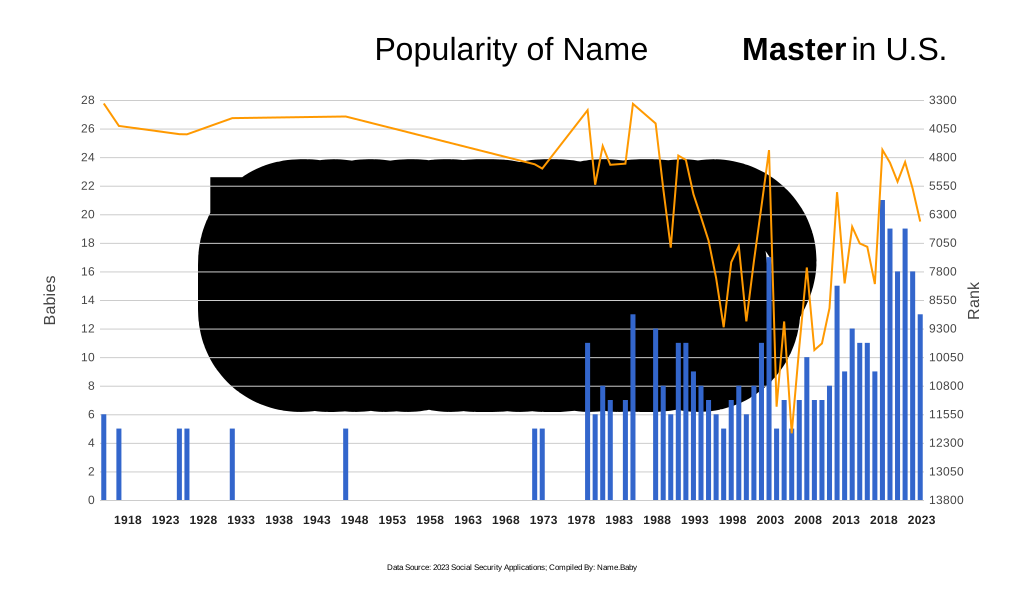
Master, rooted in the Latin magister (“teacher, chief”) and its Old English descendant, originally functioned as a formal title before evolving into a distinctive given name among Anglo-American families. Pronounced MASS-ter (/ˈmæstər/), the two-syllable appellation conveys a crisp assurance that is at once authoritative and inviting; US Social Security records note its modest but steady presence—7 uses in 2024, ranking 917th—suggesting a quiet revival rather than a mass embrace. Though it evokes the image of a seasoned artisan or commanding instructor, the modern bearer sidesteps any risk of self-important pomposity, since neither diplomas nor apprenticeships are strictly required to carry the name—though it may set an unspoken expectation of excellence. For parents who cherish both historical gravitas and contemporary flair, Master offers a warmly aspirational choice: a gently commanding moniker that honors tradition, encourages individual mastery, and delivers a wry, dry-witted nod to lifelong learning.
Pronunciation
English
- Pronunced as MASS-ter (/ˈmæstər/)
U.S. Popularity Chart


Notable People Named Master
| Master P - |
