Mezziah
Meaning of Mezziah
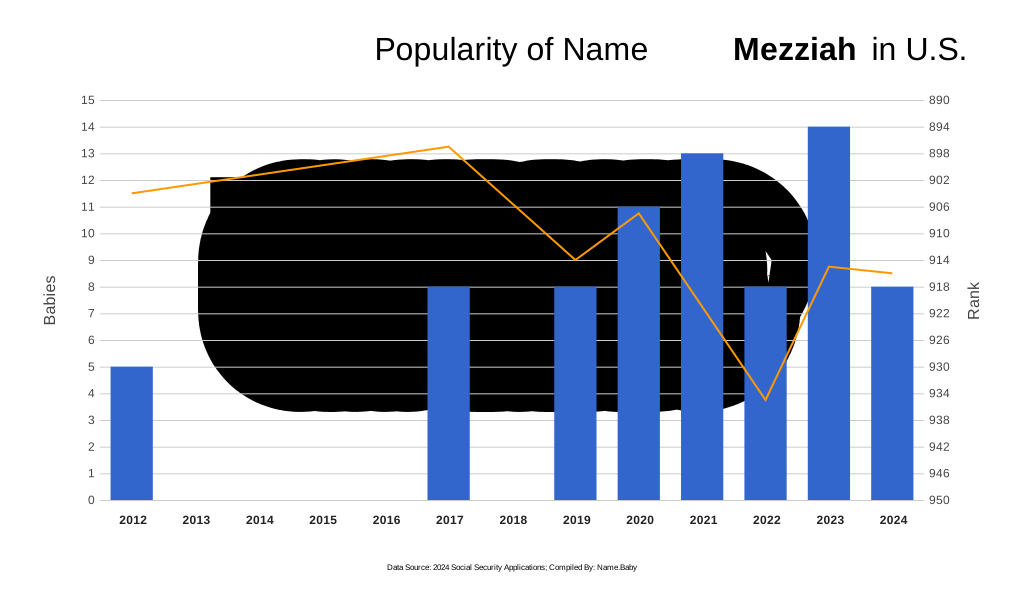
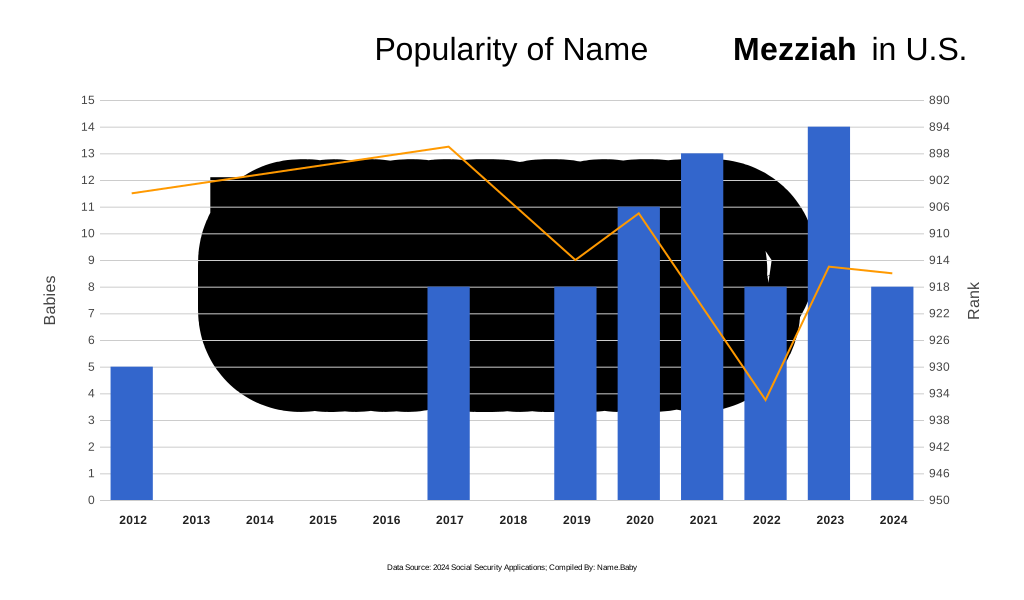
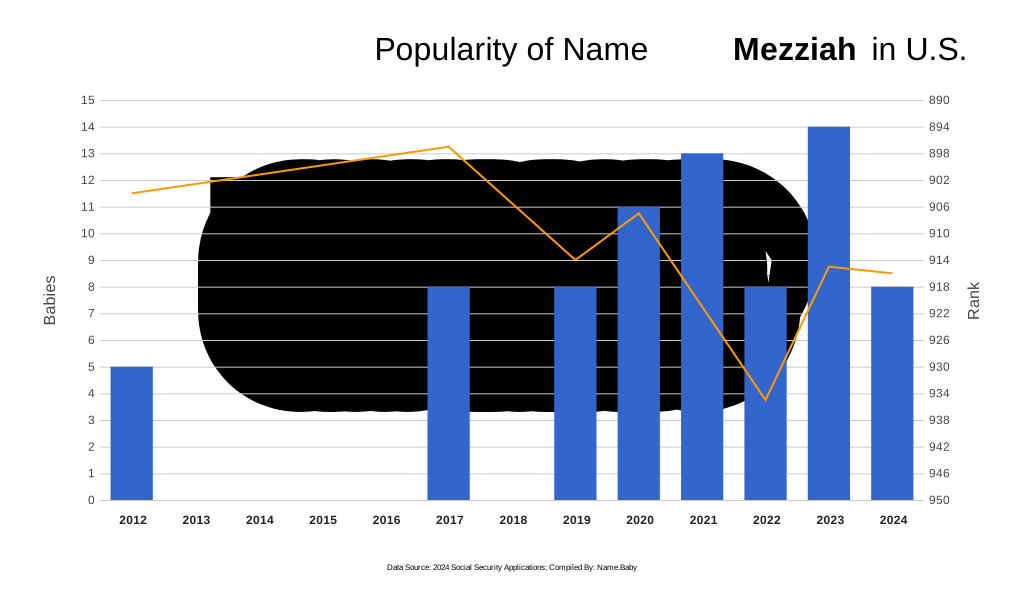
Mezziah emerges like a whispered sonnet drifting over the rolling hills of Tuscany, its very syllables a passionate fusion of Italian flair and sacred resonance: from mezzo, “middle” or “measure,” it inherits a sense of graceful balance, and through the Hebrew-tinged suffix –iah, it carries a breath of the divine. Though its origins dwell more in the realm of modern invention than in ancient tomes, Mezziah feels timeless—anointed with the warmth of a late-summer sunset and poised at the fulcrum between tradition and novelty. In the United States, it has slipped quietly into the Top 1,000 just enough to be cherished—first glimpsed modestly in 2012, and appearing eight times among newborn boys in 2024 at rank 916—each small cluster of families drawn to its lyrical promise of harmony and heartfelt distinction. Like a hidden sonata that surfaces only for those with attuned ears, Mezziah invites its bearer to stand at the center of beauty and purpose, a living testament to balance, artistry, and the gentle power of a name both rare and radiant.
Pronunciation
English
- Pronunced as meh-ZY-uh (/məˈzaɪə/)
U.S. Popularity Chart