Mikayah
Meaning of Mikayah
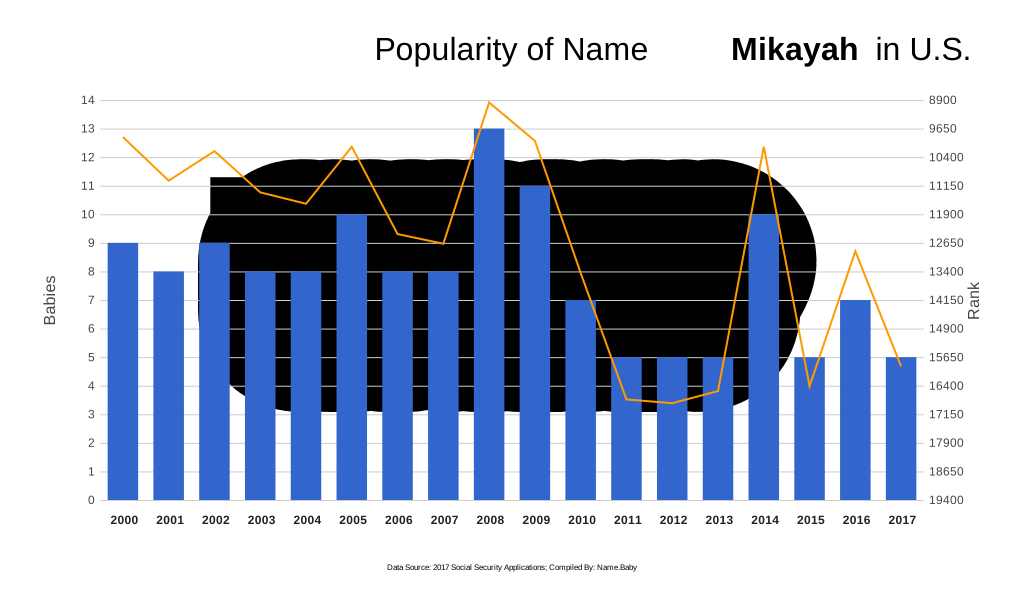
Mikayah, pronounced mih-KAY-uh (/mɪˈkeɪə/), unfolds as a modern feminine elaboration of the ancient Hebrew name Micah—literally “Who is like God?”—weaving a tapestry of theological inquiry and personal distinction into each carefully enunciated syllable. Linguistically, it exhibits the consonantal symmetry and morphological feminization characteristic of Romance onomastic patterns, its terminal –ah echoing the hushed liturgy of Latin-inflected tongues. Though its annual occurrence in the United States has hovered between five and thirteen newborns from 2000 to 2017, yielding ranks near the 900th position, this modest frequency belies a warm desirability among families seeking both biblical resonance and melodic originality. Figuratively speaking, Mikayah is a whispered invocation amid the din of more ubiquitous appellations—a name that, like a fresco unveiled in a sunlit courtyard of Andalucía, reveals fresh hues of devotion and strength to those attuned to its subtleties. In academic terms, its steady, if niche, presence underscores the enduring allure of names that balance etymological gravity with phonetic grace—a balance that, once heard, is difficult to overlook.
Pronunciation
English
- Pronunced as mih-KAY-uh (/mɪˈkeɪə/)
U.S. Popularity Chart