Mikel
Meaning of Mikel
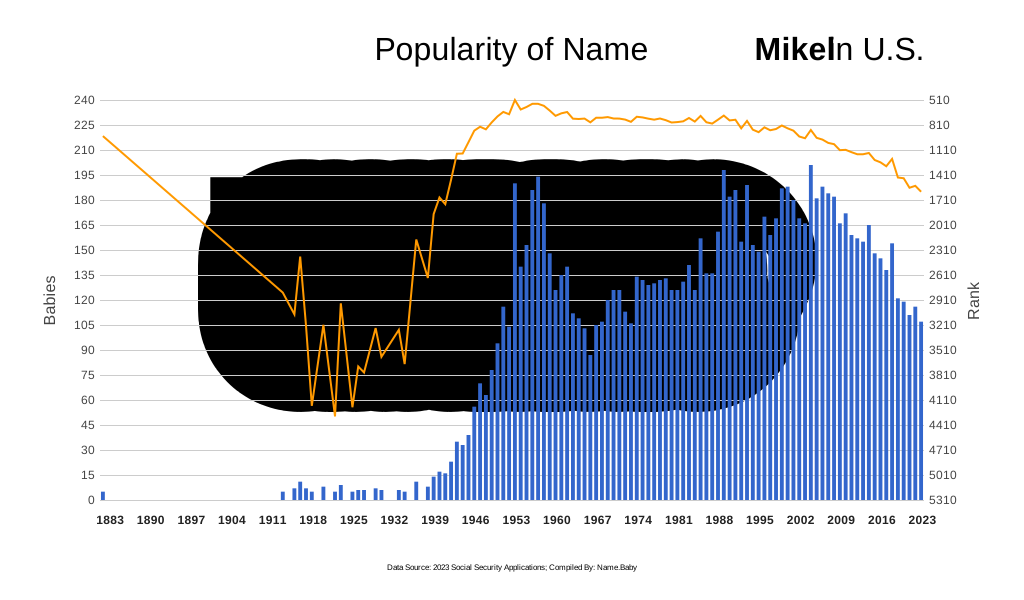
Mikel, pronounced MY-kəl, represents a Basque and northern European orthographic adaptation of the Hebrew name Michael (מִיכָאֵל), the theophoric question “Who is like God?” that has underpinned a millennia-long tradition of Judeo-Christian personal nomenclature; in the Anglo-American sphere, the spelling first entered official U.S. birth records near the turn of the twentieth century and, while never rivaling the canonical form in absolute frequency, maintained an unbroken presence inside the Social Security Administration’s Top 1,000 from the early 1940s onward, peaking at rank 521 in 1974 before settling into the lower mid-range—ranks 700 to 850—during the twenty-first century’s opening decades. This measured yet durable usage profile suggests that parents who select Mikel often seek a familiar biblical meaning coupled with a streamlined, internationally legible spelling, a preference reinforced by contemporary cultural references such as Spanish football manager Mikel Arteta and Basque singer-songwriter Mikel Erentxun, which collectively situate the name at the intersection of traditional religious resonance and modern cosmopolitan identity.
Pronunciation
English
- Pronunced as MY-kul (/ˈmaɪkəl/)
U.S. Popularity Chart
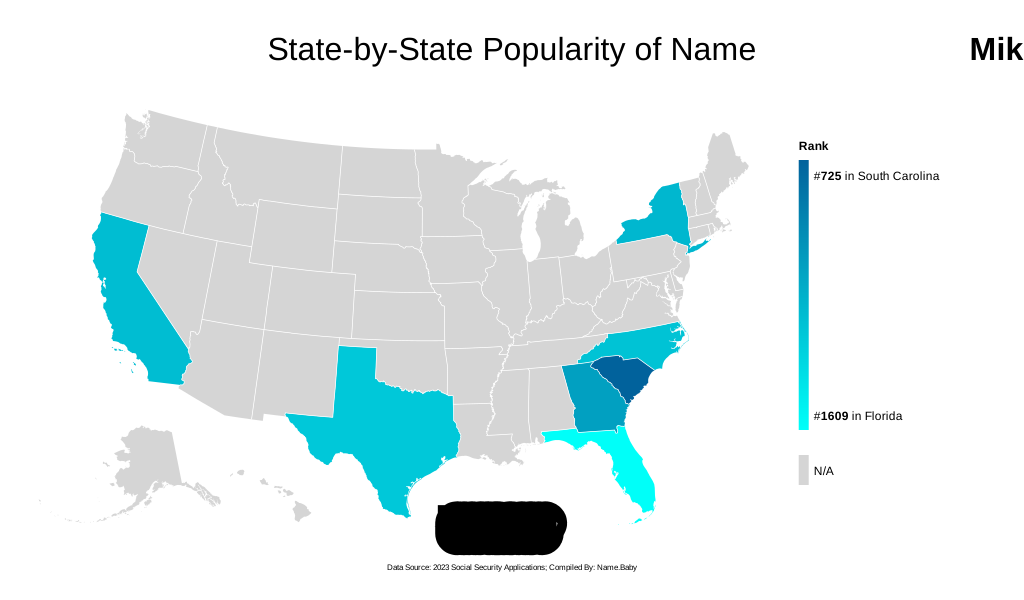
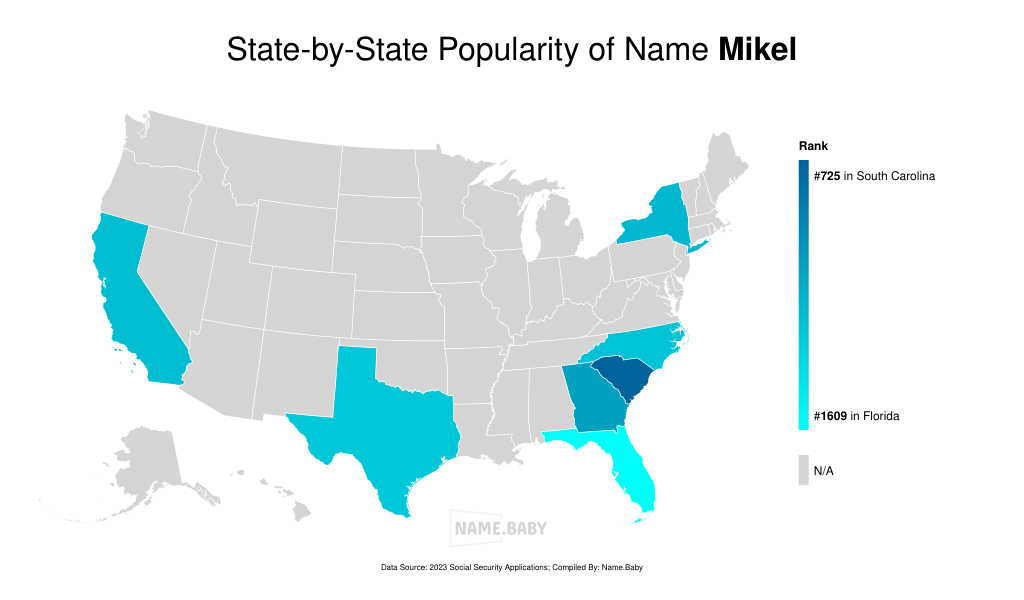
States Popularity Chart
Notable People Named Mikel
| Mikel Arteta is a Spanish football manager and former player who manages Arsenal in the Premier League. |
| Mikel John Obi is a Nigerian former professional footballer known for playing as a defensive midfielder. |
| Mikel Oyarzabal is a Spanish forward who captains Real Sociedad and plays for Spain's national team. |
| Mikel Agu is a Nigerian footballer known for playing as a defensive midfielder and centre back. |
| Mikel Lejarza Ortiz is a Spanish audiovisual producer who became president of A3 Films in 2010. |
