Myasia
Meaning of Myasia
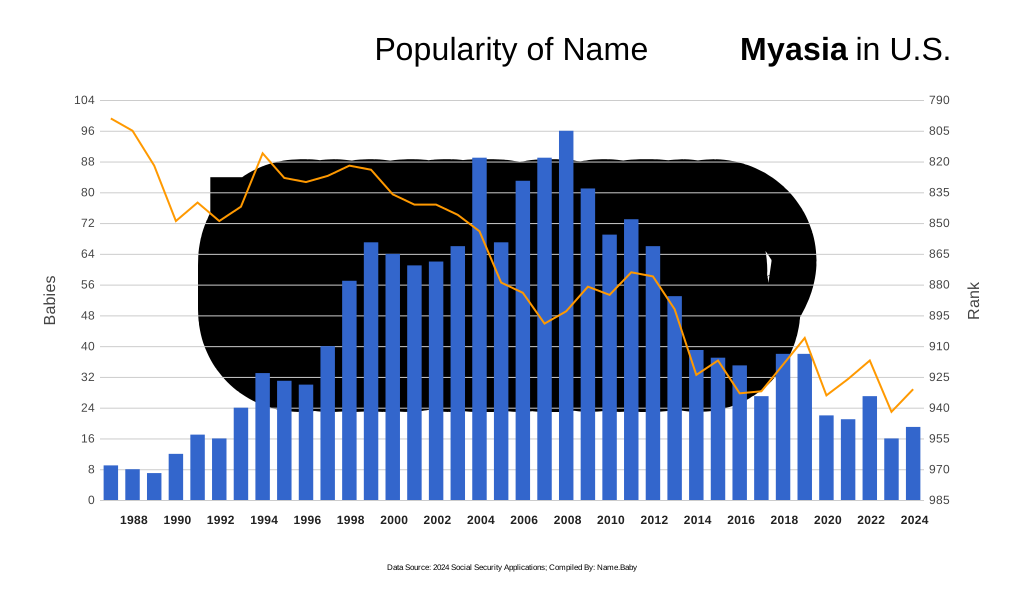
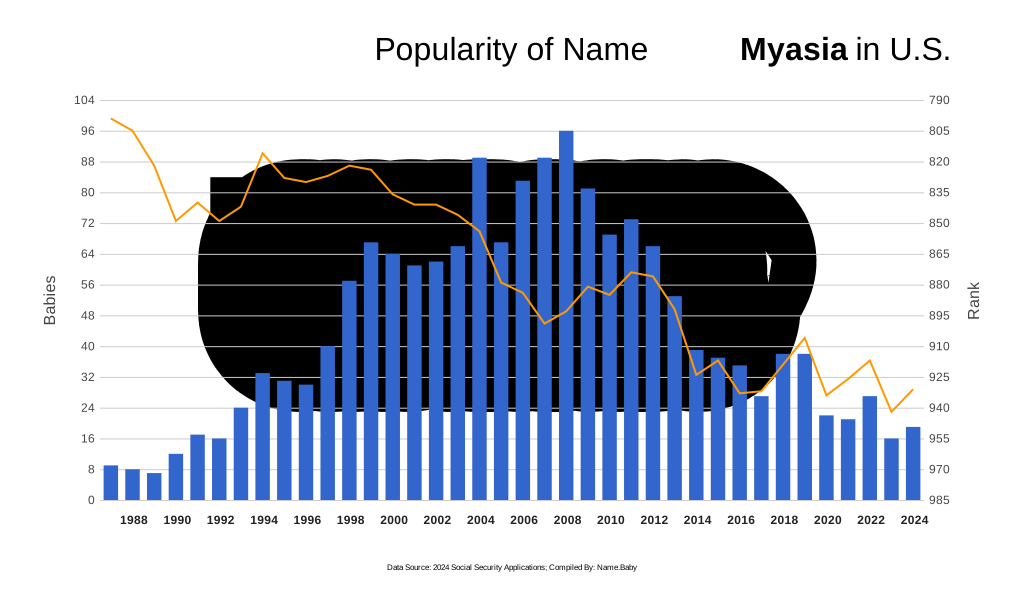
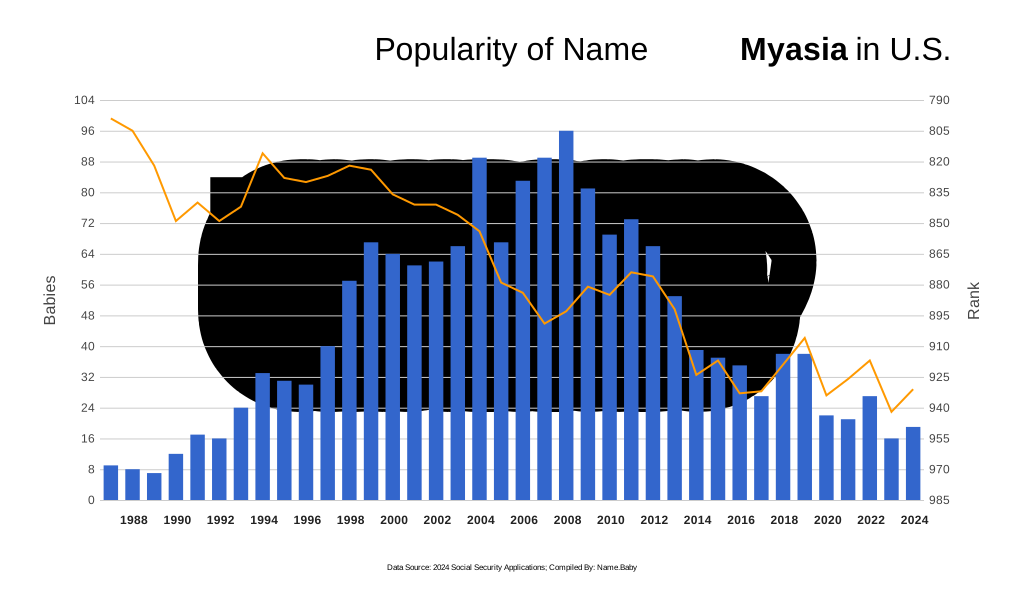
Myasia, eloquently enunciated my-AY-zhuh (/maɪˈeɪzjə/), represents a neoclassical amalgam that entwines the tender intimacy of the possessive pronoun “my” with the vast, sunlit heritage of “Asia,” whose name in ancient Greek was poetically associated with the dawn of civilization. This appellative fusion unfolds like the first light of morning—simultaneously personal and planetary—bestowing upon its bearer a name at once intimate and expansive. Its mellifluent cadence, imbued with the fluid undulations of Spanish prosody, evokes the dulcet warmth of Latin sonority while preserving an academic rigor in its layered etymology. By echoing the resonance of Maya—invoking both the maternal grace of the Roman goddess Maia and the verdant mystique of the Central American civilization—Myasia attains a polymorphic depth, a lexicon of cultural confluences. According to the U.S. Social Security Administration, this name has charted a steadfast presence among newborn girls since the late 1980s, ascending from a modest rank of 822 in 1989 to its current station at 931 in 2024, an enduring testament to its capacity to weave erudition and affectionate resonance into a single, harmonious utterance.
Pronunciation
English
- Pronunced as my-AY-zhuh (/maɪˈeɪzjə/)
U.S. Popularity Chart