Nain
Meaning of Nain
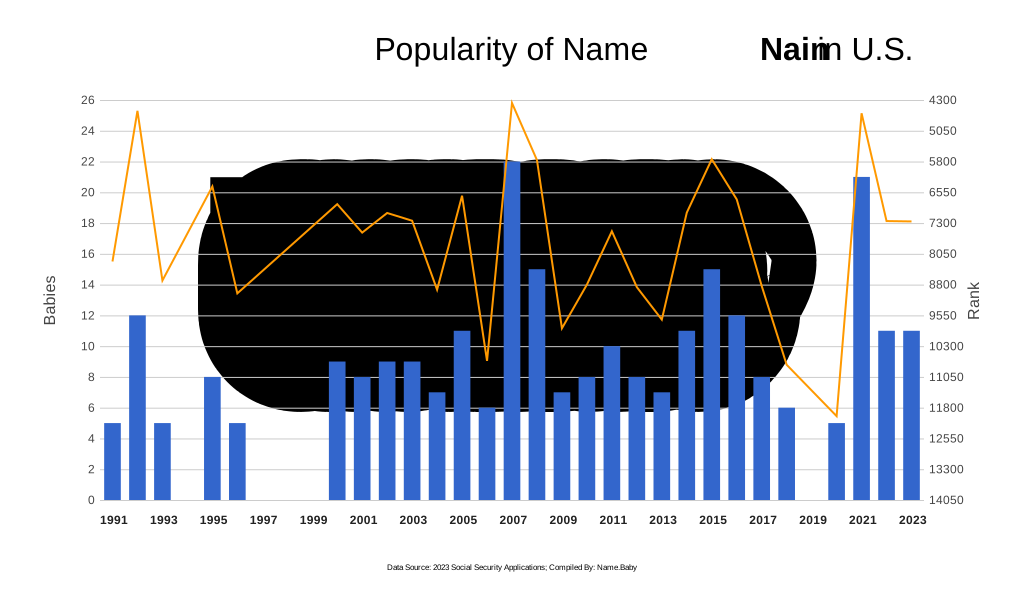
As a masculine appellation, Nain, pronounced NAYN (/neɪn/), traces its lineage to the Hebrew נַעִין, “pleasant,” evoking a gentle disposition, yet its crystalline consonantal form resonates with the concinnity praised by Latin rhetoricians. Woven into the New Testament narrative as the Galilean village where compassion transmuted sorrow, it confers an aura of classical antiquity as weighty as a marble column plucked from the ruins of Pompeii. Rare in contemporary civil registries—granted to a mere 18 American newborns in 2024, holding around the 906th rank after decades of discreet oscillations—Nain stands apart like a solitary cypress in an Italian piazza, elegant in its reticence and hardly the choice of those craving the limelight. In the scholarly field of onomastics, it exemplifies how a single syllable can bear the freight of centuries; a compact vessel of cultural memory. Parents embracing Nain thus bestow upon their son a name both erudite and exquisitely singular, though one suspects his attendance roster will provoke more furrowed brows than fanfare—a modest destiny perhaps, yet entirely fitting for a name of such quiet grandeur.
Pronunciation
English
- Pronunced as NAYN (/neɪn/)
U.S. Popularity Chart
Similar Names to Nain
Notable People Named Nain
| Nain Singh - |
| Nain Singh Thapa - |
