Naman
Meaning of Naman
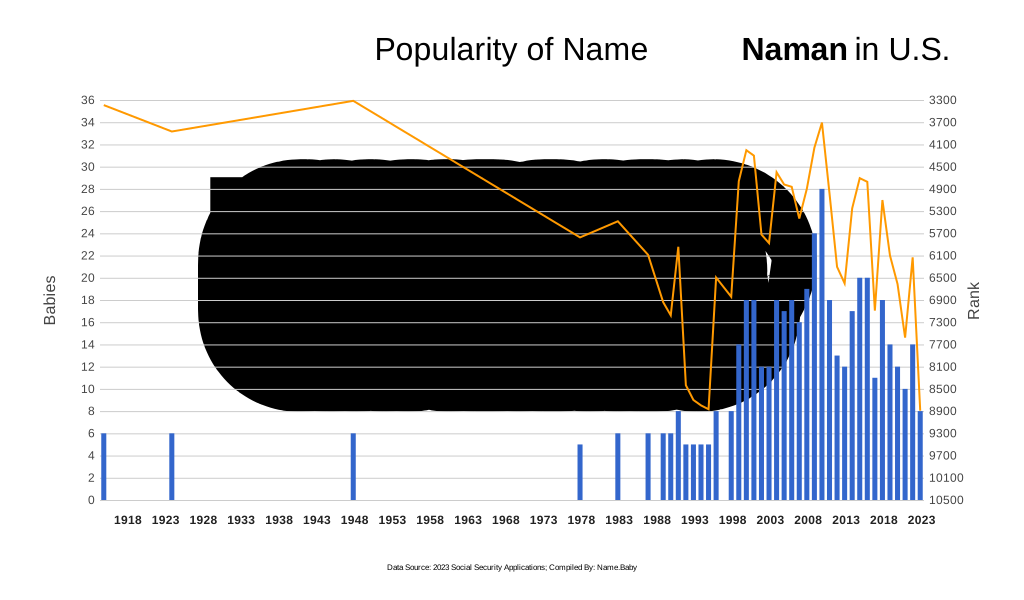
As a male given name, Naman, derived from the Sanskrit noun “namanam” meaning “salutation” or “reverential obeisance,” resonates in both Hindi and Sanskrit with the pronunciation /ˈnɑːmən/. Its etymology conjures the ritualistic gesture of bowing—gestus reverentiae—that signifies humility and communal respect, embodying a symbolic fulcrum at the heart of South Asian cultural praxis. This bisyllabic appellation, marked by phonetic symmetry, reveals cross-linguistic adaptability that has underpinned its gradual adoption beyond the subcontinent. United States Social Security Administration data document its sustained presence within the top 1,000 male names since the early 20th century, culminating in a rank of 903 in 2024—a testament to its steady ascent among diasporic communities. Through its semantic resonance and historical lineage, Naman synthesizes ancient Vedic tradition with contemporary global sensibilities, rendering it at once venerable and vivacious.
Pronunciation
Indian (Hindi)
- Pronunced as NAH-mahn (/ˈnɑːmən/)
Sanskrit
- Pronunced as NAH-muhn (/ˈnɑːmən/)
U.S. Popularity Chart
Notable People Named Naman
| Naman Ahuja - |
| Naman Ojha - |
| Naman Keïta - |
| Naman Tanwar - |
| Naman Shaw - |
| Naman Patel - |
| Naman Bixal Kongari - |
