Onie
Meaning of Onie
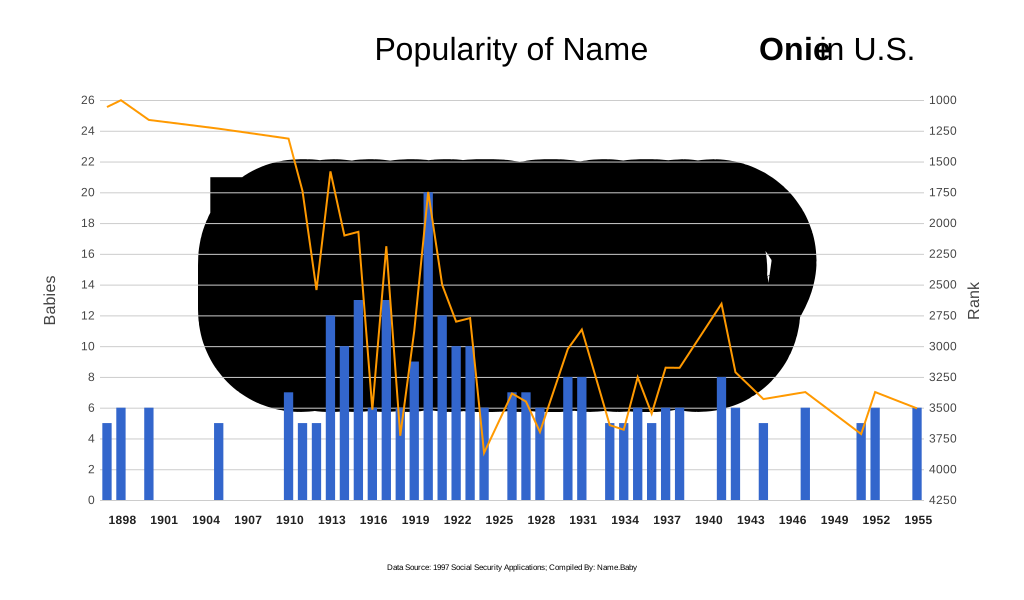
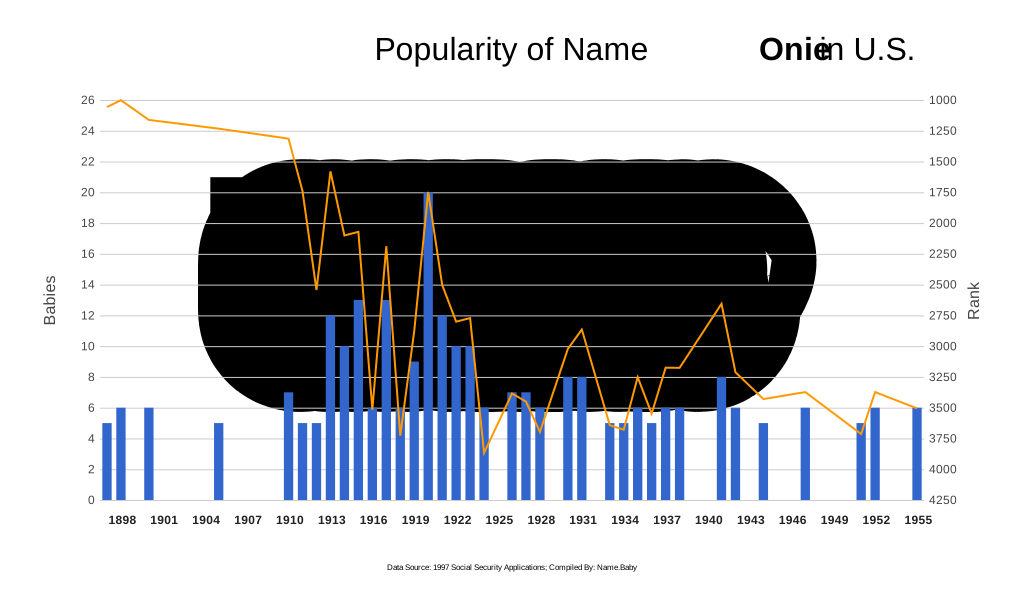
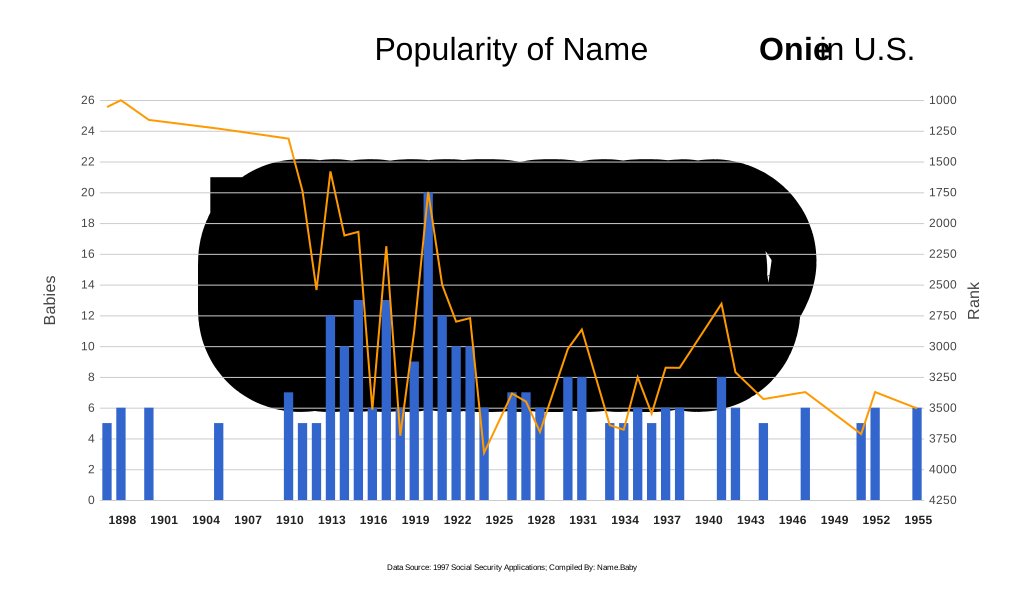
Onie, pronounced OH-nee (/ˈoʊni/), originated as an English diminutive that detached itself from several longer forenames—most notably the Greek Ione (“violet”), the French-Latin Leonie (“lion-like”), and the early-Christian Onesimus (“useful”)—thereby creating a free-standing, semantically versatile unit. Because the resulting phonological shape is gender-neutral, historical records in the United States display a unisex pattern of use: Social Security data reveal a modest but continuous presence from the late nineteenth century through the mid-1950s, peaking at twenty documented births in 1920 and rarely straying far from a rank in the 500s. Cultural associations remain discreet; the most visible bearer is the American country musician Onie Wheeler (1921–1984), yet the name’s quieter legacy resides in family trees where it served as a concise, affectionate substitute for its longer antecedents. Phonetically, the open initial vowel followed by a soft nasal and palatal glide grants the name a mellifluous, almost pastoral cadence that modern parents often seek in reviving “antique” appellations. Consequently, Onie occupies a liminal space: academically traceable to classical and biblical roots, historically attested for both sexes, and stylistically positioned to satisfy contemporary tastes for brevity tempered by subtle depth.
Pronunciation
British English
- Pronunced as OH-nee (/ˈəʊni/)
American English
- Pronunced as OH-nee (/ˈoʊni/)
U.S. Popularity Chart
Notable People Named Onie
| Onie Wheeler - |
