Parnika
Meaning of Parnika
Parnika, a mellifluous blossom drawn from the ancient wellspring of Sanskrit, unfurls like a tender new leaf at dawn—its very syllables echoing the Japanese ideal of yūgen, that profound, ineffable grace which lies hidden beneath the surface of all things. Rooted in the image of a delicate leaf (“parṇa”), it calls to mind the gentle rustle of foliage under a pale moon, yet it carries the cool reserve of a mountain stream, as though it could slip through one’s fingers if grasped too eagerly. As an epithet of the goddess Parvati, Parnika bears within her name both quiet strength and a whisper of divine playfulness—though, in a moment of dry amusement, one might note that it sounds as much like a refined matcha blend as a goddess’s appellation. In its rarity—just twenty-six newborns claimed it in the United States in 2024—the name moves with expansive calm, inviting those who speak it to contemplate the transient beauty of a leaf drifting across a koi-limned pond.
Pronunciation
Indian (Hindi)
- Pronunced as par-NEE-kah (/pɑrˈniːkɑ/)
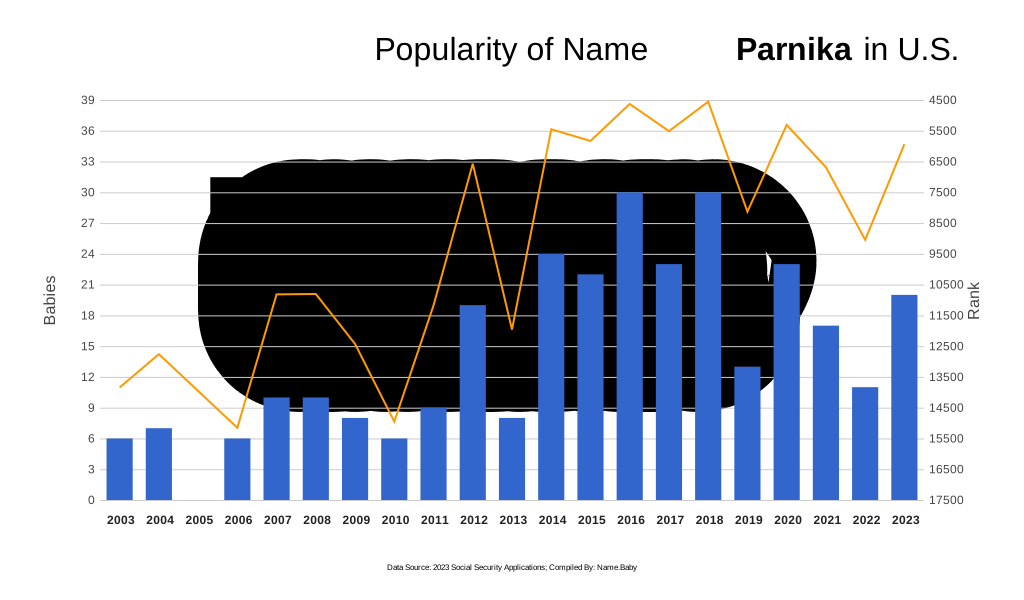
U.S. Popularity Chart
Similar Names to Parnika
