Pascual
Meaning of Pascual
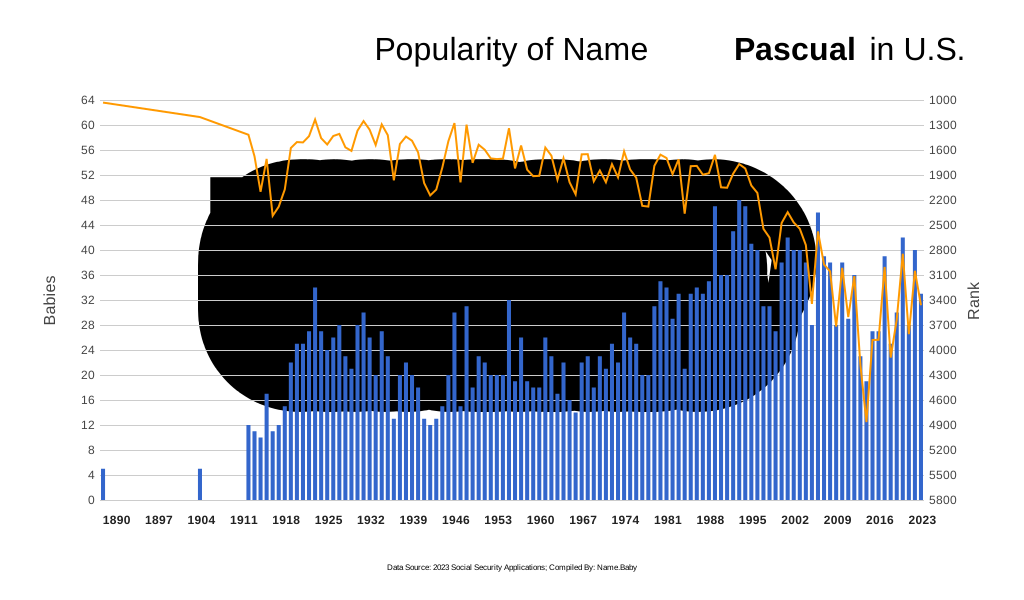
In its etymological trajectory, Pascual emerges from the Latin Paschalis—itself traceable through Greek Pascha to Hebrew Pesaḥ—denoting “pertaining to Passover or Easter,” a liturgical nexus that confers sacramental resonance. The appellation’s morphological structure, characterized by the relational suffix -ual typical of Romance-language adjectives, is complemented by its phonetic duality: Italian [paˈskwaɪ] versus Spanish [paˈskwal], each preserving a voiceless velar plosive and a rhotic-inflected vowel sequence. U.S. Social Security Administration data record a peak of relative popularity in the late nineteenth century (rank 221 in 1888), followed by a protracted descent to rank 885 in 2024, a trajectory that reflects evolving Anglo-American naming conventions amid Hispanic and Italian diasporic influences. Within onomastic analysis, Pascual is thus valued both for its precise semantic heritage and for its capacity to signal cultural identity within contemporary contexts.
Pronunciation
Italian
- Pronunced as pahs-KWAHL (/paˈskwaɪ/)
Spanish
- Pronunced as pahs-KWAL (/paˈskwal/)
U.S. Popularity Chart
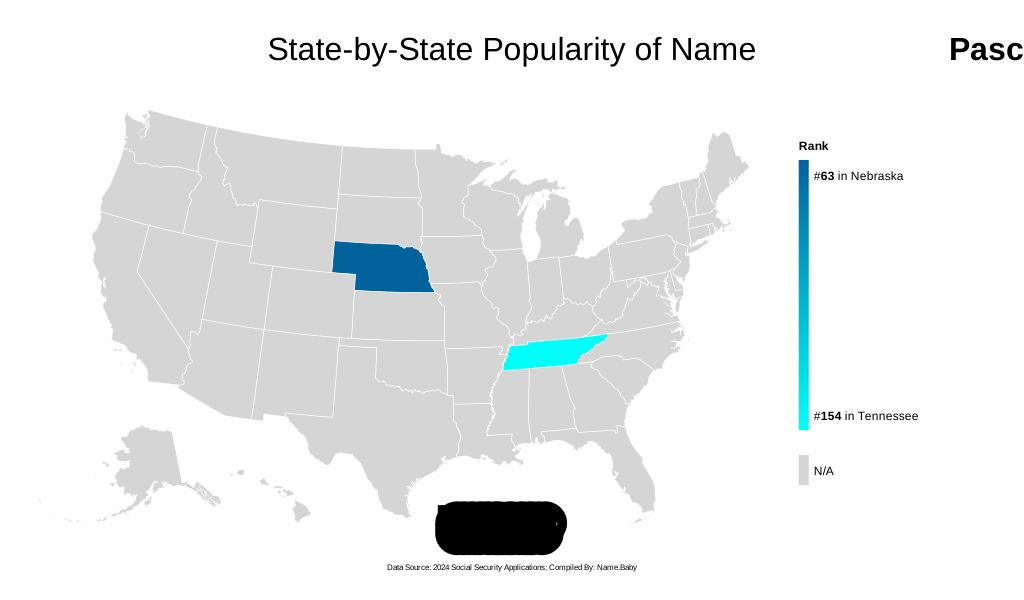
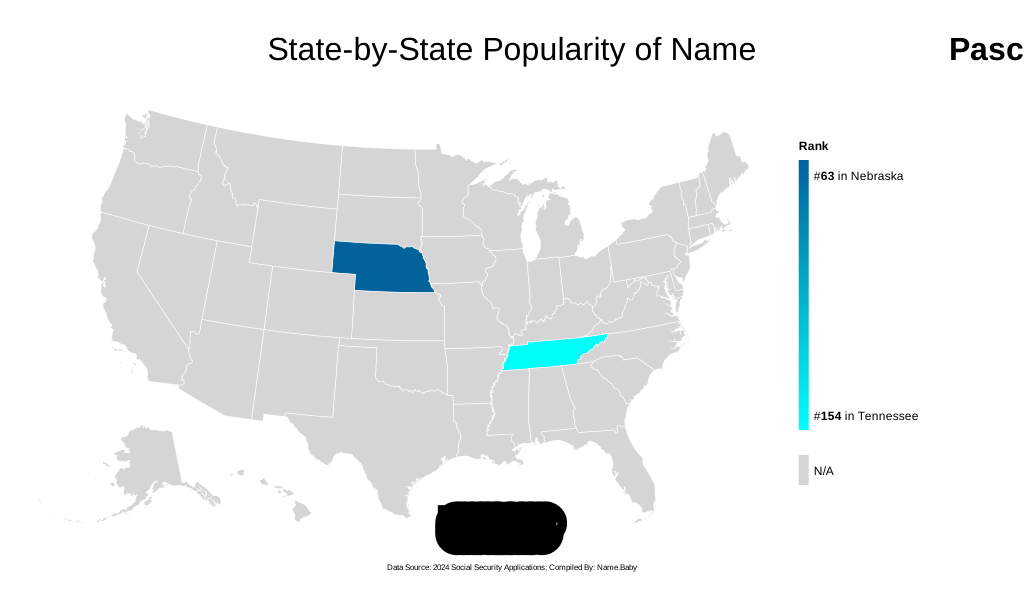
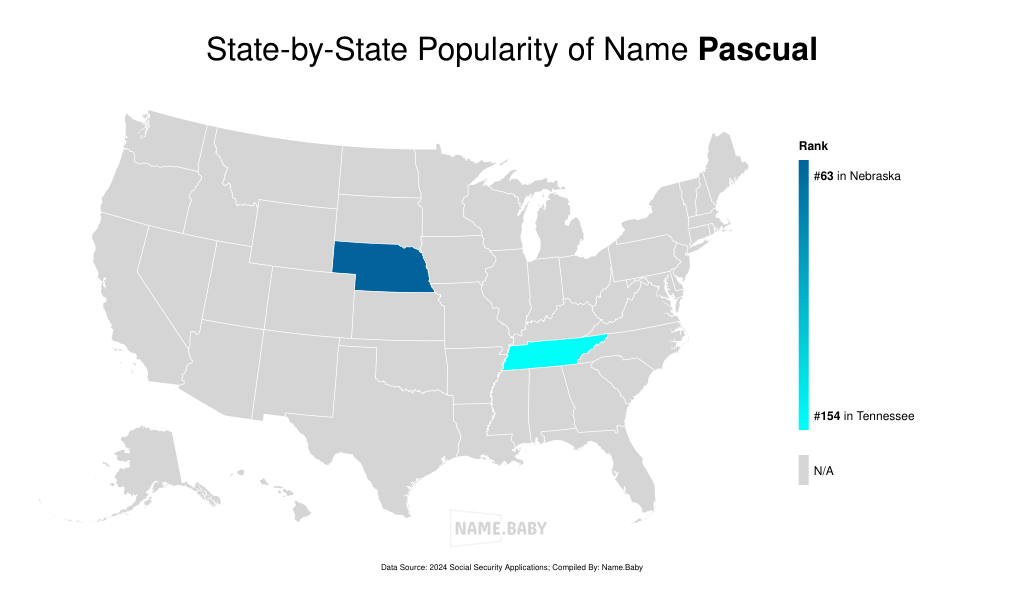
States Popularity Chart
Notable People Named Pascual
| Pascual Pérez - |
| Pascual Jordan - |
| Pascual Ortiz Rubio - |
| Pascual Pérez - |
| Pascual Fort - |
| Pascual Pistarini - |
