Phineas
Meaning of Phineas
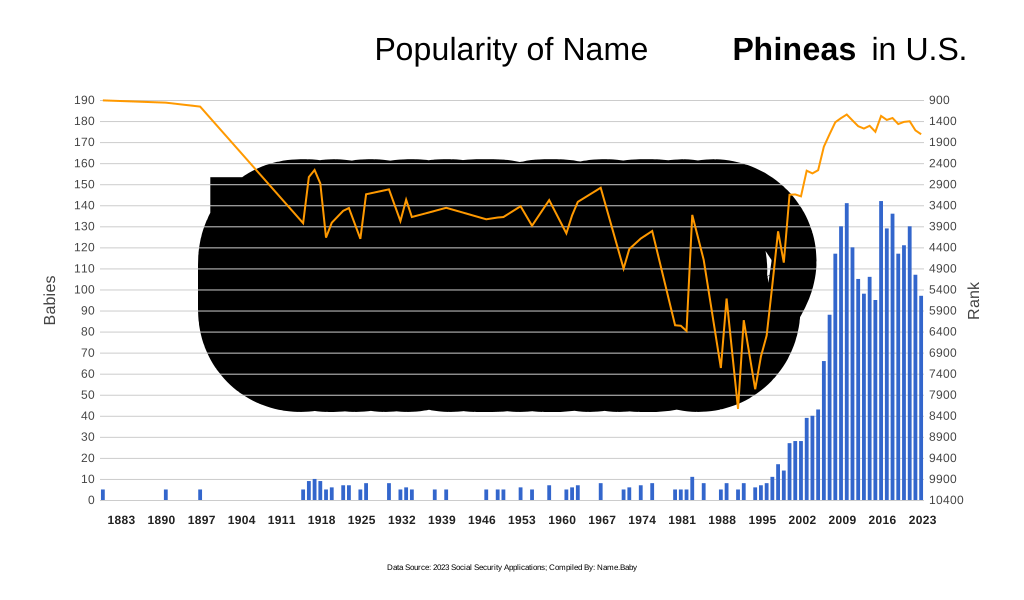
Phineas, pronounced fi-NEE-uhs, reaches modern nurseries by way of the Hebrew Pinchas—likely derived from an ancient Egyptian phrase for “dark-skinned one”—and first surfaces in the Old Testament as Aaron’s zealous grandson, a figure whose ardor for principle has given the name a faint, enduring aura of moral backbone. In Anglo-American hands it picked up a scholarly polish during the colonial period, yet, with characteristic contrariness, has rarely breached the middle reaches of the U.S. popularity charts, content instead to hover congenially around the 700–800 mark for much of the past century. Cultural references keep the embers glowing: Phineas Taylor Barnum drapes it in red-and-white circus bunting and a touch of capitalist derring-do; the indefatigable hero of Disney’s “Phineas and Ferb” recasts it in suburban technicolor; John Knowles’ tragic athlete in “A Separate Peace” lends it a note of innocence lost; and Lemony Snicket’s orphans prove it can still outwit adversity with dry wit intact. The result is a name that pairs antique gravitas with inventive sparkle—equally believable on a brass-buttoned waistcoat or a half-finished tree-house blueprint.
Pronunciation
English
- Pronunced as fi-NEE-uhs (/fɪˈniːəs/)
U.S. Popularity Chart
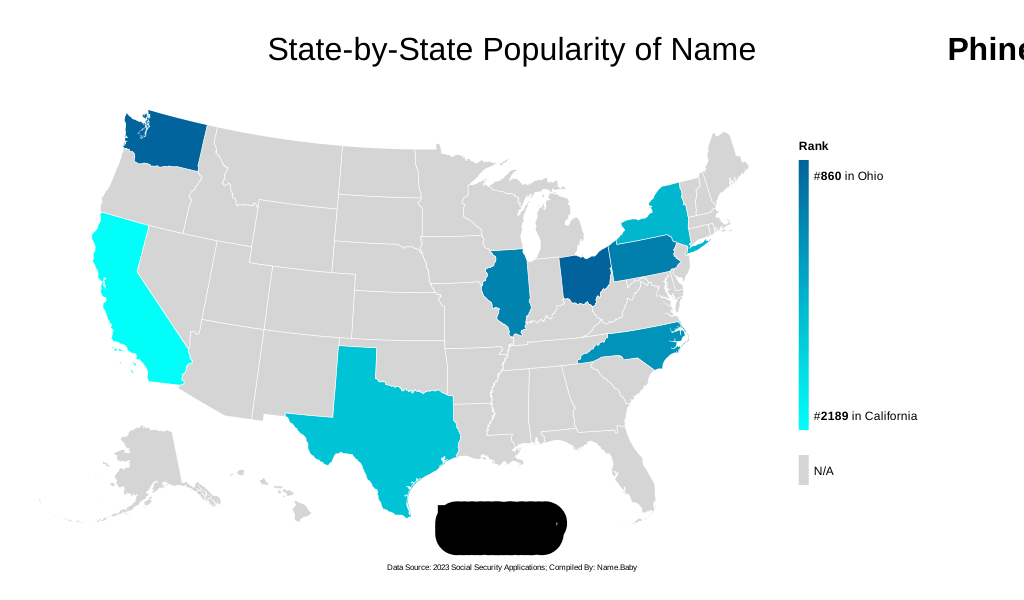
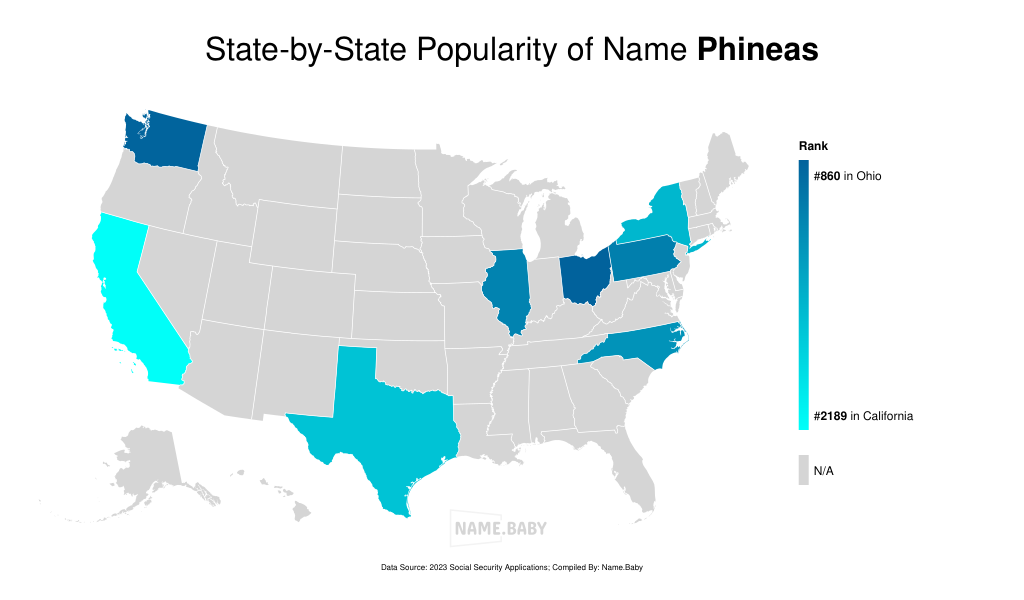
States Popularity Chart
Notable People Named Phineas
| Phineas Gage was a 19th century American railroad foreman who famously survived an iron rod blasting through his skull, an injury that changed his personality so much that friends said he was no longer himself. |
| Phineas Banning was an American businessman and entrepreneur often called the Father of the Port of Los Angeles. |
| Phineas Newborn Jr was an American jazz pianist shaped by Art Tatum, Oscar Peterson and Bud Powell. |
| Phineas Fletcher was an English poet born in Cranbrook in 1582 and the elder son of Giles Fletcher. |
| Phineas Young was an early Latter Day Saint convert, Mormon pioneer and missionary, and the older brother of Brigham Young. |
| Phineas Jonathan Horwitz was an American surgeon who served as Surgeon General of the United States Navy. |
| Phineas D Ballou was a Vermont businessman who served as mayor of Burlington from 1868 to 1870. |
| Phineas Riall was a British Army general and governor of Grenada who is best remembered for being captured at the Battle of Lundy's Lane during the War of 1812. |
| Phineas Jones Stone was a Massachusetts politician who served in the state House of Representatives and became the seventh mayor of Charlestown. |
| Phineas Chapman Lounsbury was a Republican politician who served as the 53rd governor of Connecticut. |
| Phineas Fowke was an English physician who lived from 1638 to 1710. |
| Phineas Stearns was a Watertown, Massachusetts farmer and blacksmith who joined the Boston Tea Party and rose to captain during the American Revolution. |
| Phineas Andrews was an English politician who served in the House of Commons from 1660 to 1661. |
| Phineas Mendel Heilprin was a respected Jewish scholar known for his learned writings on Hebrew texts and tradition. |
| Captain Phineas Stevens was a colonial militia commander from Sudbury, Massachusetts, best remembered for leading just 32 British soldiers in holding the Fort at Number 4 against a French and Native American siege in 1747. |
