Phoua
Meaning of Phoua
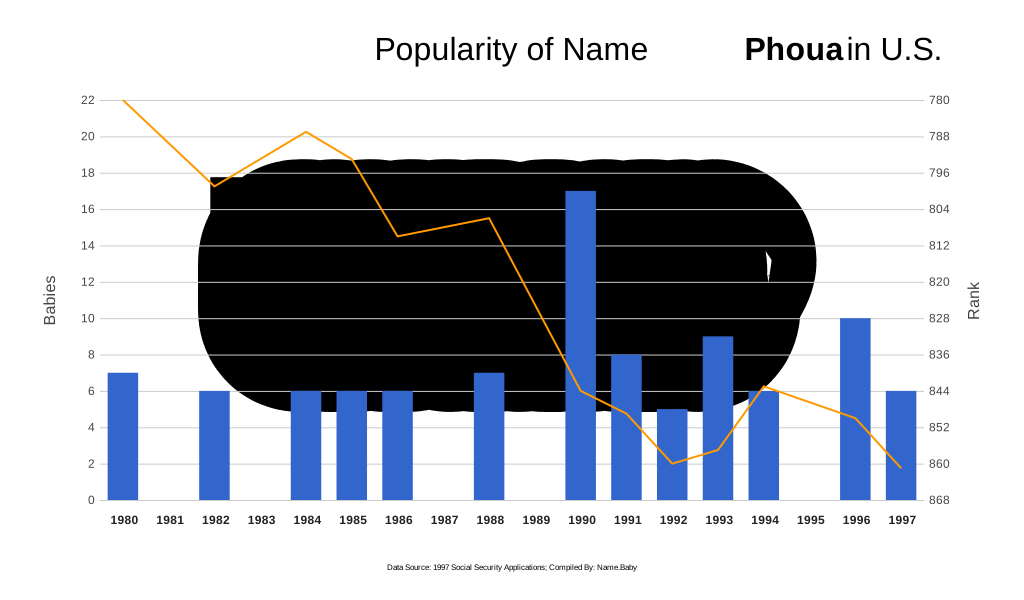
Phoua, a feminine appellation rooted in the Hmong linguistic tradition, emerges as a testament to cultural continuity and ethereal grace; derived from the native phonology—pronounced /puˈɑ/—it resonates like dulcis melodia echoing across ancestral valleys. This nomen, whose semantic embroidery often evokes the delicate bloom of a dawn-kissed orchid, functions as an emblem of resilience (fortitudo) and communal identity, its syllables weaving together the narratives of diaspora and shared memory. Between 1980 and 1997, Phoua surfaced intermittently in United States birth records—registering six occurrences in six separate years and reaching a cohort high of seventeen registrations (rank 844) in 1990—underscoring a quietly persistent affirmation of heritage within the broader tapestry of American onomastics. In bestowing the name Phoua upon a newborn, one invokes not only the promise of rebirth but also a living bridge between past and future, a lyrical thread connecting generations across oceans.
Pronunciation
Hmong
- Pronunced as poo-ah (/puˈɑ/)
U.S. Popularity Chart
Similar Names to Phoua
