Raam
Meaning of Raam
The name Raam, a gentle ripple in the ocean of nomenclature, traces its origin to Sanskrit, where it blossoms like a white lotus upon still waters with meanings of “pleasure” and “delight,” and bears the storied weight of Prince Rama, hero of the ancient Ramayana. Pronounced rahm (/rɑːm/), it carries the hush of a Kyoto dawn, when cherry blossoms drift like whispered secrets across an ink-painted pond. Though in the United States it hovers near the ninth-hundredth rank—statistically as rare as a perfectly ripe yuzu in midsummer—Raam persists with the quiet confidence of a solitary crane cutting through a steel-gray sky. Across continents, in faint echoes of Hebrew “exalted,” it underscores a universal longing for calm eminence. It evokes serene strength, as if a Haiku were distilled into a single breath, and, with a wry, dry smile, reminds us that true power seldom trumpets its own arrival. Rooted in myth yet poised on the lip of tomorrow’s story, Raam stands as an emblem of measured grace—an invitation to inscribe one’s path in delicate, ink-brushed strokes.
Pronunciation
- Pronunced as rahm (/rɑːm/)
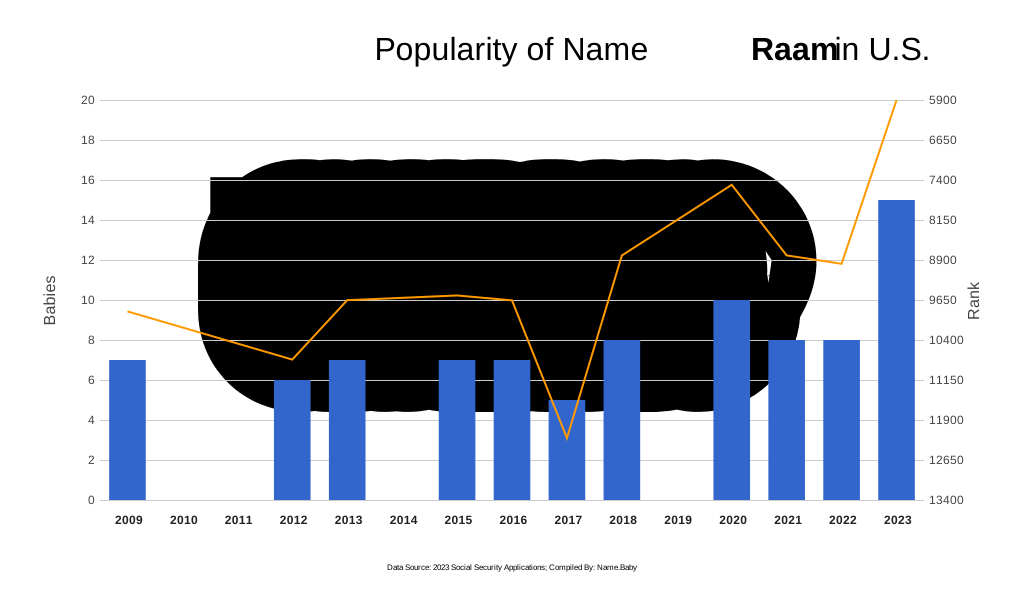
U.S. Popularity Chart
Notable People Named Raam
| Raam Mori - |
| Raam Reddy - |
