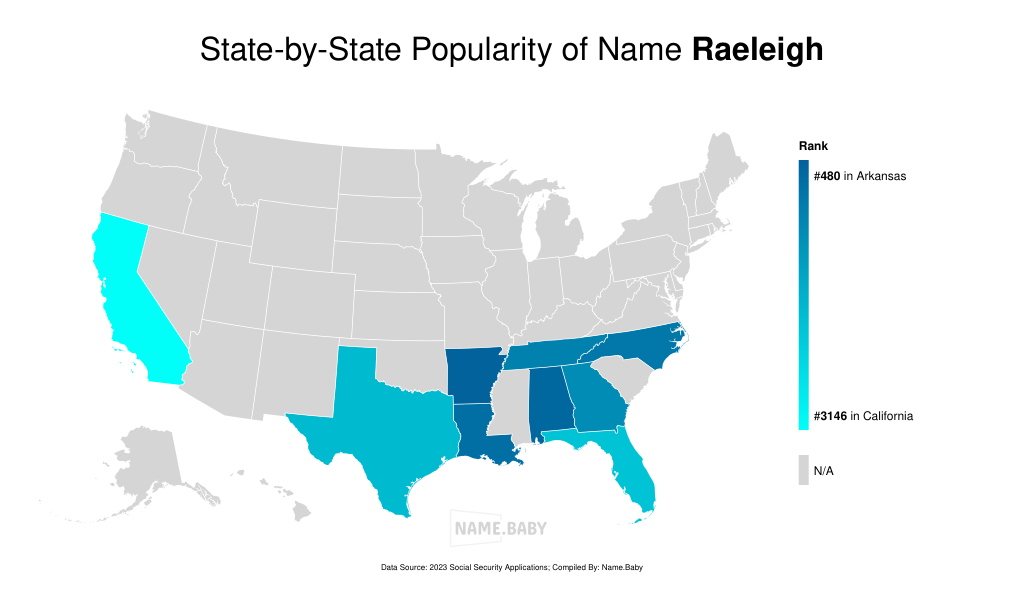
Raeleigh
Meaning of Raeleigh
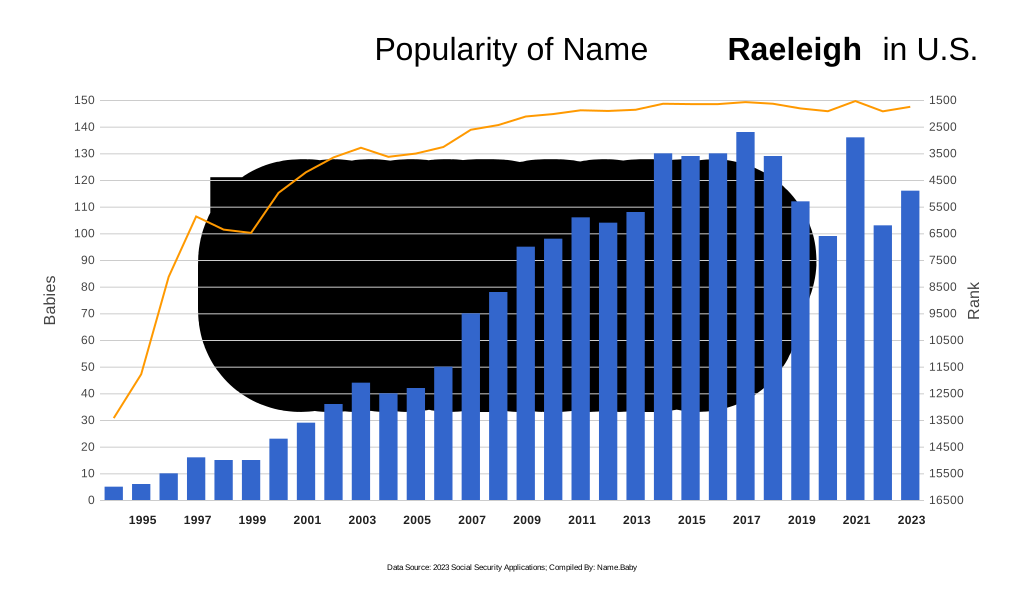
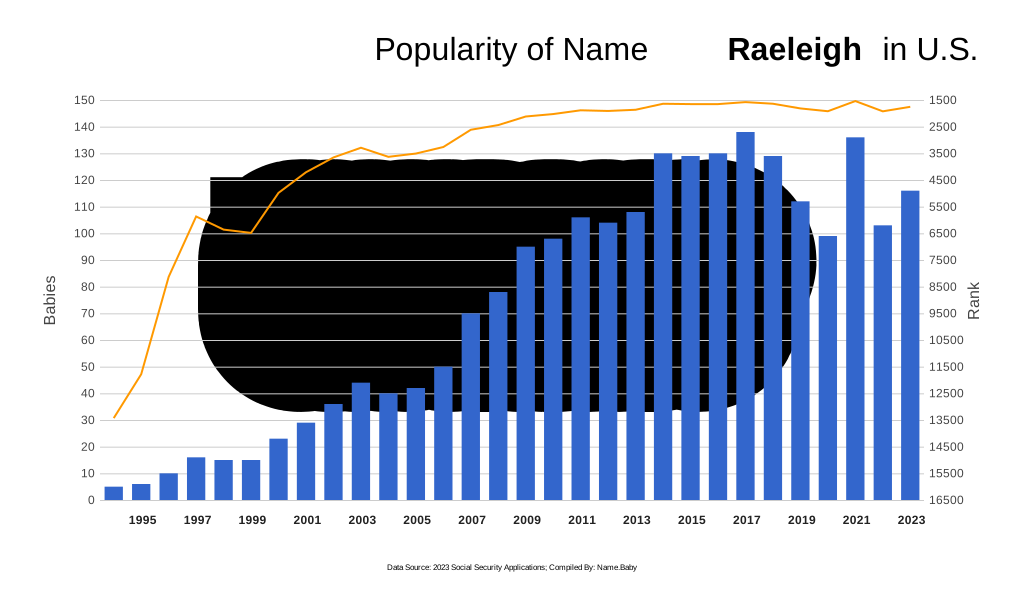
Raeleigh, pronounced RAY-lee (/ˈreɪli/), is a modern American coinage whose etymological layers intertwine several Anglo-Saxon threads: it can be read as a respelling of the English surname Raleigh—ultimately from Old English rā “roe deer” and lēah “woodland clearing”—while simultaneously functioning as a portmanteau that pairs the short form Rae (itself derived from Rachel or Raymond) with the fashionable –leigh suffix seen in contemporary names such as Ashleigh and Hadleigh. First recorded in U.S. birth data during the mid-1990s, Raeleigh has maintained a steady, if modest, presence within the national top-1000 list, its annual usage hovering between 40 and 138 births and conveying the subtle balance between uniqueness and recognizability that many present-day parents seek. Culturally, the name carries faint associations with the historic figure Sir Walter Raleigh and the North Carolina capital that bears his surname, yet its creative spelling projects a distinctly twenty-first-century sensibility, aligning Raeleigh with the broader Anglo-American trend of reinvigorating traditional roots through inventive orthography.
Pronunciation
English
- Pronunced as RAY-lee (/ˈreɪli/)
U.S. Popularity Chart
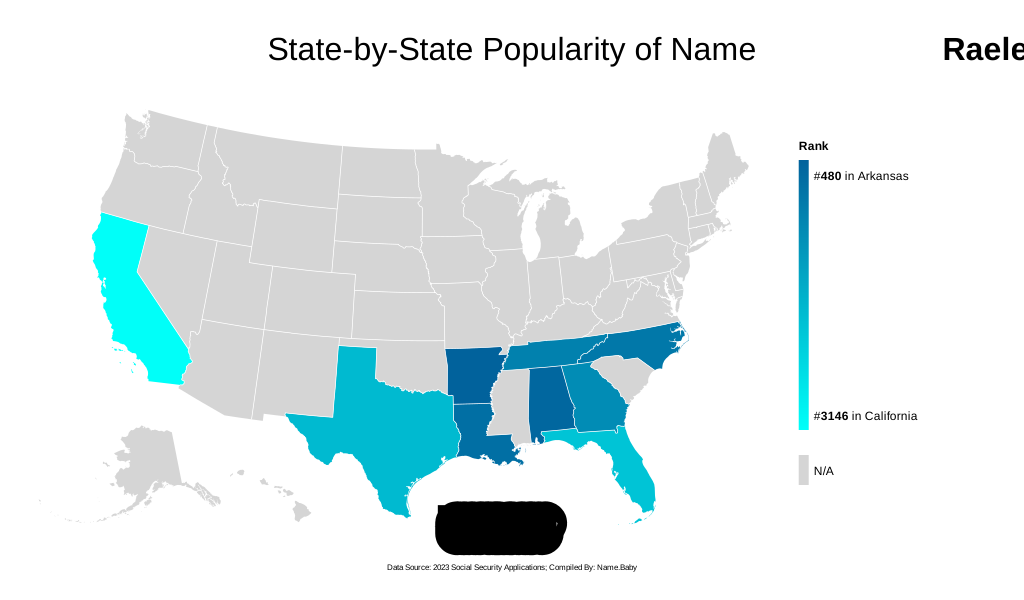
States Popularity Chart