Rakisha
Meaning of Rakisha
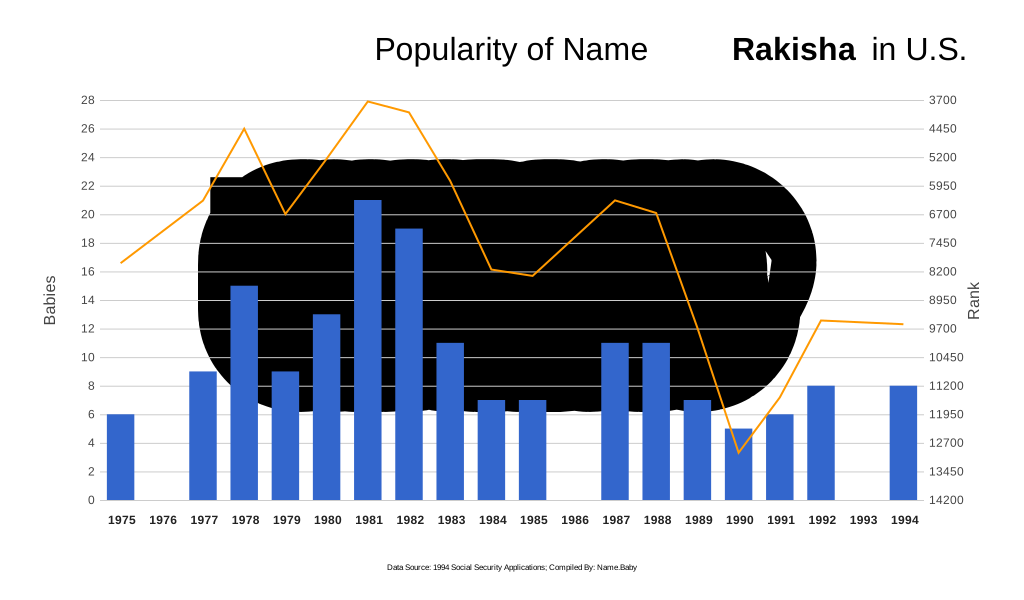
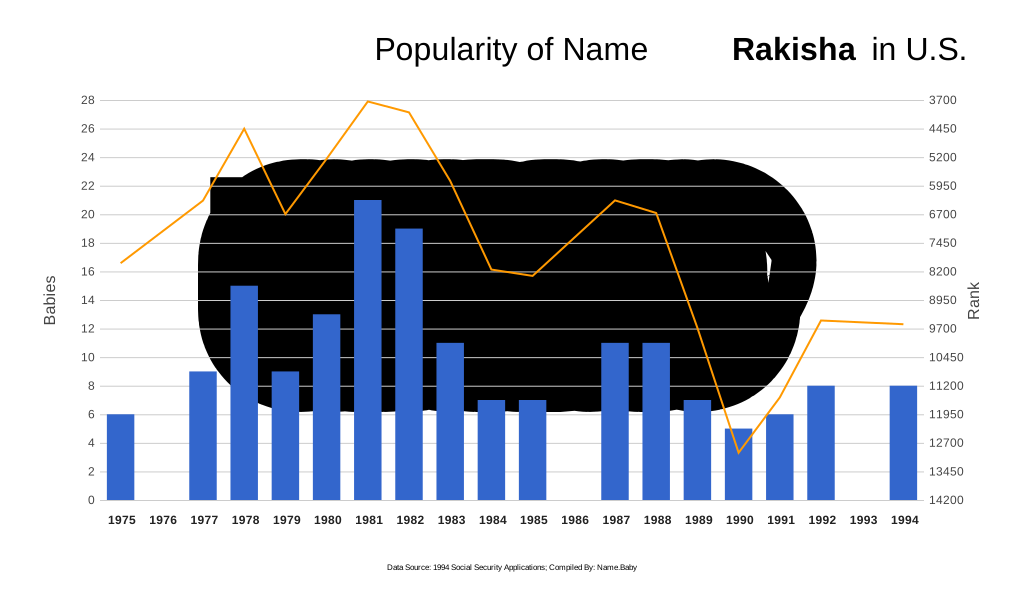
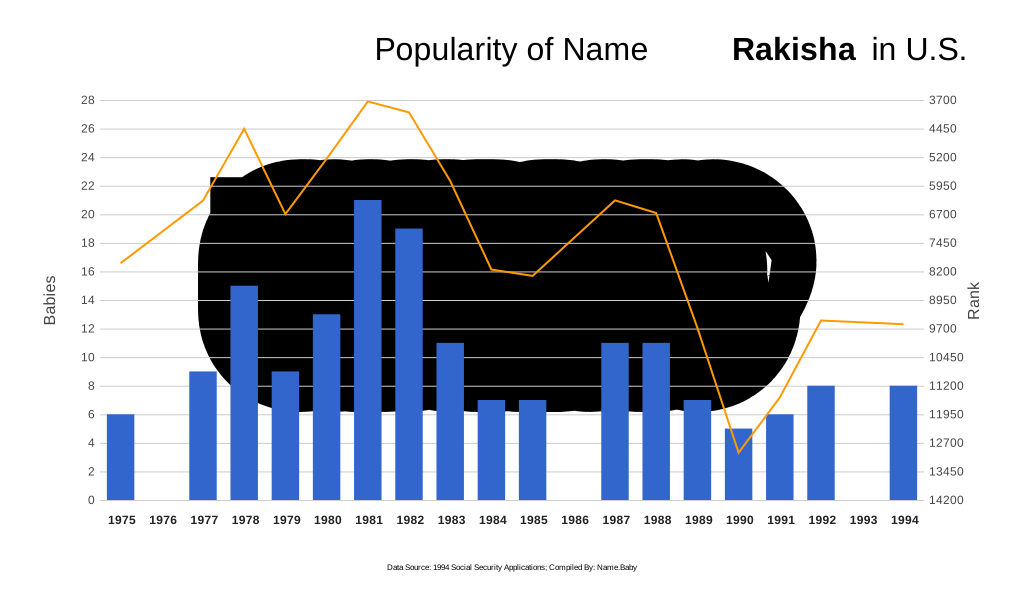
Rakisha emerges in the scholarly annals of American onomastics as a modern feminine appellation, a creative variant of Lakeisha—itself rooted in the Arabic name Aisha (“alive”)—yet reconceived through the inventive spirit of African-American naming traditions. Pronounced ruh-KEE-shuh (/rəˈkiːʃə/), it unfolds with the measured cadence of a classical Latin hexameter and the vibrant syncopation of a Caribbean marimba, evoking both academic rigor and cultural warmth. Etymologically, the name interlaces the Arabic vitality of Aisha with the inventive La- prefix, while its initial R- may be read as an echo of the Latin rex, subtly transformed into a feminine emblem of sovereignty and resilience. Demographically, Rakisha’s modest yet meaningful trajectory—peaking between 1978 and 1994 with annual usages ranging from five to twenty-one births and ranking in the mid-700s to low-800s—traces a gently undulating curve on sociolinguistic charts (a footnote that, in true dry-humor fashion, invites more scholarly enthusiasm than mass-market name lists). In its melodic interplay of consonants and vowels, Rakisha resonates like a sonorous ballad under balmy tropical skies, bridging continents and heritages with the grace of a finely wrought sonnet. As such, it stands not merely as a label but as a living testament to linguistic fusion—a warm, dignified moniker that celebrates vitality, cultural synthesis, and the enduring power of personal storytelling.
Pronunciation
American English
- Pronunced as ruh-KEE-shuh (/rəˈkiːʃə/)
U.S. Popularity Chart