Reyla
Meaning of Reyla
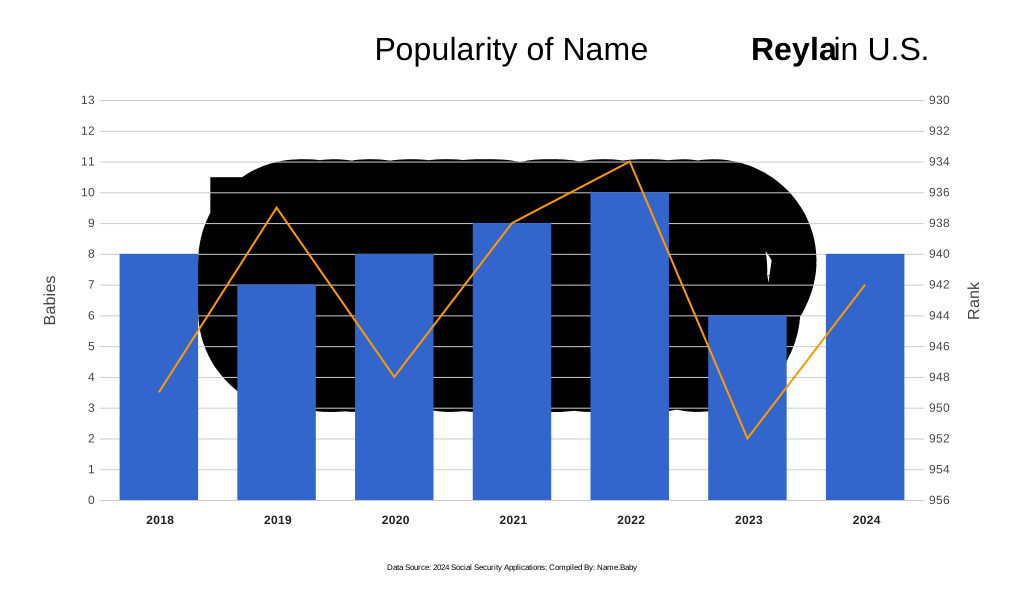
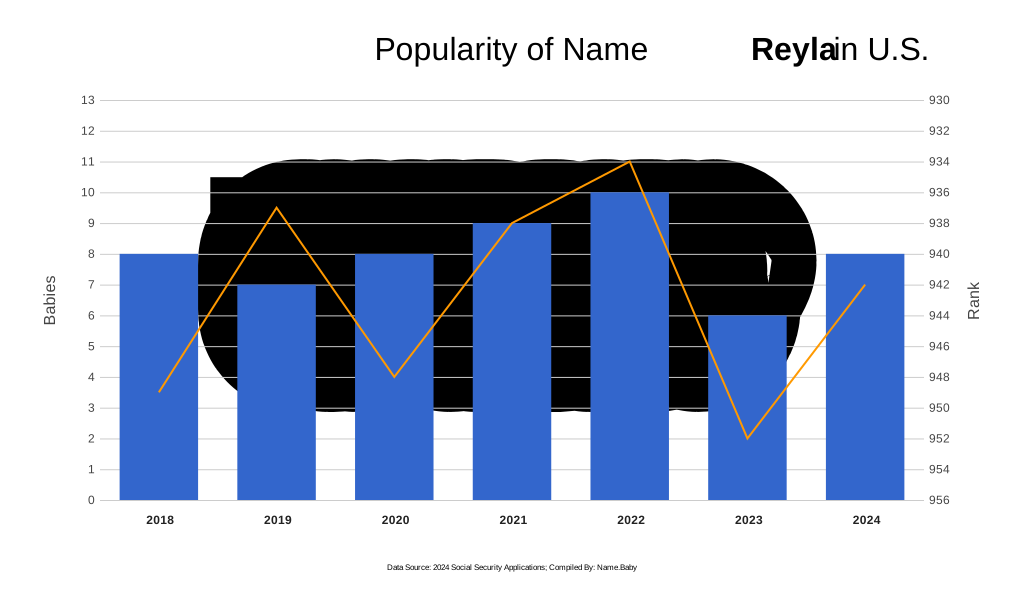
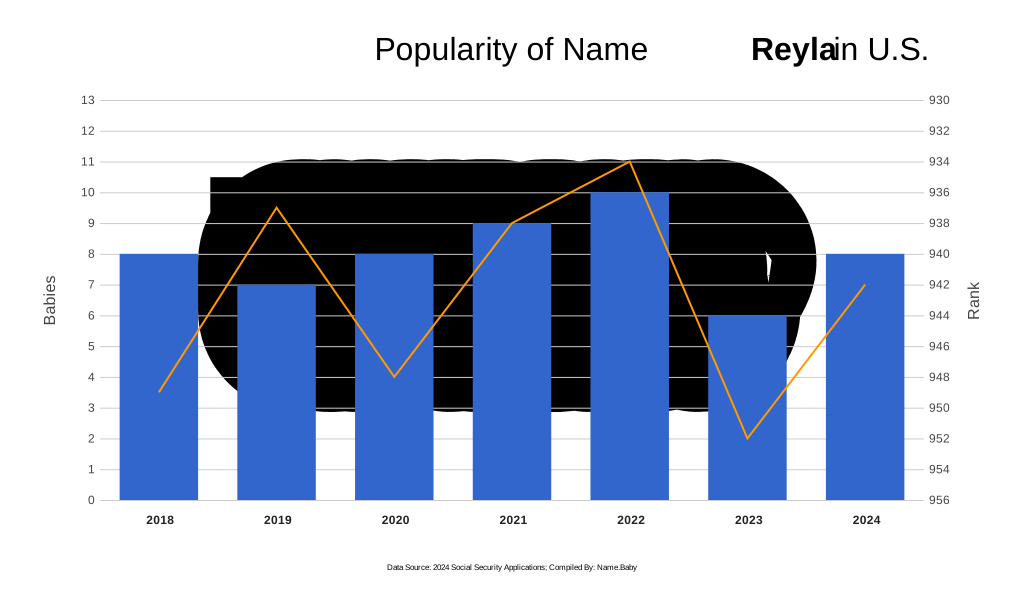
Reyla is a name whose emergent charm finds root in the Spanish lexicon, deriving from the masculine rey (king) suffused with the feminine diminutive suffix –la, thus evoking “little queen” and conjuring an aura of regal innocence. Simultaneously, its phonological kinship with the Hebrew name Raḥēl (Rachel), meaning “ewe”—a pastoral symbol of purity and gentle strength—imbues it with a dual heritage that bridges Iberian nobility and biblical pastoralism. Phonetically realized as /reɪˈlə/ (RAY-luh) in American English, the name unfolds in two syllables, the initial diphthong shimmering like a golden ray cresting the horizon. In contemporary onomastics, Reyla has begun to enter the U.S. birth data, registering eight occurrences and securing the 942nd rank in 2024—a testament to its growing favor among parents seeking appellations that fuse historical gravitas with lyrical novelty. As an appellation, it conjures the image of a luminous sovereign—a protagonist who inherits tradition and innovation alike, whose very phonetics seem to vibrate with the promise of dawn. Its appeal lies in the interplay of the venerable and the modern, the spatiotemporal legacies of Spain and the ancient rhythms of the Hebrew tongue, endowing Reyla with an expository richness that invites both scholarly exploration and poetic homage.
Pronunciation
American English
- Pronunced as RAY-luh (/reɪˈlə/)
U.S. Popularity Chart