Romari
Meaning of Romari
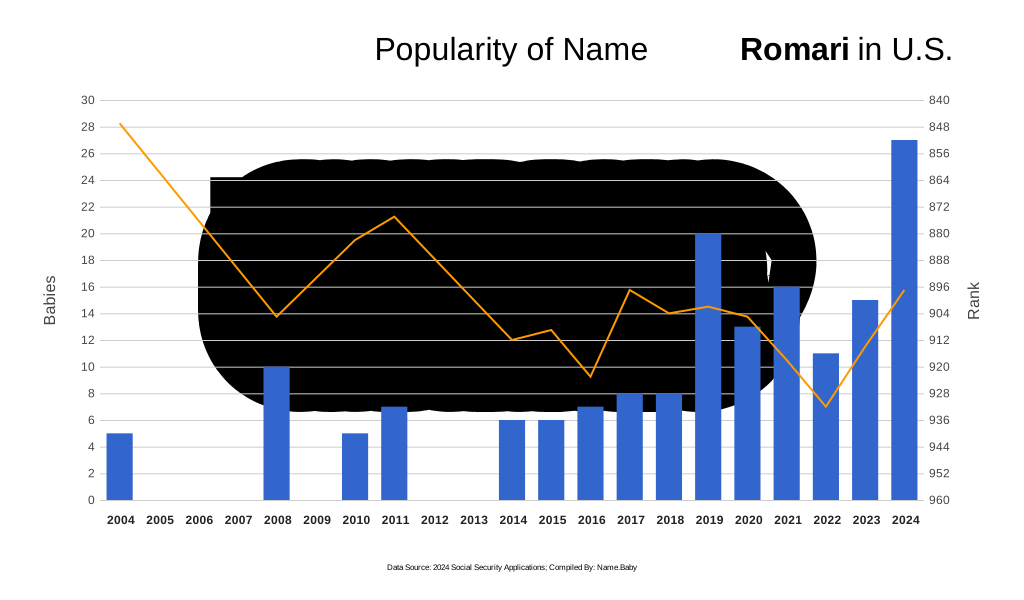
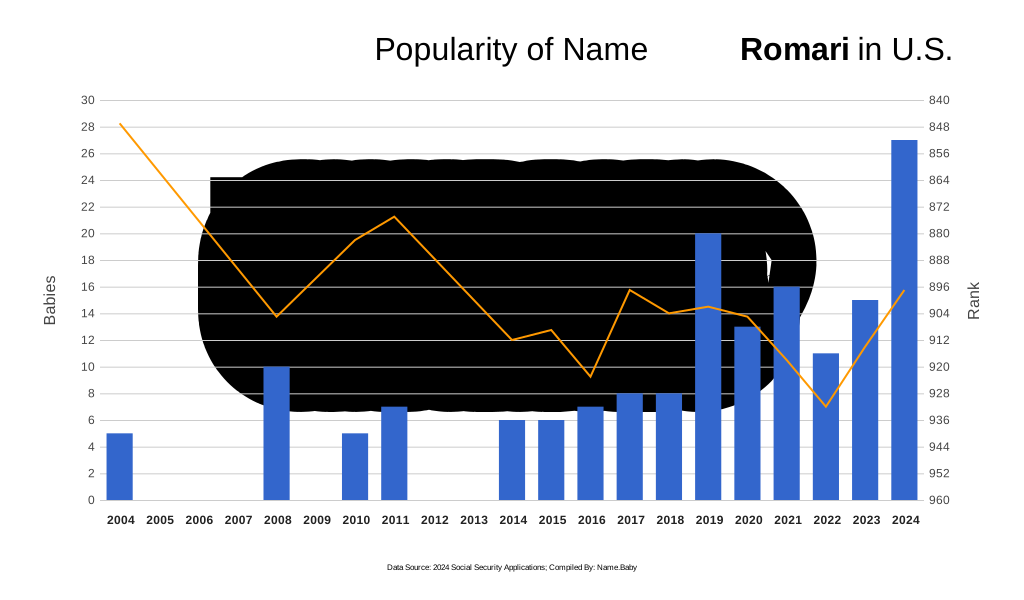
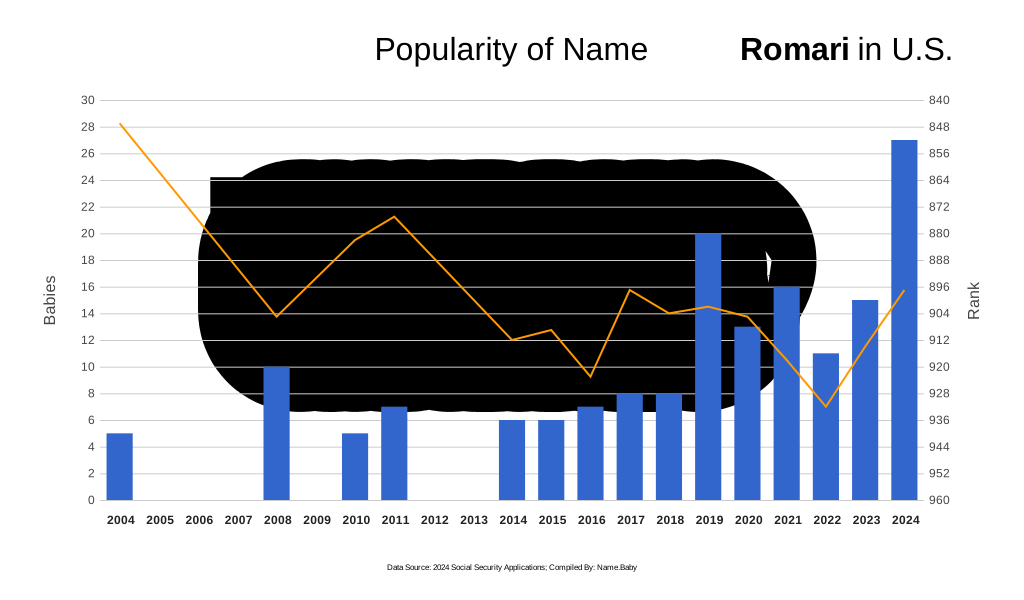
Romari, a masculine forename of apparent neo-classical provenance, functions as a composite onomastic entity deriving from the Latin Romanus (denoting “citizen of Rome”) and the Swahili-Arabic Omari (connoting “flourishing” or “long-lived”); this hybridization reflects late twentieth- and early twenty-first-century Anglo-American tendencies toward portmanteau naming strategies. Phonetically rendered in English as /roʊˈmɑri/ and in French as /ʁɔ.ma.ʁi/, the name exhibits a robust iambic prosody that centers primary stress on the medial syllable, thus aligning with contemporary preferences for distinctive rhythmic profiles. Empirical data from the U.S. Social Security Administration place Romari within the 800–900 rank band for male newborns across the past two decades, with a modest yet steady increase culminating in 27 recorded occurrences at position 897 in 2024; this statistical trajectory underscores its status as a niche choice that retains durable appeal. Conceptually, Romari conveys both classical heritage and modern innovation, rendering it a technically intriguing option for parents seeking a name that bridges historical resonance with contemporary onomastic creativity.
Pronunciation
British English
- Pronunced as roh-MAH-ree (/rəʊˈmɑːri/)
American English
- Pronunced as roh-MAH-ree (/roʊˈmɑri/)
French
- Pronunced as roh-mah-REE (/ʁɔ.ma.ʁi/)
U.S. Popularity Chart