Romilly
Meaning of Romilly
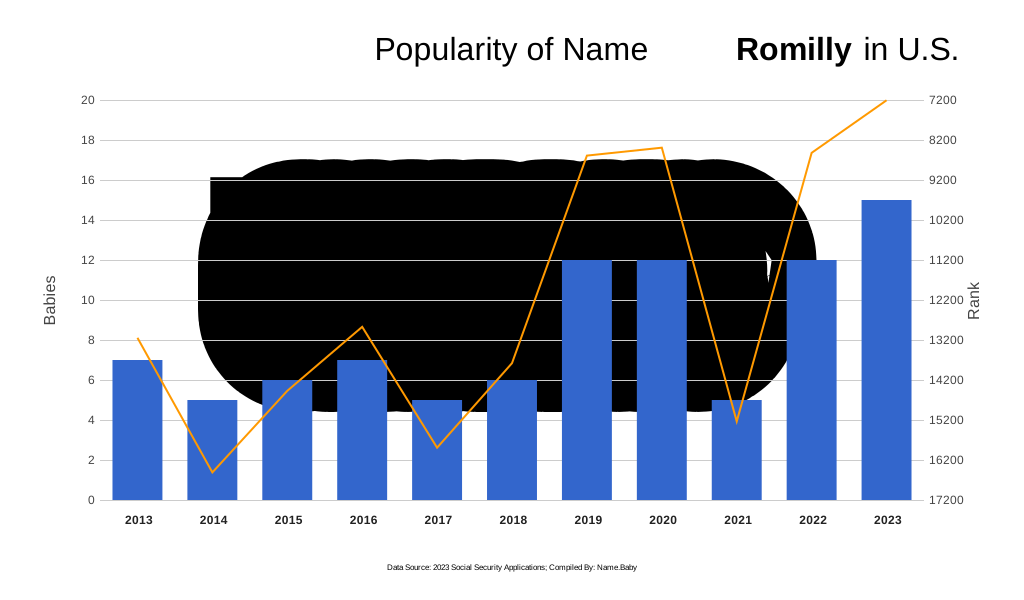
Romilly (RAH-mi-lee /ˈrɔm.ɪ.li/) is a unisex name with Norman roots, originating as a French toponym—derived from Latin romanus (“Roman”) and the Gallic suffix –acum (“estate”)—that transitioned into an English surname before entering general usage. In the United States, its annual frequency among female newborns has displayed a steady increase, rising from five occurrences (rank 938) in 2013 to twenty occurrences (rank 930) in 2024. This gradual upward trend underscores a growing, if still niche, preference among parents for names that combine historical depth with an understated scholarly tone. Romilly has surfaced in literary contexts—most notably in 19th-century French fiction—and has been adopted in contemporary Anglo-American media, lending it an analytical aura without sacrificing accessibility. Its phonetic simplicity belies a layered etymology, making it an appealing choice for families seeking technical rigor in name origins coupled with a neutral, versatile presence. Despite its classical pedigree, it requires no archaeological credentials to bear the name.
Pronunciation
English
- Pronunced as RAH-mi-lee (/ˈrɔm.ɪ.li/)
U.S. Popularity Chart
Notable People Named Romilly
| Romilly Jenkins was a British scholar who taught Byzantine and Modern Greek studies at King's College London from 1946 to 1960. |
| Romilly Jane Madew is an Australian business executive and Engineers Australia CEO known for her work in sustainable building and infrastructure strategy. |
| Arthur Romilly Fedden was an English artist known for his watercolour paintings and the older brother of engineer Roy Fedden. |
