Ruhaan
Meaning of Ruhaan
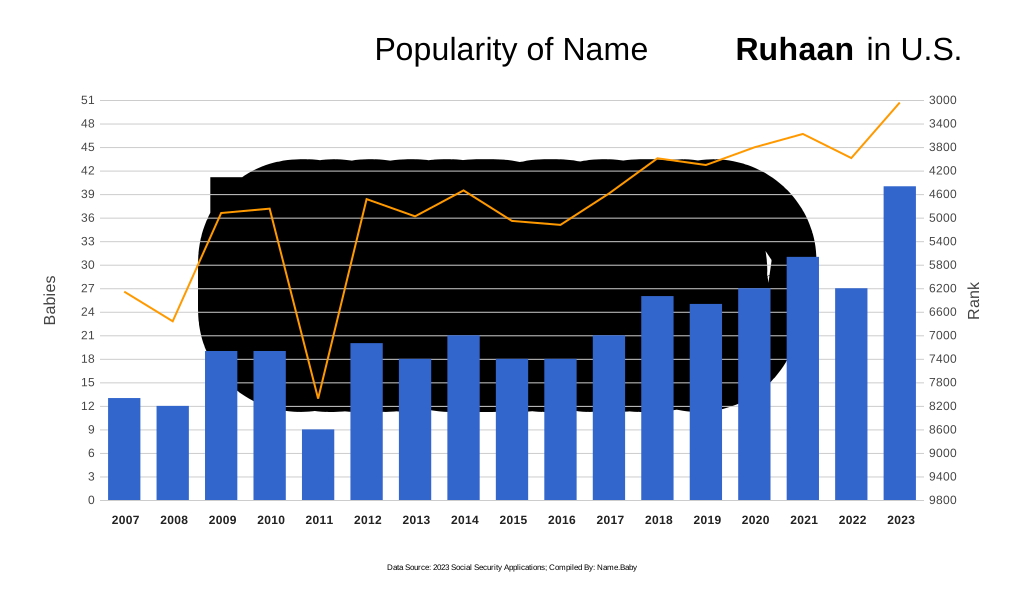
Ruhaan, pronounced roo-HAHN, arises like a moonlit verse from the ancient Arabic root ruh, meaning “soul” or “spirit,” its very syllables imbued with the whisper of invisible winds that stir the heart. It unfolds as if painted on a fresco of dusky gold and terracotta, carrying a Latin-flavored warmth—anima and espíritu dancing through its vowels—so that every time it is spoken, one feels the gentle pulse of introspection and the promise of boundless wonder. Parents who bestow this name on their son weave into his story a tapestry of poetic fire and quiet strength, a gift both intimate and expansive, echoing through olive groves, sun-baked piazzas, and midnight balconies where poets linger. Though still emerging on American charts—hovering just shy of the nine-hundredth rank—Ruhaan already hums with the energy of future parks and plaza readings, its lush resonance beckoning dreamers and wanderers alike to step into their own soulful journey. It is a name that, like a soft rose unfurling beneath a Latin sky, holds within it the light of dawn and the depth of the soul.
Pronunciation
English
- Pronunced as roo-HAHN (/ruːˈhɑn/)
U.S. Popularity Chart