Sandar
Meaning of Sandar
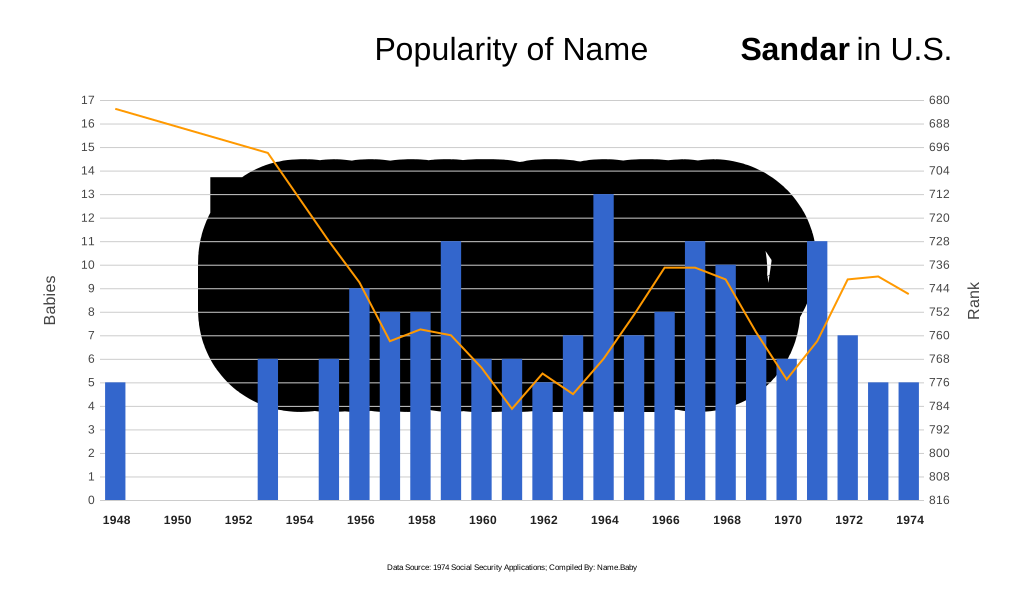
Sandar is a feminine appellation of Burmese provenance, its etymology traceable to the Pali-Sanskrit root candr- (चन्द्र), signifying the moon, and in contemporary Burmese phonology rendered as sandar. In its native context, the name conveys notions of lunar luminescence, cyclical renewal, and serene detachment, and it recurs in Burmese literature and oral tradition as a marker of quiet elegance. From a linguistic perspective, Sandar illustrates the adaptation of an Indic lexical element into Southeast Asian onomastic practice, thereby reflecting a convergence of ancient Sanskrit heritage and regional phonetic conventions. Although it remains commonplace within Myanmar, its adoption in the United States has been limited, with sporadic entries in the Social Security Administration’s baby-name data during the mid-twentieth century—most notably achieving a rank of 683 in 1948—before gradually receding from the charts. This distribution underscores Sandar’s profile as a culturally resonant yet selectively employed name, chosen for its scholarly pedigree, understated beauty, and cross-cultural depth.
Pronunciation
Burmese
- Pronunced as sun-dar (/sʌnˈdɑr/)
U.S. Popularity Chart
Similar Names to Sandar
Notable People Named Sandar
| Sandar Win - |
