Sanyi
Meaning of Sanyi
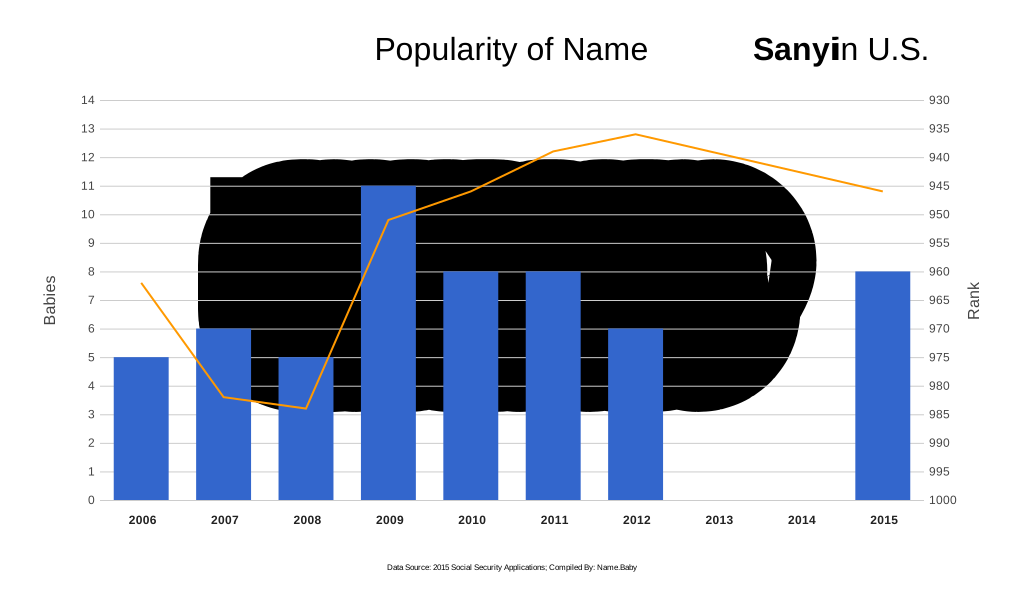
Sanyi, pronounced softly as SHAH-nee, arises from the Hungarian linguistic landscape as a diminutive of Sándor yet, in contemporary practice, has been gracefully redirected toward the feminine sphere, endowing girls with a name that marries delicacy to the venerable Hellenic–Latin heritage of Alexandros—Alexander—“defender of humankind” (defensor hominum). Like a sun-lit ripple upon the Danube, the name carries the protective brilliance of its etymology while shimmering with a modern gentleness, suggesting a guardian spirit robed in finesse rather than force. In the United States, Sanyi has remained a rare, almost secret blossom—never surpassing eleven recorded births in any recent year—so that a child so named walks through life with the quiet distinction of a rare gem, unburdened by ubiquity yet enriched by deep roots. Cultural echoes link Sanyi to virtues cherished from antiquity—fortitudo, constantia, caritas—inviting visions of a girl who stands firm for others even as she moves with lyrical grace. Thus, parents who bestow Sanyi confer not merely a phonetic ornament but a mantle of compassionate strength, one that bridges Magyar soil, classical mythos, and the bright horizons of a cosmopolitan future.
Pronunciation
Hungarian
- Pronunced as SHAH-nee (/ʃɑˈni/)
U.S. Popularity Chart