Seva
Meaning of Seva
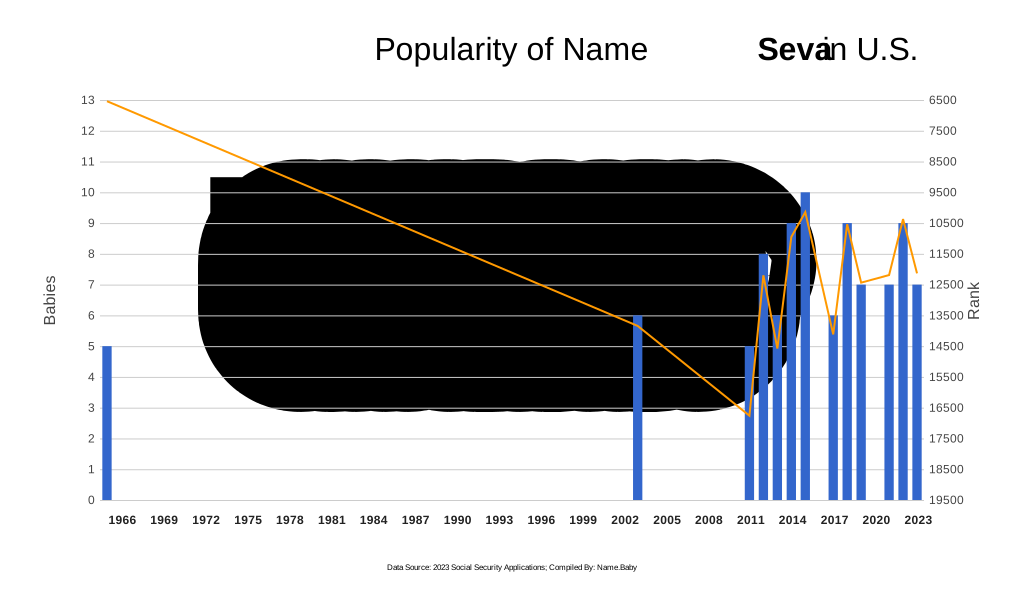
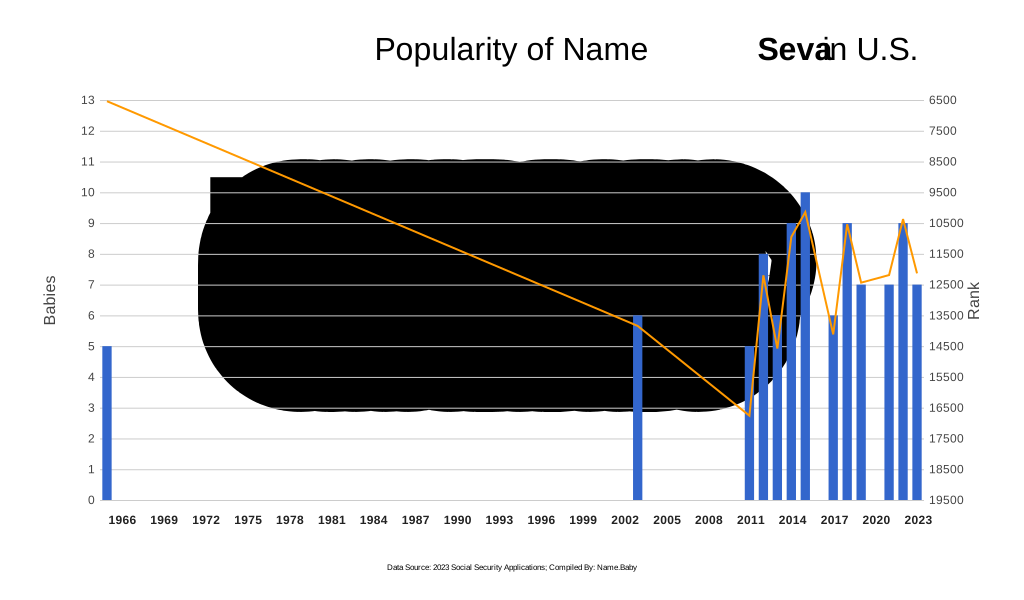
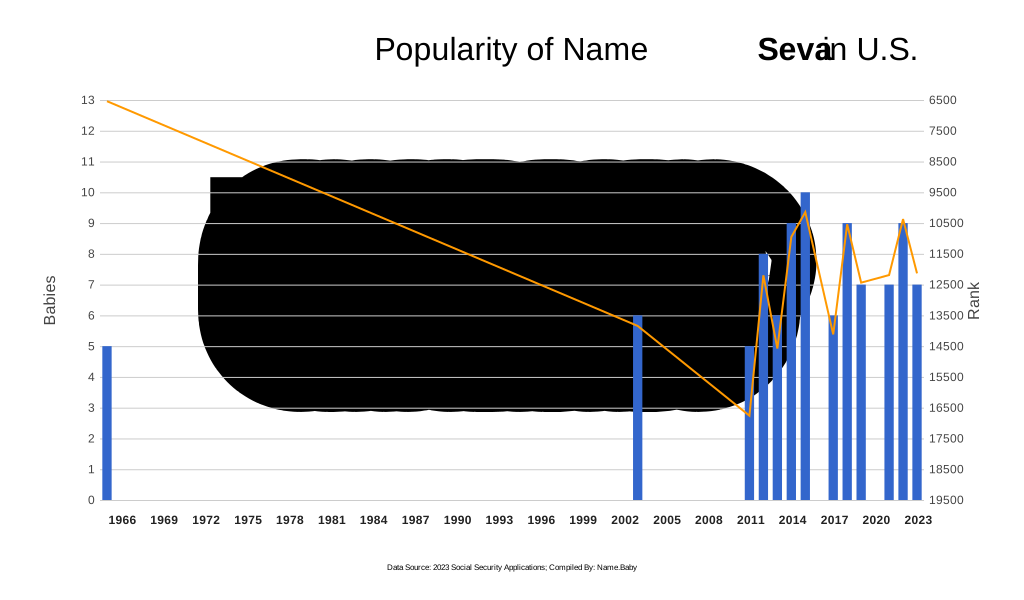
Seva—pronounced SEH-vah (/səˈvɑ/)—has carved out a modest yet remarkably steady niche in American naming charts over the past decade, appearing in most years since 2011 with annual tallies ranging from five to eleven newborns and rankings consistently near the 900th mark. After dipping to seven registrations in 2023 (951st), it rebounded in 2024 with 11 occurrences, securing the 939th position—a quiet testament to its subtle allure amidst a sea of more conventional choices. Rooted in Eastern Europe as a Russian and Ukrainian diminutive—linked variously to Sevastyan (the Slavic counterpart to Sebastian), Sevar, or Yevsevy—this unisex name has more recently resonated globally through its Sanskrit homonym, embodying the noble ideal of selfless service. Such linguistic duality endows Seva with both historical depth and a modern sensibility, offering parents a concise, melodious option that bridges cultural traditions without sacrificing individuality. While it may never storm the summit of popularity charts, its enduring presence—refusing to dissolve into obscurity—underscores an analytical narrative of intentionality, where heritage, meaning, and adaptability converge in two crisp syllables—a modest triumph that might elicit a wry grin from even the most trend-obsessed onomastician.
Pronunciation
Russian,Ukrainian
- Pronunced as SEH-vah (/səˈvɑ/)
U.S. Popularity Chart
Notable People Named Seva
| Seva Gunitsky - |
