Shamar
Meaning of Shamar
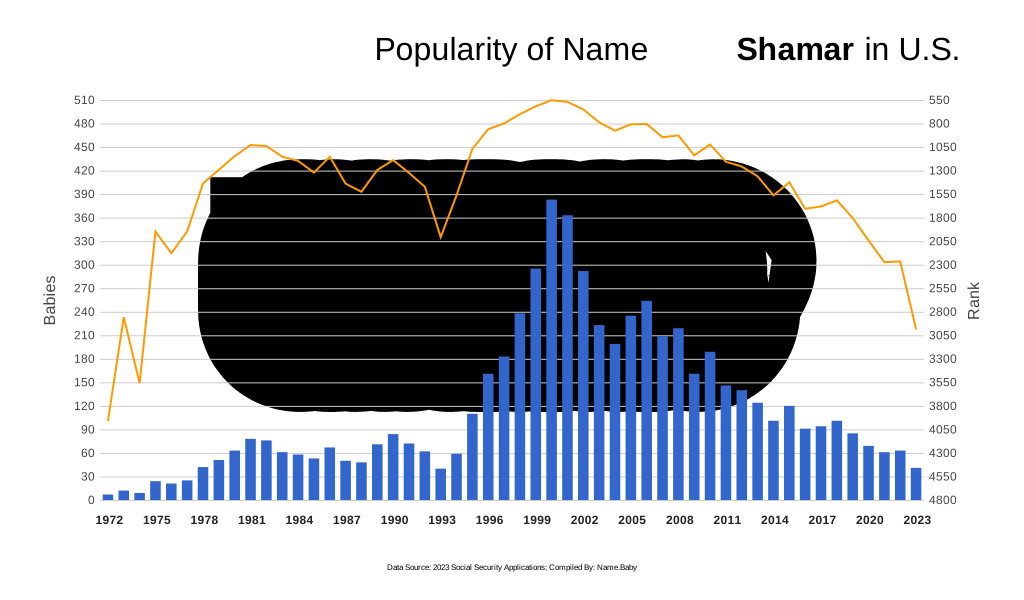
Shamar, pronounced sha-MAHR in its Hebrew origin and more softly rendered shuh-MAR in American English, descends from the Semitic root šāmar, “to guard, to keep,” an etymology that endows the name with an aura of vigilant custodianship—como un centinela nocturno que vela por la integridad de la ciudad. This semantic core has resonated far beyond the ancient Near East, finding particular favor in African American communities where names with protective or aspirational meanings carry sociocultural weight. Statistically, Shamar emerged on U.S. birth registers in the early 1970s, ascended to a zenith of 504th in 2001, and has since followed a gentle ebb, ranking 888th in 2024; the curve, while undulating, demonstrates a sustained presence that suggests cultural resilience rather than fleeting fashion. In onomastic studies, such stability is often interpreted as evidence of a name’s capacity to balance distinctiveness with familiarity, a trait especially prized by parents seeking individuality without obscurity. Figuratively, Shamar’s trajectory resembles the pulse of a steady drum—never dominating the orchestral score of given names, yet supplying an unmistakable rhythm that invites listeners to discern the enduring message of watchfulness embedded within its syllables.
Pronunciation
Hebrew
- Pronunced as sha-MAHR (/ʃa-ˈmaɾr/)
American English
- Pronunced as shuh-MAR (/ʃə-ˈmɑr/)
U.S. Popularity Chart
Notable People Named Shamar
| Shamar Bailey - |
| Shamar Stephen - |
| Shamar Nicholson - |
