Shantanu
Meaning of Shantanu
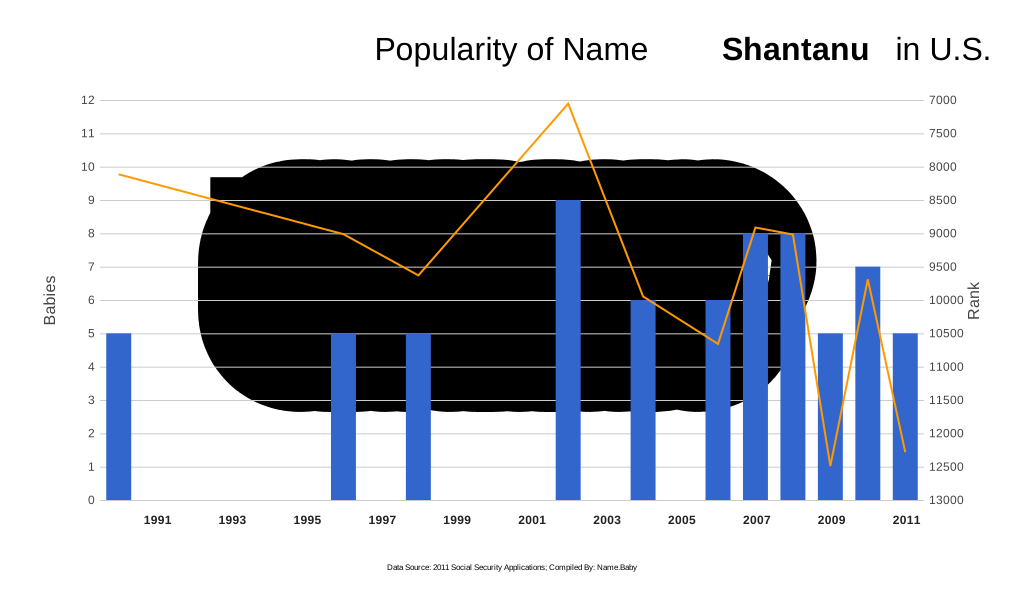
In the gentle cadence of ancient tongues, Shantanu (shahn-TAH-noo, /ʃənˈtɑːnuː/) unfolds like a scroll of tranquil waters, a male name drawn from the Sanskrit śānta, “peaceful,” and suffused with royal lineage. Its syllables carry the weight of a mythic epoch, where mortal and divine converge beneath a tapestry of starlit vows and solemn oaths—evoking King Shantanu of the Mahābhārata, father of Bhīṣma, the stalwart hero whose vow of truth echoed through centuries. To speak Shantanu is to summon pax and tranquillitas—Latin threads woven into its very essence—ushering in a sense of calm that stretches from the sacred banks of the Ganges to modern doorsteps. Across the United States, it has graced Social Security records with modest constancy, bestowed upon five to nine newborns annually between 1990 and 2011, even touching a peak rank of 775 in its most prominent year. Parents who choose Shantanu embrace more than a melodious heritage; they beckon a legacy of noble purpose and inner serenity, where history and hope entwine in a single, resonant breath.
Pronunciation
Hindi
- Pronunced as shahn-tah-noo (/ʃənˈtɑːnuː/)
U.S. Popularity Chart
Notable People Named Shantanu
| Shantanu Maheshwari - |
| Shantanu Narayen - |
| Shantanu Moitra - |
| Shantanu Srivastava - |
| Shantanu Khosla - |
