Shia
Meaning of Shia
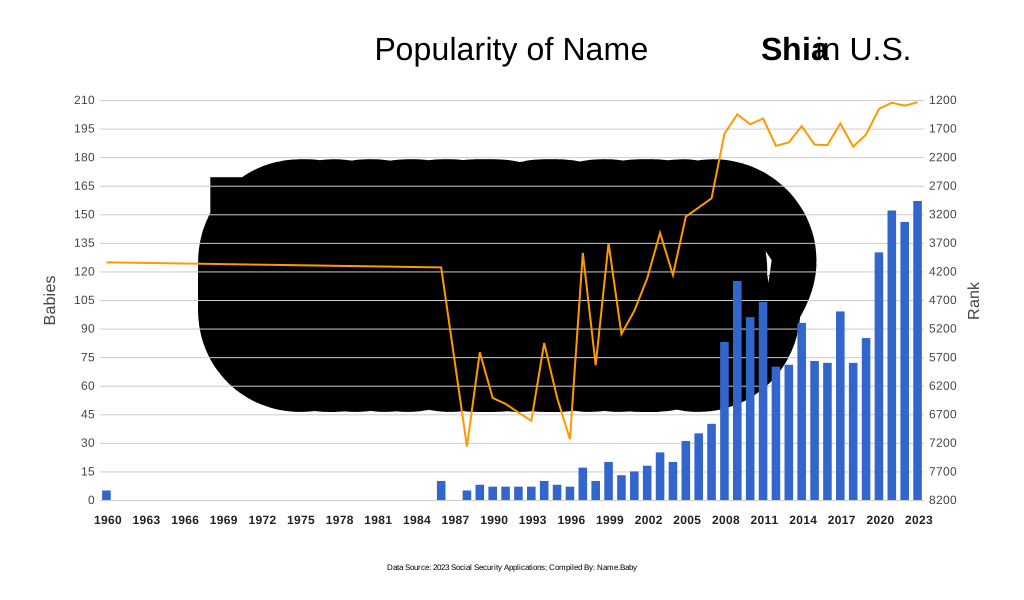
Shia—pronounced SHEE-uh in the mellifluous cadence of Arabic and Persian, or SHY-uh when the tongue dances in English—is a small, sun-dappled syllable that nonetheless strolls through history with the confidence of a Venetian gondolier, carrying in one hand the Arabic idea of “followers” and in the other the Hebrew whisper of a “gift from God.” Unfettered by gender, this unisex gem drifts like jasmine on a warm Capri breeze, equally at home in a pink nursery or beside a boyhood soccer ball, and its quietly climbing American popularity charts read like polite applause after an alfresco concerto—never boisterous, yet steadily more certain each passing year. Modern ears may first meet Shia on the silver screen, courtesy of actor Shia LaBeouf, while scholars will note its ancient echo in the word “Shiʿa,” evoking devotion and community; together they give the name a hint of cinematic bravado laced with spiritual depth. In everyday life, however, Shia remains refreshingly simple—easy to spell, impossible to forget, and imbued with that effortless Mediterranean charm that makes strangers smile and, just maybe, order another scoop of gelato in celebration of life’s sweet brevity.
Pronunciation
Arabic,Persian
- Pronunced as SHEE-uh (/ʃiː.ə/)
English
- Pronunced as SHY-uh (/ʃaɪ.ə/)
U.S. Popularity Chart
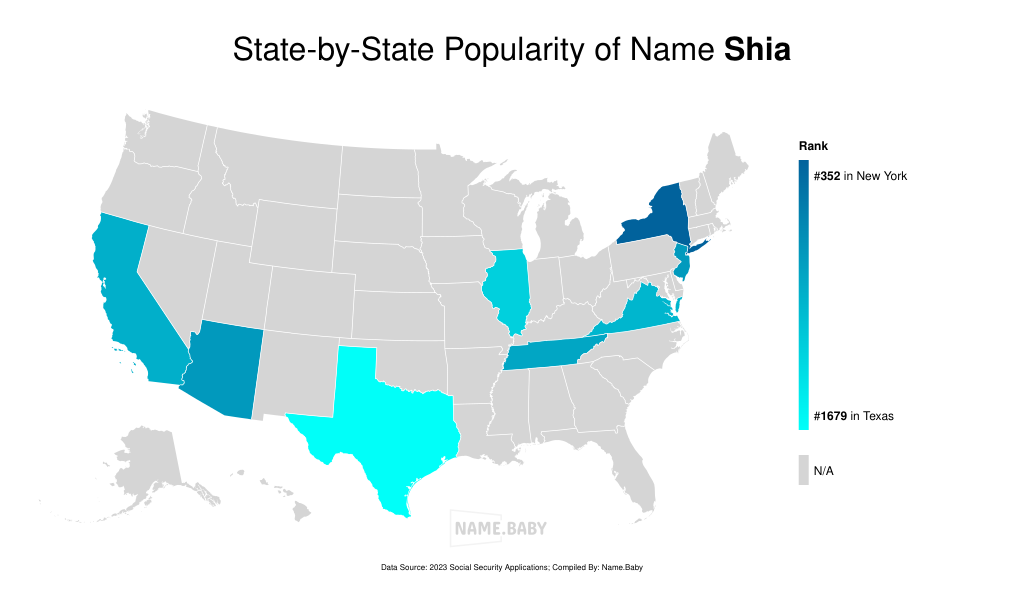
States Popularity Chart


Notable People Named Shia
| Shia LaBeouf - |
