Shradha
Meaning of Shradha
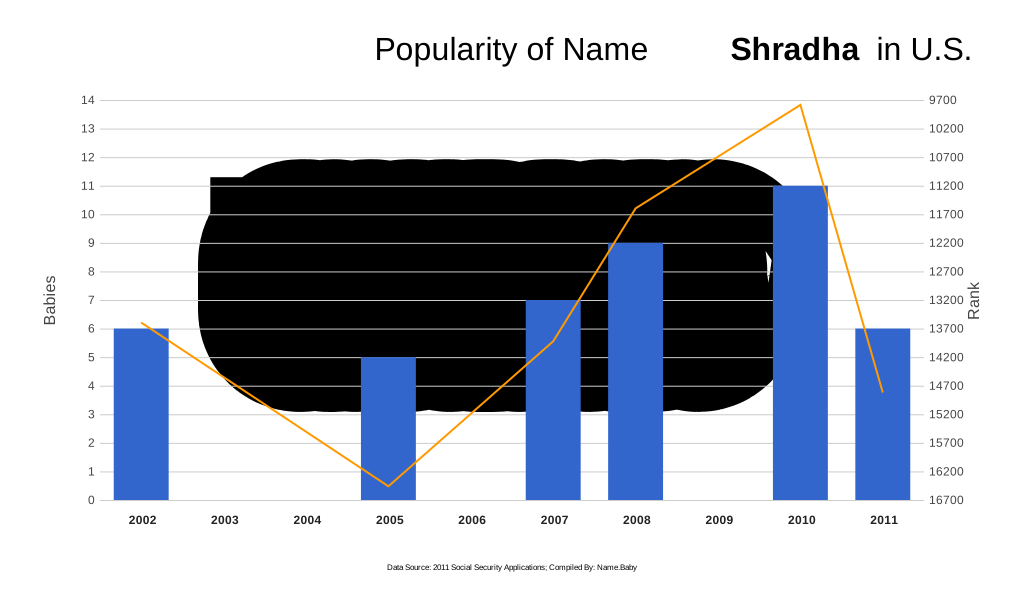
Shradha, pronounced SHRA-dha (/ʃrɑːdə/), springs from the Sanskrit śraddhā, meaning “faith” or “devotion,” and carries a dignified calm akin to a whispered mantra rather than the pyrotechnics of a trend-driven moniker. On the United States Social Security Administration charts, Shradha recorded six births in 2002 (rank 897) and then fluctuated modestly between five and eleven births—occupying ranks from 941 to 981—in years such as 2005, 2007, 2008, 2010, and 2011, a testament to its cultivated niche appeal. Its phonetic fusion of the retroflex R with smooth English vowels ensures cultural authenticity while gliding effortlessly across an Anglo-American tongue. Analytically, one might observe that its steady appearances resemble a perennial herb quietly thriving at the edge of a manicured garden, offering perennial promise rather than the fleeting bloom of a fast-rising favorite. With a dry wink at the capriciousness of naming fashions, Shradha stands as a warm, substantive choice—an investment in spiritual depth that never truly goes out of style.
Pronunciation
- Pronunced as SHRA-dha (/ʃrɑːdə/)
U.S. Popularity Chart