Sitara
Meaning of Sitara
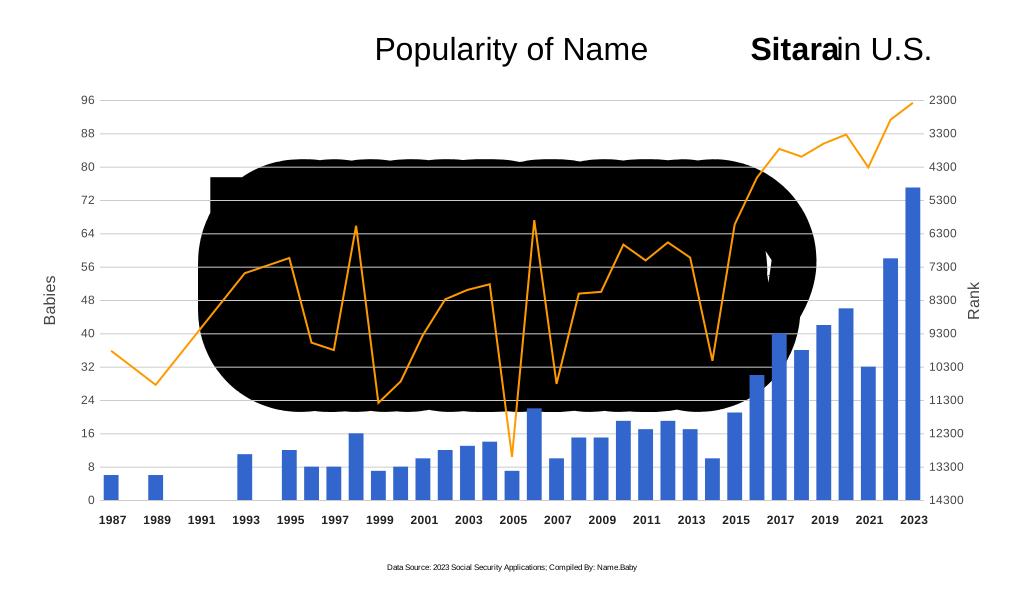
Sitara, a mellifluous appellation distilled from the Sanskrit and Persian word for “star,” glimmers with the same quiet radiance that guides nocturnal travelers— a lucerna in the firmament of names. Rooted in the Indo-Persian poetic canon yet adaptable to many tongues, it carries resonances of aspiration, navigation, and transcendence, as though each syllable were a compass rose pointing toward possibility. In the United States, its celestial cadence has traced a gentle but persistent arc across the vital-statistics heavens: since the late 1980s the name has flickered just below the top 800, rising and falling like the pulsation of a variable star, yet never extinguishing its light. Scholars of onomastics note that Sitara’s phonetic elegance—stress settling on the open vowel of the second mora—offers both lyrical ease and cultural depth, inviting parents to bequeath a heritage that is at once ancient and cosmopolitan. Thus, to bestow Sitara upon a daughter is to wrap her in a mantle of constellations, conferring the ardent hope that she, too, will illuminate her own quadrant of the night sky.
Pronunciation
Indian (Hindi)
- Pronunced as sih-TAH-rah (/sɪˈtɑːrə/)
U.S. Popularity Chart
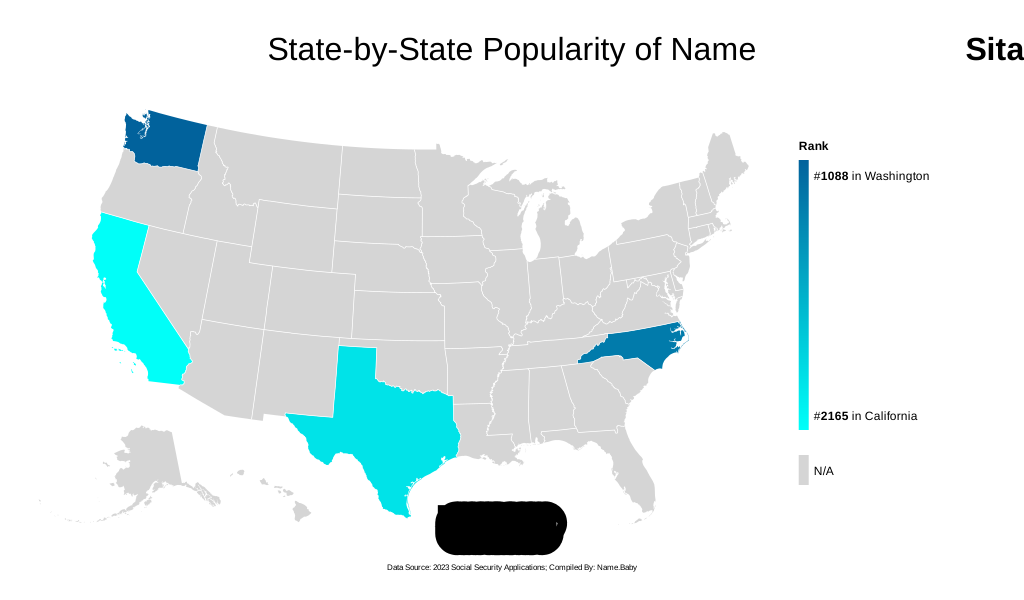
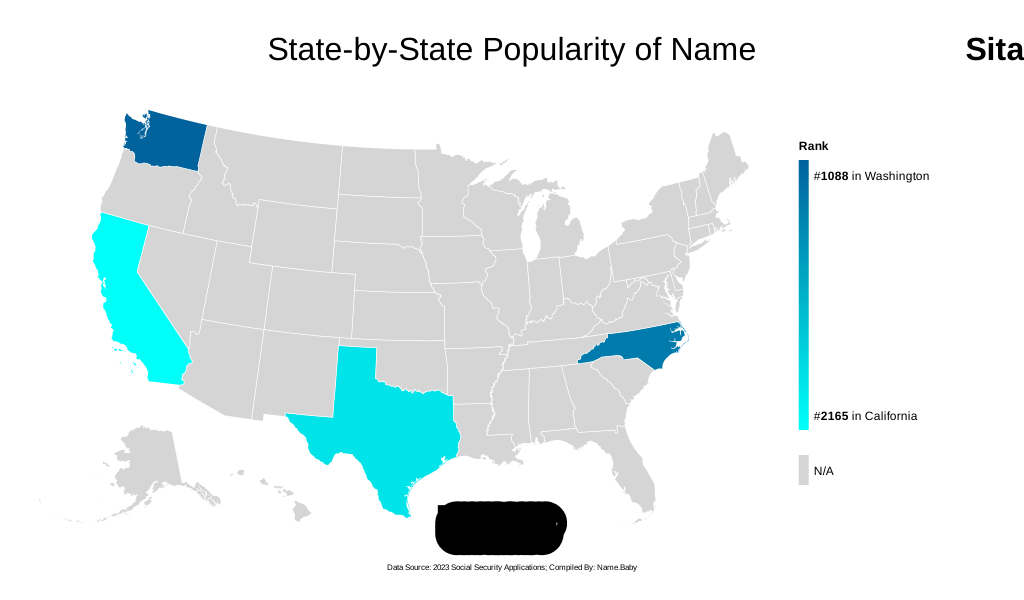
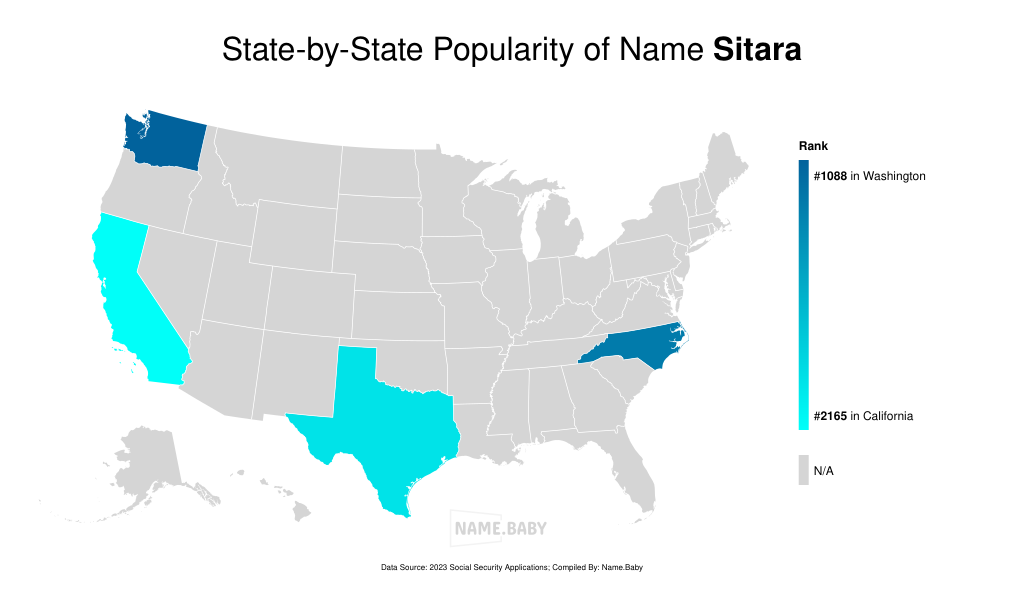
States Popularity Chart
Notable People Named Sitara
| Sitara Devi - |
| Sitara Hewitt - |
