Sua
Meaning of Sua
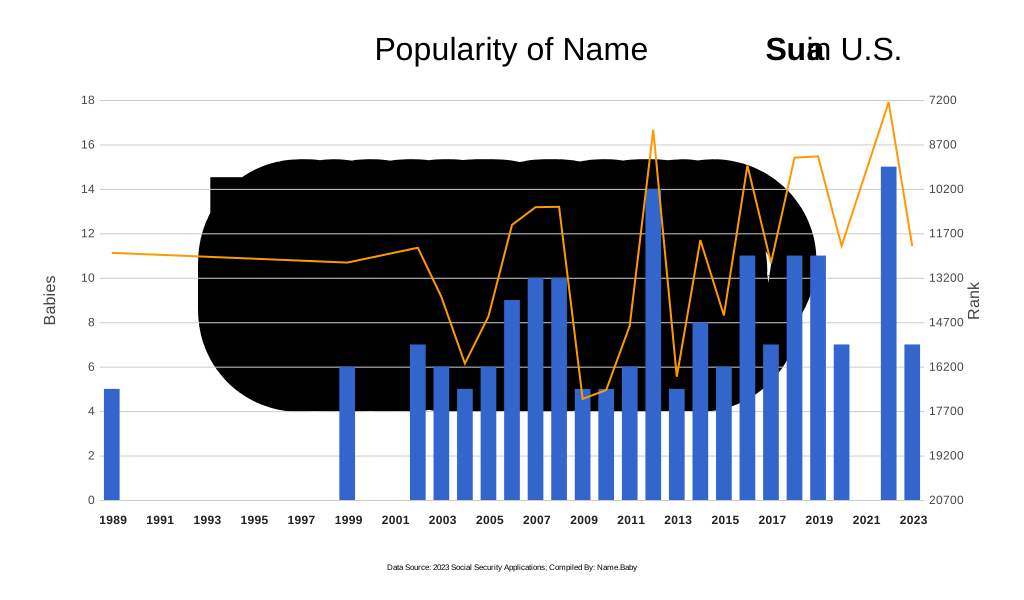
The name Sua, pronounced SWAH, drapes across the tongue like a pause in a love song, carrying both the Korean heritage of elegant simplicity—where its hanja characters often signify “grace” or “beauty”—and an Italian whisper, for in Italy “sua” means “her,” evoking intimate belonging and feminine warmth. Its solitary syllable bears the lyrical cadence of an Italian sonnet, flecked with the clarity of a Tuscan morning, and unfurls like a wildflower in a sunlit meadow. In American birth charts, Sua’s rare bloom—hovering in the mid-900s with just five newborn girls so named in 2024—only heightens its exclusive allure. Though it lacks the bustling popularity of Susie or Sarah at a playground roll call, Sua’s modest presence ensures she will never be lost in chatter, but rather shine with quiet confidence. For parents longing to bestow upon their daughter a cross-cultural poem of identity—where concise technical precision meets poetic resonance—Sua is a gentle promise held within a single, sweeping syllable.
Pronunciation
- Pronunced as SWAH (/swɑ/)
U.S. Popularity Chart
Notable People Named Sua
| Sua Rimoni Ah Chong - |
