Suan
Meaning of Suan
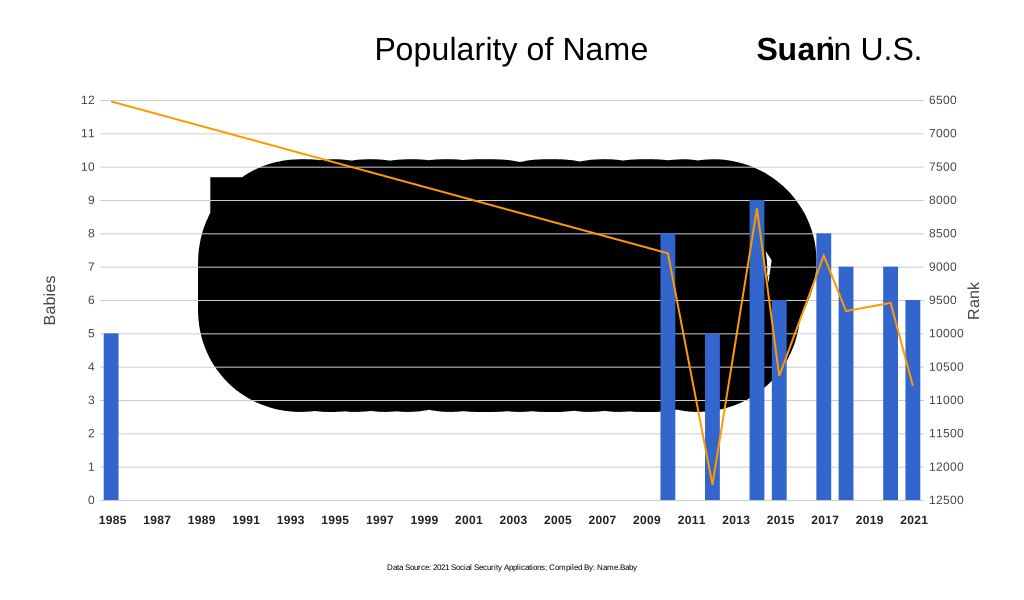
Suan emerges as a convergent onomastic innovation that channels the Latin suavis (“pleasant, agreeable”) and the Old English phoneme reminiscent of the swan—an avian totem of grace—while simultaneously nodding to the venerable Hebrew Shoshana lineage through Susan. As a unisex appellation, it defies rigid gender binaries, offering parents a succinct, phonetically harmonious choice that resonates with both classic etymology and modern sensibility. Analyses of United States Social Security Administration data reveal that, since its modest ascent to rank 692 in 1985, Suan has maintained a low but steady frequency—between five and nine annual occurrences—hovering within ranks 879 to 928 over the past decade. Such statistical consistency suggests an enduring appeal grounded not in widespread popularity but in cultivated distinctiveness. The pronunciation SWAHN (/swɑn/) underscores its crisp, single-syllable cadence, evoking imagery of reflective still waters and poised resilience. In this respect, Suan embodies both a scholarly nod to linguistic heritage and a contemporary commitment to individual identity.
Pronunciation
English
- Pronunced as SWAHN (/swɑn/)
U.S. Popularity Chart
Notable People Named Suan
| Suan Lam Mang - |
