Taison
Meaning of Taison
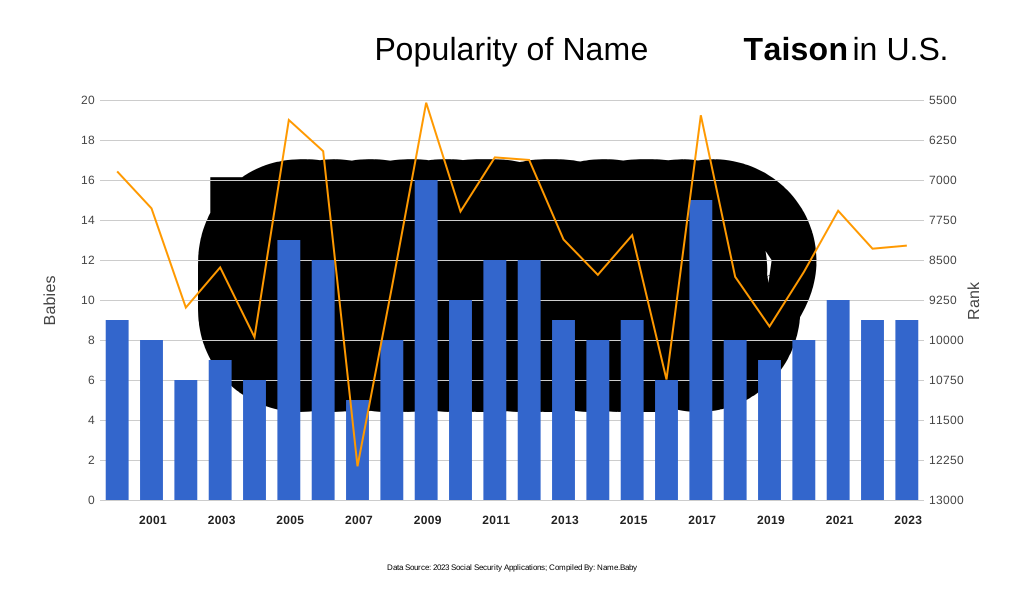
Taison, pronounced “TAY-suhn,” traces its lineage to the Old French tison, or “firebrand,” a term that conjures the flickering embers of vivacity leaping skyward like a Latin danza. In the scholarly realm of onomastics, it is often classified as a variant of Tyson, yet Taison has achieved its own cultural cadence—particularly in Portuguese-speaking countries, where a certain Brazilian futebolista bore it onto the global stage, bestowing upon the name an almost kinetic elegance. In the United States, Taison occupies a quietly tenacious niche: according to Social Security Administration figures, nine newborn boys in 2024 received the name, ranking it near 915th—a statistical whisper, perhaps, but one that persists with admirable regularity despite the fickle fortunes of naming trends. Its academic appeal resides in the interplay between its Old World etymology and New World adoption: a single word that bridges medieval hearths and modern stadia, whose syllables unfold with the warmth of a bygone hearth yet strike with the precision of a well-planned pass. One might wryly observe that Taison, like a solitary flame in a vast hall, commands attention without clamoring for it.
Pronunciation
English
- Pronunced as tay-suhn (/teɪsən/)
U.S. Popularity Chart